Online Reporter
Raymond Jaravaza, [email protected]
THREE years after Government’s intervention breathed new life into the Redwood Irrigation Scheme in Umguza, farmers at the once-struggling project are now thriving and their winter wheat crop is proof of a dream realised.
With the installation of a centre pivot in 2022, courtesy of the Agricultural and Rural Development Authority (Arda), the scheme’s 24 active plot holders have become a key part of the country’s drive towards wheat self-sufficiency, with the farmers setting a projected yield of more than 50 tonnes.
Located in Ward 9 of Umguza District, Matabeleland North Province, the Redwood Irrigation Scheme is once again abuzz with activity.
Preparations for the 2025 winter wheat season are in full swing as farmers rush to beat the May 31 planting deadline, announced by Government.
This year, the national target for wheat production is 120 000 hectares, with the Presidential Scheme expected to contribute 5 000 hectares, a clear indication of the country’s commitment to wheat-based food security.
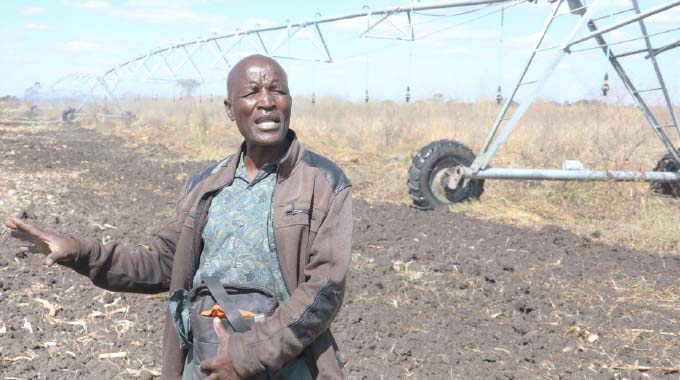
In an interview during a tour of the irrigation scheme, Redwood chairman Mr Abraham Luckson Moyo said the journey has been long but rewarding.
“Redwood Irrigation Scheme was established in 2004 with over 40 villagers. Back then, we pooled funds monthly to keep the scheme afloat, using only a small portion of the 95 hectares allocated by Government,” he said.
“The project struggled due to lack of capital for equipment, land clearing and consistent water supply. Over time, membership dropped significantly.”
But the narrative changed in 2022. The provision of a centre pivot, a mechanised sprinkler system ideal for large-scale farming, marked a turning point.
With Arda’s support, the scheme’s members started growing winter wheat on a commercial scale.
Now in its third consecutive season, winter wheat farming has become a profitable and empowering venture for the 14 women and nine men, who run the scheme.
“This year, we planted winter wheat on 10 hectares, a decrease from the 17 hectares that we planted last season.
We are facing water shortages this year, so we decided that planting 10 hectares would be ideal for us to save water for other cash crops such as butternuts and sugar beans that we also grow,” said Mr Moyo.
Still, the farmers remain upbeat.
“Our focus is on maximising yield from the 10 hectares by giving the crop full attention. We are expecting a harvest of 50 tonnes or more,” said Mr Moyo.

Beyond wheat, the scheme grows other crops to sustain family incomes and ensure year-round farming activity.
“The irrigation scheme is our livelihood. We grow maize, butternuts and sugar beans. We are full-time farmers and depend entirely on the scheme,” said vice chairman, Mr Joseph Sibanda.
The centre pivot has been a game-changer as it enables the members to irrigate a big area in a short time.
According to the Permanent Secretary in the Ministry of Lands, Agriculture, Fisheries, Water and Rural Development, Professor Obert Jiri, the winter wheat planting season ends within the next 10 days and farmers across the country are racing against time.
Matabeleland North’s Agricultural and Rural Development Advisory Services (Ardas) provincial director Mr Mkhunjulelwa Ndlovu, said the province is targeting 2 500 hectares under winter wheat.
“A majority of farmers in the province are busy in their fields planting winter wheat and are still within the window period that was set by the Ministry of Lands,” said Mr Ndlovu.
Elsewhere in Matabeleland North, including at the farm of Provincial Affairs and Devolution Minister Richard Moyo, planting has already been completed.
“We began land preparations in early April, starting with two rounds of disking to break the soil before moving on to planting,” said Mr Peculiar Moyo, managing director at Minister Moyo’s farm.