Online Reporter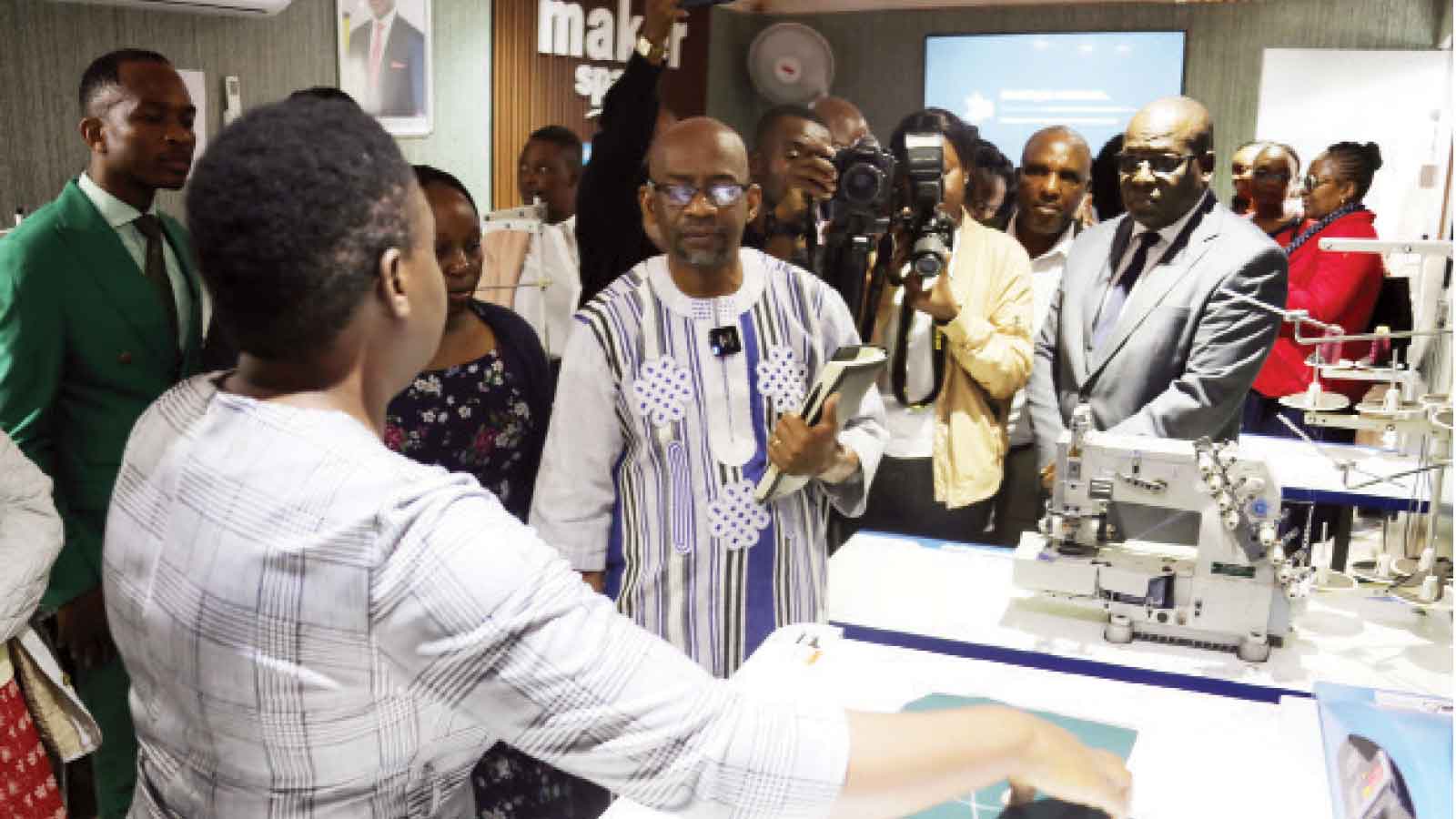
Robin Muchetu, Health and Gender Editor
VISITING UN Women Eastern and Southern Africa Deputy Director, Mr Adama Moussa, has commended Zimbabwe for demonstrating strong political will in implementing women empowerment programmes, describing it as a critical step towards inclusive economic growth.
Mr Moussa made the remarks on the sidelines of a tour of the Bulawayo Small to Medium Enterprises (SMEs) Maker Space Centre, where he witnessed first-hand women-led enterprises benefiting from the Government and development partner support.
“We are here with the Deputy Minister responsible for small-scale enterprises, and it is very important to see how committed the Government is. The vision is very clear,” said Mr Moussa.
The country knows where it is going, there is political commitment, and now resources are being mobilised to support that vision.”
Mr Moussa said Zimbabwe stood out for its clarity of purpose in advancing women’s economic development, adding that UN Women’s role was to support nationally driven priorities rather than impose external agendas.
“They do not ask us where to go — they already know the road. We are here to support them. They are leading, and we are providing the necessary support,” he said.
Mr Moussa stressed that women-led enterprises play a critical role in driving economic growth at the household, community, national and regional levels.
“Investing in women’s capacitation is not an expense; it is an investment. When women are empowered with skills, they sustain households, strengthen communities and contribute meaningfully to national and regional economies,” he said.
Mr Moussa said women are important in terms of numbers, skills and access to markets.
He said the skills demonstrated by women entrepreneurs at the Maker Space reflected Zimbabwe’s untapped economic potential.
“Any investment must be measured by its impact at the household, community, national, regional and global levels. Supporting women is the smart and sustainable thing to do,” he said
Mr Moussa was accompanied by Deputy Minister of Women Affairs, Community, Small and Medium Enterprise Development, Mr Kiven Mutimbanyoka, Permanent Secretary in the Office of the Minister of State for Bulawayo Provincial Affairs and Devolution, Mr Paul Nyoni, Bulawayo Chamber of SMEs coordinator, Mr Nketa Dlamini, and other officials.
Deputy Minister Mutimbanyoka said the visit affirmed Zimbabwe’s strong partnership with the United Nations system.
“We are grateful as the Government to host a high-level UN delegation that is here to assess and affirm the support being given to gender and women empowerment initiatives in Zimbabwe,” he said.
“Our main purpose was to showcase the work being done, and we are pleased that our women are performing exceptionally well.”
The deputy minister acknowledged the role played by development partners, particularly UN Women, in providing training, skills development and machinery to women-owned enterprises.
“Through these partnerships, women are able to take care of their families and uplift their livelihoods. This is what impresses us as Government — seeing women working tirelessly to sustain themselves and their households,” he said.
Deputy Minister Mutimbanyoka added that the clustering of SMEs under one roof had enhanced organisation, planning and productivity.
“The work being done here is visible and commendable. We will continue supporting these women in areas where assistance is needed,” he said.
One of the beneficiaries, Ms Vaida Muleya, who has been incubated at the Maker Space for eight years, said the UN Women visit reaffirmed the organisation’s commitment to uplifting women entrepreneurs.
“I make school wear here, such as tracksuits, blazers, shirts and more. My business has grown significantly because of this space. We pay lower rentals than in the CBD, which has made our work more profitable,” she said.
However, Ms Muleya expressed concerns over unfair competition from informal street traders who sell at lower prices without incurring overheads or complying with regulations.
The Maker Space Centre was established by the International Labour Organisation (ILO) under the Employment Promotion and Labour Market Governance Programme to improve working conditions in the informal economy and facilitate the transition to formal business operations.
The centre, which houses 60 working spaces, accommodates over 80 percent women-owned enterprises, mainly in the textile cluster, producing school uniforms, industrial workwear and clothing. It serves as a model that can be replicated in other urban centres across the country.