admin
admin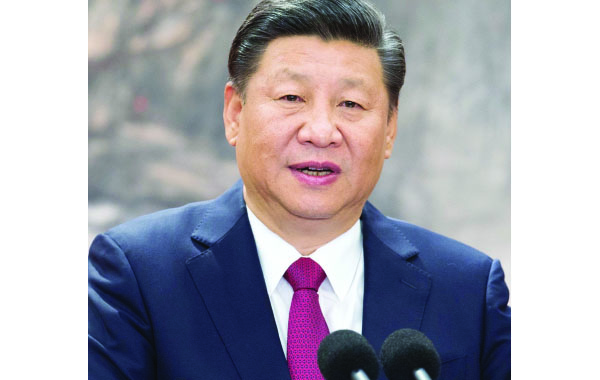
Ruzivo Media and Resource Centre
“When all countries unite in pursuing the cause of common good, plan together, and act together day by day toward the right direction of building a global community of shared future, we can build an open, inclusive, clean, and beautiful world of lasting peace, universal security and shared prosperity and jointly create a better future for all of humanity.”
This aptly sums the thinking that led to Chinese President Xi Jinping propounding of the concept of a community with a shared future for mankind over 10 years ago.
A decade later, the concept is gaining worldwide recognition and significance as a basis for uniting the world to achieve harmony and progress that benefit all people and nations despite vast differences economically, politically and socially. The purpose and overarching goal of this approach is to enhance international understanding and comprehension, foster broad consensus, and better collaborate with countries around the world in building a community with a shared future for mankind. When President Xi — himself a consummate thinker who now ranks among the most influential Chinese leaders and arguably the most outstanding global leader today — proposed the idea of building a global community of shared future ten years ago, he sought to answer the existential question,: “Where is humanity headed?”
The global context was characterised by a number of problems including threats to peace and security, global economic meltdown and financial crises, poverty and challenges in human development and moribund global governance systems.
These can be summarised as the quadruple deficits (peace, development, security and governance deficits) with a number of specific problems such as war in the Eurasian subcontinent, arms race threat of nuclear war, sluggish global economic recovery, unilateralism and protectionism as well as geopolitical tension, terrorism, cyber attacks, translational crime and new disease threats.
Further, the world faced energy, food and debt crises as well as climate change and challenges brought about the rapid development of artificial intelligence.
In the intervening period, China has led the world in searching for solutions to these problems, many of which affect Zimbabwe as well as other countries in Africa and beyond.
This article, the first of a series outlining the concept of a community with a shared future for mankind, looks at the major features and characteristics of this philosophy and outlines why it is important for countries such as Zimbabwe to embrace and support China in its efforts to lead the world in beating a new path that takes us away from the crisis-ridden trajectory before the world as we know it falls over the precipice on the weight of the threats outlined above.
Philosophical, scientific background
The idea of a community with a shared future for mankind is a philosophical expression that shares a vision of the world and at the same time it is practical and has been backed by solid policy programmes and initiatives that we shall examine below.
There is significant literature that seeks to explain the import and significance of this concept.
According to an article, “In the long river of history, different civilisations, flowing and converging from time to time, have surged forward like waves.
Along with the continuous progress of human society and the deepening of globalization, countries have become increasingly connected and inter-dependent, forming a community with a shared future.”
There are strong commonalities between Chinese and other people’s, including Zimbabwe, hence the concept makes the correct supposition that people of all countries have come to realise that material abundance, peace and stability and cultural prosperity are what all societies aspire for and therefore require growth, security and civilisation, which complement and reinforce each other.
What makes the concept relevant and applicable in modern countries is that it incorporates modern thinking in governance and politics, therefore becoming a useful tool to governments, institutions and people worldwide.
The vision of building a human community with a shared future provides scientific answers to the epochal questions of what kind of world we should build and how to build it.
The vision, together with the new outlook on growth, security and civilisation encompassed in the three global initiatives, represent the worldview of China and the Chinese communists in the new era.
They also provide the methodology for putting that worldview into practice, as they contain not only profound political wisdom but also many practical pathways and measures. Thus, they represent the unity of both the worldview and the methodology.
Key theories such as Marxism are reflected in a community with a shared future for mankind concept. Following Marxist tradition, global shared future recognizes dialectical and historical materialism, the vision and the three global reveal the laws governing the development of human society and its future direction. They also provide scientific methods and pathways to advance human society.
Critically, the concept is highly consistent with the purposes and principles of the UN Charter including developing friendly relations among nations based on sovereign equality and respect for equal rights of peoples, maintaining international security by collective and peaceful means, and establishing international cooperation to solve global economic, social and/or cultural problems.
It is not a surprise, then, that President Xi received warm responses when he propounded the idea 11 years ago, on 23 March 2013, during his speech at the Moscow Institute of International Relations in Russia. In 2017, the concept was written into United Nations security resolutions for the first time.
On January 18 that year, President Xi had delivered a keynote speech entitled “Work Together to Build a Community of Shared Future for Mankind” at the UN Office in Geneva, Switzerland.
“All countries should jointly shape the future of the world, write international rules, manage global affairs and ensure that development outcomes are shared by all,” said President Xi. The concept of a community with a shared future for mankind, as a governance and philosophical approach, is important in its distinction from Western models, which — it goes without saying — are responsible for generating the problems and challenges that the wold faces today.
As one Liu Jianchao, writing for China Daily last year explained, unlike traditional Western theories that focus on hegemony and capitalism, among other key drivers, China will never tread the path of seeking hegemony even when it grows in strength, engage in hegemonism or power politics, pursue its own security at the cost of others, stoke divisions or confrontations, or create small circles to alienate those with views different from its own.
Instead, China will remain committed to promoting world peace, driving global development and safeguarding the international order. Little wonder, then, that China is looked at favourably by the majority of developing world, including Zimbabwe.
President Xi has in the past decade gone on to propose three key frameworks to give life and praxis to the global shared future concept and has addressed various fora, including in Africa, to demonstrate the applicability of the philosophy.
These three frameworks are the Global Development Initiative (GDI), Global Security Initiative (GSI) and the Global Civilisation Initiative (GCI). The GDI, from the perspective of growth, answers the question of what development philosophy people need and how to achieve global development.
It is aimed at creating the material foundation for a human community with a shared future. The GSI, from the viewpoint of security, focuses on the issue of what sort of security humanity needs and how to achieve universal security.
The GCI, from the perspective of the upper structure, answers the question of how to view different civilisations and promote exchanges and mutual-learning among them. It aims to build the cultural foundation for the human community. From the perspective of practice, the three global initiatives, focusing on prominent issues amid the profound changes unseen in a century, provide viable paths for the world to build a human community with a shared future.
Experts note that, the three global initiatives, inherently connected and reinforcing each other, point the way forward for the progress of human society from three different perspectives: growth, security and civilisation; and thus are the main buttresses supporting the vision to build a human community with a shared future.
It is crucial to point out that among them, the three initiatives offer practical solutions and frameworks to cooperate on a bilateral and multilateral level among countries of the world, with China at the core.
For example, there are a number of opportunities that countries such a as Zimbabwe can tap into, taking advantage of China’s willingness to cooperate with the world to solve existential problems including modernisation of the economy, security cooperation an in traditional and non-traditional domains; as well as cultural exchanges, tourism and scholarships.
Window of opportunities
China’s a community with a shared future for mankind concept offers a wide window of opportunities that stakeholders globally should take advantage of at various levels, including governments, regional blocs, multilateral institutions, civil society and individuals.
Zimbabwe, which enjoys a comprehensive strategic partnership of cooperation with China which has roots in history as far back as 600 years and honed through mutual assistance in liberation struggles, stands to benefit immensely. It is thus critical to craft strategic thinking and planning on how to effectively cooperate with China in this matrix.
Ruzivo Media & Resource Centre Trust is a registered think tank organisation that analyses and creates platforms for the discussion of global and local issues with focus on creating understanding and leading thinking on innovative solutions and knowledge.



 Online Reporter