Online Reporter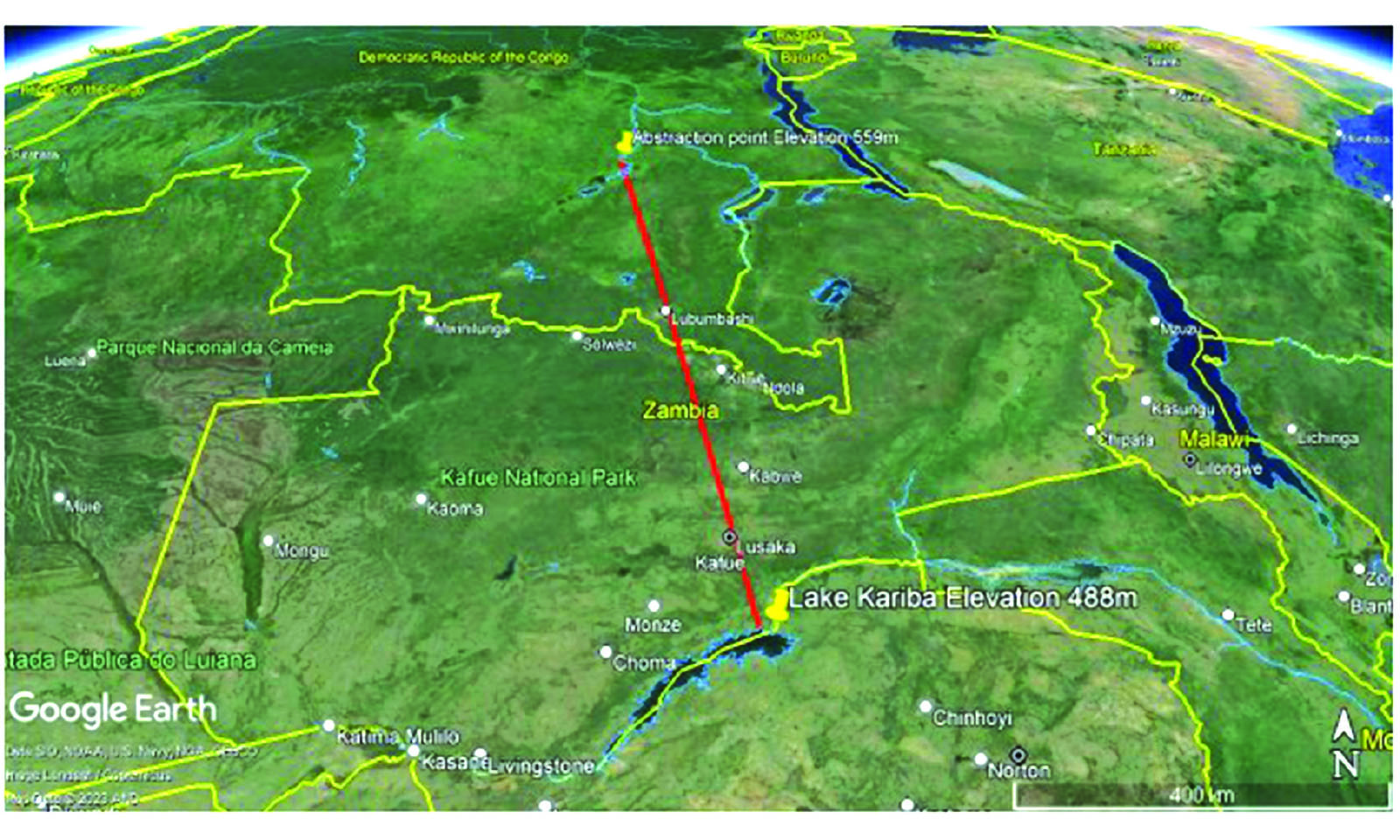
Engineer Elijah Chifamba
SOME countries in Southern Africa, particularly Namibia, Botswana and South Africa, are experiencing increasing water stress due to limited internal renewable water resources.
This scarcity has necessitated regional water-sharing initiatives.
For example, Lesotho currently supplies water to South Africa’s Gauteng province. Additionally, a similar project is now at the detailed feasibility stage to supply water from Lesotho to Botswana.
Water stress is intensifying across the region as Southern Africa becomes progressively drier.
Climate change is contributing to a higher frequency of extreme weather events, such as droughts and floods.
The region is still recovering from the 2023/2024 El Niño-induced drought that led to widespread crop failure, depleted water resources and severely affected pastures.
Lake Kariba experienced its lowest water levels in years, forcing Zimbabwe and Zambia to drastically scale back electricity generation.
Mozambique’s Cahora Bassa Hydropower Station also suffered the effects.
Although the 2024/2025 rainy season has brought some relief, climate change remains an existential threat to Southern Africa.
In response to this growing crisis — and rather than waiting for interventions from other continents — it is crucial for the authorities to explore and support the proposed and ambitious Congo to Zambezi water transfer project.
Congo to Zambezi water transfer project
The African continent is home to 63 transboundary river basins, yet water resources remain unevenly distributed.
The Lesotho Highlands Water Project stands out as a successful example of transboundary cooperation between a water-rich country (Lesotho) and a water-scarce neighbour (South Africa), demonstrating the potential for mutual benefit through shared water management.
Building on this precedent, a Zimbabwean firm of consulting engineers has completed a pre-feasibility study confirming the technical viability of transferring 16 billion cubic metres of water annually from the Lualaba River, a tributary of the Congo, to Lake Kariba on the Zambezi River.
This transfer would be achieved by gravity, eliminating the need for pumping, via an 18-metre-diameter tunnel bored across Zambia over a distance of approximately 1 000 kilometres.
The Congo River, located in the Democratic Republic of Congo (DRC), was identified as the source due to climate projections by the Intergovernmental Panel on Climate Change, which indicate that Central Africa will become wetter while Southern Africa continues to dry.
Thus, Central Africa is expected to remain water-rich, while Southern Africa faces increasing water scarcity.
Due to elevation constraints, the tunnel will discharge directly into Lake Kariba.
Discharge upstream of the lake would not be feasible for a gravity-fed system.
Transboundary water transfer projects of this scale are not without precedent.
China’s South-North Water Diversion Project, for instance, aims to transfer 44,8 billion cubic metres annually from the Yangtze River in the south to the arid and industrialised north.
One of its three routes — the Middle Route — transports water over 1 241 kilometres using a sophisticated system of tunnels, canals and aqueducts.
Similarly, the Lesotho Highlands Water Project moves 2 billion cubic metres annually through a network of four dams and 200 kilometres of tunnels.
Project road map
The pre-feasibility study for the Congo to Zambezi water transfer project was conducted between early 2020 and mid-2022.
Throughout this process, the consultants engaged key Zimbabwean ministries, including Lands, Agriculture, Fisheries, Water and Rural Development; Energy and Power Development; and Foreign Affairs and International Trade.
Diplomatic channels were also activated, with consultations involving the Embassy of the DRC in Harare and the Zimbabwean Embassy in Kinshasa
Regional bodies such as the Zambezi Watercourse Commission and the Zambezi River Authority (ZRA) have also been consulted.
Notably, the ZRA has issued an official expression of interest in the project.
The initiative has now moved to the planning stage for the detailed feasibility study.
A team of regional experts is now being assembled to conduct comprehensive technical assessments, environmental and social impact studies, and an economic and financial viability analysis.
Hydropower generation and water resources experts will also be brought on board to evaluate and structure the optimal utilisation of the 16 billion cubic metres, balancing hydroelectric potential with other regional water needs.
This phase is expected to take approximately three years and will culminate in a detailed feasibility study report.
This report will serve as the foundation for mobilising funding for the project’s final implementation.
Once funding is secured and the project structure finalised, it will proceed to the detailed design, bidding and construction stages.
Potential benefits to the region
The Congo to Zambezi water transfer project promises wide-ranging benefits for Southern Africa. It will significantly enhance the reliability of water supplies for existing hydropower stations, including Kariba South, Kariba North and Cahora Bassa, during periods of drought and low rainfall.
The project may also prompt a re-evaluation of designs for proposed hydropower stations at Mupata Gorge, the Cahora Bassa expansion and Mphanda Nkuwa to accommodate increased river flow.
Zimbabwe, Zambia, Mozambique and South Africa stand to gain directly through improved hydropower generation capacity, while other countries in the region could benefit via the Southern Africa Power Pool.
Beyond energy, the project will open up new opportunities for regional water abstraction for urban supply, agriculture, mining and other sectors.
For example, Zimbabwe is already developing the first phase of the Matabeleland Zambezi Water Project, which aims to transfer 0,037 billion cubic metres of water to Bulawayo.
With the Congo-Zambezi water transfer, Zimbabwe could significantly scale up future abstraction to meet growing demand.
South Africa, Botswana and Namibia also have plans to draw water from the confluence of the Chobe and Zambezi rivers for use via the North-South Carrier through eastern Botswana.
This project has yet to materialise, likely due to objections from other riparian states.
However, with the Congo-Zambezi initiative in place, it would become feasible for these countries to draw larger volumes of water — especially if the abstraction point is relocated downstream, possibly to the same location as Zimbabwe’s Matabeleland Zambezi Water Project.
Ultimately, the Congo to Zambezi water transfer project will contribute significantly to making Southern Africa more climate-resilient.
It will ensure long-term water security beyond 2050 and stimulate economic growth across the region.
Given its scale, objectives and climate adaptation focus, this initiative is a strong candidate for climate financing and will be presented to institutions such as the United Nations Framework Convention on Climate Change and the Programme for Infrastructure Development in Africa.
Engineer Elijah Chifamba is a civil engineer, specialising in water resources engineering and urban infrastructure development.