Chronicle Editor
THE seasonal forecast for the upcoming agricultural season is out and I hope most of our farmers have seen at least a brief outline of it.
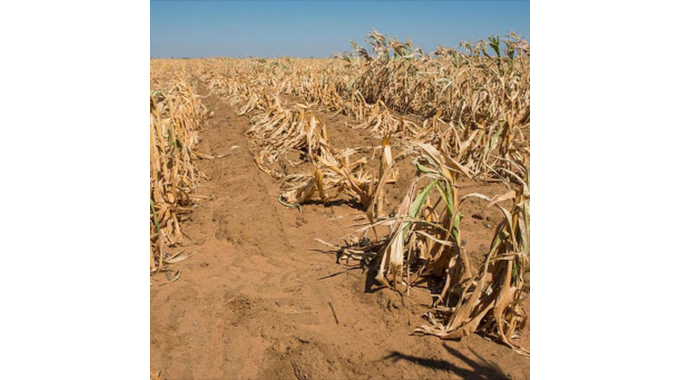
A forecast for a bad season for the Matabeleland region and Midlands is being predicted with below normal rains expected due to the El Nino effects.
We have experienced an El Nino induced drought before and the experience was not a pleasant one for farmers. It is against that background that this pen counsels for well thought out and planned drought mitigation measures by livestock farmers.
Let the drought be not a surprise because it is not. It’s coming has been announced therefore it needs not to find you unprepared and in sixes and sevens.
In a drought year, two things present a challenge to livestock farmers and if they are not planned for, huge losses can be incurred either through livestock mortalities or astronomical expenses in feed procurement. The two major issues during a drought year are lack of drinking water for livestock and unavailability of forage material.

Lack of drinking water being the most devastating and principal cause of mortality as animals track large distances to far and wide sources which will be also drying out.
The water sources even become death traps as the dam levels decline severely with water left right at the centre of the dam with muddy peripheries where most animals which are at those times very emaciated, getting stuck and die either trying to reach the water or to come out after drinking. Also because of the distances involved when animals track to drinking points, a lot of energy is lost against the background of a bare veld with nothing to eat.
Therefore, livestock farmers need to prepare for the coming drought and be ready to even take extra-ordinary measures to supplement their animals and avoid losses.
The drought mitigation measures are pretty much standard for livestock production with a few differences depending on the severity of the situation.
In broad terms one would say, just make sure your animals will have access to drinking water within reasonable distance and also ensure they get supplementary feed of one form or another. The how part becomes mechanical and situation specific.
Also growing fodder for your animals will be a good idea as the fodder can help to lower the quantity of feed that you will need to buy. Early planting of drought tolerant legume forages can prove to be helpful as they can establish adequate herbage from the few rains received. The other important aspect is culling those animals that would easily succumb to drought such as old animals.
Also, cull non-productive animals which are an unnecessary burden. It is wise to remain with a herd of younger animals as these tend to be more resilient than older ones. Also, you want to remain with a manageable number which you can be able to supplement even with commercial if need be.
The bottom line being that some action needs to be taken and preparations made for the drought situation to avoid loss of investment. In previous devastating droughts we have seen some people emerging rich after profiting from desperate farmers either by buying their dying animals for a song or selling them feed at astronomical prices.
So, as sure as the sun will rise tomorrow, someone will definitely benefit and become rich from your predicament if you do not plan how you will help your animals during the drought. Let us as livestock farmers start planning now how we can save our animals during the upcoming drought and protect our hard-earned investment in this important industry. Uyabonga umntaka Makhumalo!
Mhlupheki Dube is a livestock specialist and farmer. He writes in his own capacity. Feedback [email protected]/cell 0772851275


 Online Reporter