admin
admin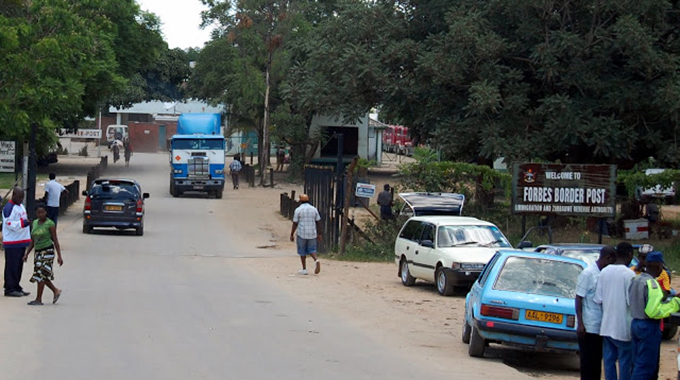
Samuel Kadungure recently in CHIMOIO, Mozambique
ZIMBABWE and Mozambique are working on transforming customs services at Forbes and Machipanda Border Posts by fast-tracking the implementation of the one-stop-border concept to eradicate inefficiencies currently compromising smooth trade between the two sister nations.
Forbes Border Post, a getaway to the Beira Corridor, is often grid-locked due to inefficient customs operations, resulting in long transit times.
The border is a major economic link between most SADC countries.
Long winding queues of haulage trucks have become a common sight on either side of the border as the demand for service outweighs its current capacity, and this often breeds corruption and illegal entries along the porous border.
In an interview with The Manica Post on the sidelines of Mozambique’s 48th lndependence celebrations held in Chimoio, Secretary for Manicaland Provincial Affairs and Devolution, Mr Edgars Seenza said border management redesign and infrastructure improvement will eliminate bureaucracy and duplications contributing to the current inefficiencies that have seen vehicles spending hours queuing.
Mr Seenza was part of a delegation led by the Minister of State for Manicaland Provincial Affairs and Devolution, Honourable Nokuthula Matsikenyere, that attended the celebrations last Sunday.
“Our Government has already agreed to expand Forbes Border Post, and that has already received attention from the Ministry of Transport and Infrastructure Development.
“We are now engaging our counterparts from Manica Province on the matter. We want to thank President Mnangagwa for facilitating the funding of this critical project which will increase trade between the two countries,” he said.
Mr Seenza said the two republics are working together to establish the Katiyo Border Post in Mutasa, which will reduce the distance to the Port of Beira by 100km.
“The architectural designs are already in place and we are engaging our counterparts to hear how far they have gone to kick-start this critical project.
“Already we have a plantation company that is ready to assist with funding for the construction of a bridge to facilitate the opening of Katiyo Border Post.
“It is a strategic intervention for the company as that border post will reduce the distance to Beira by 100km — which will be a huge saving for them in the long run,” he said.
Zimbabwe and Mozambique share a porous border stretching for about 700km.
Mr Seenza said Katiyo Border Post will also help decongest Forbes Border Post, as transporters will have an alternative route.
The Mozambique Secretary for State, Mr Stefan Dick Kassotche Mphiri said the two countries share historical and economic ties warranting efficient border operations.
“We are friends and more than brothers and have to strengthen our economic relationship. There are things we need from Zimbabwe and there are things Zimbabweans need from Mozambique, and these go through Machipanda and Forbes Border Posts.
“We had a meeting with Minister Matsikenyere and her delegation during which we agreed to solve this matter on both sides. It is a topical issue, and we will continue to engage to improve movement of goods into our respective zones. We will take the necessary measures.
“It is good that when Minister Matsikenyere was coming here she had first hand experience of the congestion at the border. Sometimes when you see and experience something, you feel it and look for a permanent solution,” said Mr Mphiri.
Minister Matsikenyere said Zimbabwe and Mozambique are all-weather friends, highlighting that the latter sacrificed a lot for Zimbabwe to gain her lndependence.
She said Manicaland and Manica Provinces will remain inseparable, and will continue working together to fast-track economic development for the benefit of its people.
“We must grow our two economies together and increase trade between our two provinces. We cherish the peace we enjoy and the free movement of our people across our borders,” she said.
The Governor of Manica Province, Honourable Fransisca Domingos Tomas said notwithstanding administrative limits, the people from the two provinces constitute a single people that are united, not only by language, but also by habits, customs, traditions and history, as well as bonds of cooperation forged over time.


 Online Reporter