Online Reporter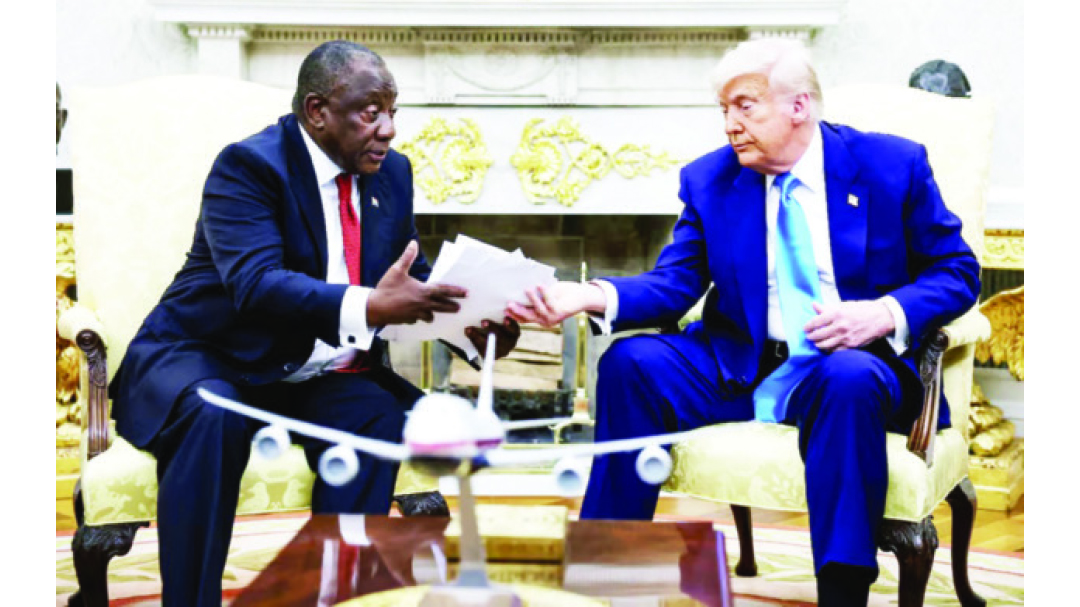
Richard Muponde-Zimpapers Politics Hub
THE recent advancement of the so-called United States– South Africa Bilateral Relations Review Act by the country’s House Foreign Affairs Committee is nothing short of a neo-colonial attempt to intimidate a sovereign African state into submission.
It reflects the outdated worldview of a declining superpower seeking to maintain control over global dynamics through coercion rather than cooperation.
The proposed legislation, which calls for sanctions against South African officials and a review of diplomatic ties, is not rooted in facts or principles but rather in geopolitical paranoia and ideological arrogance.
It is yet another manifestation of the United States’ long standing pattern of bullying independent minded nations, particularly from the Global South, who dare to challenge its hegemony.
At the heart of the Bill are flimsy and demonstrably false accusations against South Africa. Chief among them is the discredited narrative of a so called “white genocide”, a myth that was amplified by President Donald Trump, but has since been debunked, even by right wing South African groups and international fact checkers.
Crime in South Africa, including farm attacks, affects people of all races and there is no state sanctioned campaign targeting white citizens. On the contrary, recent statistics reveal a darker reality, blacks in South Africa continue to suffer disproportionately at the hands of white aggressors.
For instance, in 2022, the brutal killing of Mthokozisi Ntumba, a young black man shot dead by white police officers while leaving a clinic in Johannesburg, sparked outrage across the country. This incident, among many others, underscores that systemic racial violence against black South Africans remains an unresolved legacy of apartheid.
The bill also condemns South Africa’s stance on the Israel-Palestine conflict, particularly its courageous move to file a genocide case against Israel at the International Court of Justice in 2023.
But this action by Tshwane is firmly grounded in international law and moral clarity. Israel’s military actions in Gaza, which have resulted in thousands of civilian deaths and mass displacement, are not just a regional tragedy, they are a stain on global conscience. South Africa, given its own history of Apartheid, is uniquely positioned to speak truth to power and it has every right to seek judicial remedies through global institutions. That the United States finds this objectionable only serves to reveal Washington’s complicity and bias in global conflicts.
At the core of this diplomatic spat is the question of sovereignty. South Africa, as one of Africa’s largest economies and a founding member of BRICS, is well within its rights to pursue partnerships with countries like Russia and China. It is not for Washington, or any foreign power, to dictate who Tshwane engages with. The principle of self-determination must be non-negotiable. Ironically, the US, a country that claims to pride itself on “democratic values”, is now attempting to curtail the democratic choices of another nation.
The hypocrisy is staggering. This is the same US that, under false pretences, invaded Iraq in 2003, plunging the Middle East into decades of instability. It is the same US that has imposed devastating sanctions on Zimbabwe and countries like Cuba, Venezuela and Iran, often without the United Nations backing. In many of these cases, the allegations were later proven exaggerated or outright fabricated, while the human cost of sanctions, poverty, hunger, broken healthcare systems, was dismissed as collateral damage. What we are witnessing with South Africa is a repetition of the same pattern, demonise, isolate and punish.
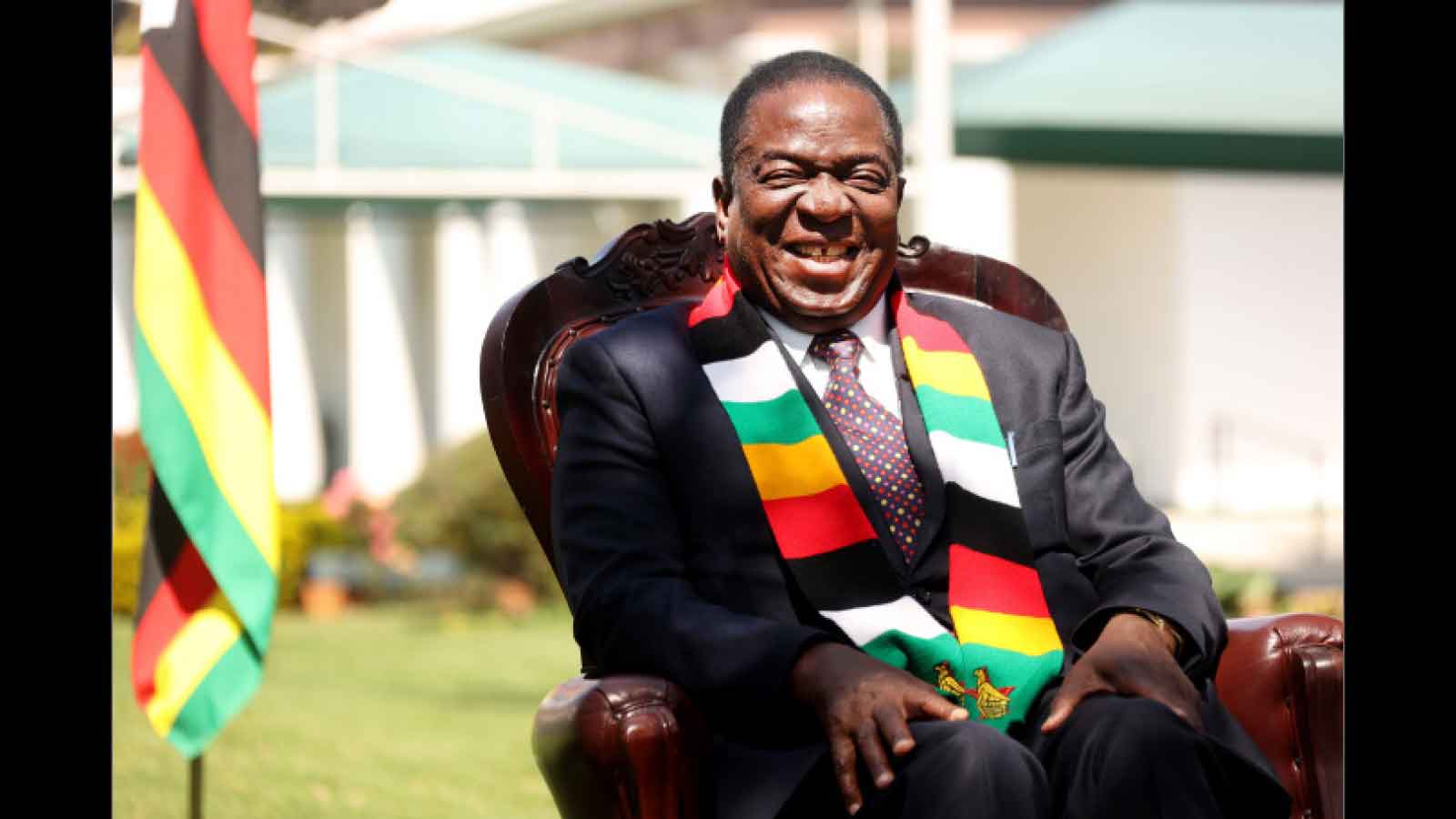
Zimbabwe offers a compelling case study of resilience against such tactics. For over two decades, the country has been under punitive US sanctions. Yet, under the Second Republic led by President Mnangagwa, it has forged a path forward, guided by the philosophy “Nyika inovakwa nevene vayo” (a country is built by its own people).
The nation has adopted a home grown development agenda, Vision 2030, aimed at achieving an upper middle income economy . Despite the sanctions, Zimbabwe has launched transformative infrastructure and industrialisation projects, such as the Dinson Iron and Steel Company in Manhize, which is set to become Africa’s largest integrated steel plant. This progress has been made possible through a strategic “Look East” policy and deeper ties with China and Russia, models that South Africa may well consider emulating further.
Zanu PF’s spokesperson, Ambassador Christopher Mutsvangwa, was unequivocal in his criticism to the US, urging South Africa to remain steadfast.
“These issues could be resolved without resorting to sanctions. But if America decides to go its own way, so be it, we’ve had over two decades of experience dealing with sanctions,” Amb Mutsvangwa said during the ANC’s 2025 Liberation Movements Summit in Kempton Park.
“They have not stopped Zimbabwe from making progress. On the contrary, we are now potentially the most dynamic economy on the African continent. Who would have thought that Zimbabwe would now be developing a third-world steel industry, one that even America might look at with a bit of jealousy?”
As the current president of the G20 and a key player in BRICS, South Africa must use this moment to rally the Global South toward a more equitable World Order.
It should double down on efforts to strengthen the South-South cooperation and push for an expanded BRICS alliance that can serve as a counterbalance to Western imperialism. Disgruntled Western nations, increasingly wary of Trump’s erratic foreign policy and trade wars, may find common cause with BRICS in promoting a multipolar world.
Moreover, the Southern African Development Community (SADC) should invoke its collective defence clause, “An attack on one of us is an attack on all of us.”
The region must unite in condemning this attempt to destabilise South Africa through legislative coercion. An injury to South Africa is an injury to regional integration, Pan-African unity and the continent’s developmental aspirations.
This latest US manoeuvre is not about promoting democracy or combating human rights abuses, it is about punishing disobedience.
It seeks to cow South Africa into abandoning its allies, silencing its voice on global injustice and aligning with US foreign policy at the expense of its own national interest. That cannot and must not be allowed to happen.
South Africa stands at a crossroads. It can either bend to pressure or retreat into compliant silence or rise to the occasion and assert its rightful place in a changing World Order.
The path forward is clear. The time for appeasement is over. The time for principled resistance, strategic partnerships, and regional solidarity is now.