Online Reporter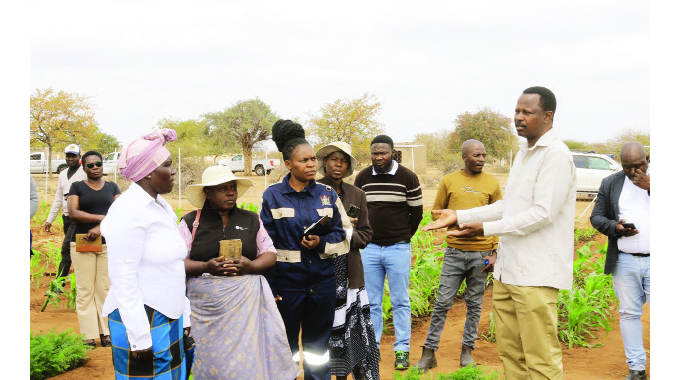
Thupeyo Muleya-Beitbridge Bureau
IN recent years, the Government has intensified efforts to transform the lives of Zimbabweans — especially those living in semi-arid regions — from the effects of recurrent droughts.
Areas such as Beitbridge district have been hardest hit, as climate change continues to disrupt normal rainfall patterns, leading to poor yields from rain-fed agriculture.
The rollout of the Village Business Units (VBUs) initiative has emerged as a game changer, improving food and nutrition security while creating new income streams for rural households.
Launched in 2021 by President Mnangagwa at Jinjika Village in Mangwe District, Matabeleland South, VBUs are registered rural development enterprises designed to stimulate economic activity, foster food security and empower communities.
Each VBU typically consists of a one-hectare plot equipped with a solar-powered borehole for irrigation, greenhouses, livestock facilities and in some cases, fish ponds.
It is envisaged that this model of production will shift communities from subsistence farming to market-oriented production.
Produce is sold to ready markets, with proceeds shared among members, who are both shareholders and workers.
The programme, spearheaded by the Ministry of Lands, Agriculture, Fisheries, Water and Rural Development under the broader Rural Development 8.0 initiative, aims to benefit 1,8 million households.
It is being implemented in collaboration with the Zimbabwe National Water Authority (Zinwa), AFC Bank, the Agricultural and Rural Development Authority (ARDA) and other agencies.
Deputy Information, Publicity and Broadcasting Services Minister Dr Omphile Marupi, speaking during a recent media tour of high-impact projects in Matabeleland South, said the VBUs were transforming lives at the grassroots.
“This is a game changer; it brings water to communities with boreholes being solarised and communal farmers are now putting land to proper use,” said Dr Marupi.
“We are happy to see that the communal farmers are taking this initiative seriously to change their lives at the household level.
“They have migrated from subsistence farming to market-led agricultural production as you can see from the produce here.
“Issues of access to water for livestock and ordinary citizens have improved in most villages.
“The VBU is benefiting dozens of families who are putting resources together to commercialise agriculture”.
Dr Marupi said the programme’s focus on drip irrigation and fish ponds had enabled communities to maintain a steady supply of fresh produce while reducing reliance on imports.
The income generated, he said, was allowing households to invest in businesses, access credit and create jobs.
“These VBUs foster a sense of ownership and involvement, as beneficiaries are both shareholders and workers.
“This collaborative approach enables communities to manage and grow their businesses effectively,” said the Deputy Minister.
In Beitbridge district alone, 55 VBUs have been established across its 15 rural wards, according to Beitbridge Rural District Council acting chief executive officer Mr Peter Ncube.
He said more units would be rolled out as resources permit, and noted that women, who bear the greatest social burden, had embraced the concept wholeheartedly.
“The programme promotes environmentally friendly practices, such as drip irrigation, to ensure sustainable agricultural productivity and minimise waste,” he said.
“We commend our President and the Government for such a well thought initiative and we are now seeing the fruits on the ground.”
Beitbridge RDC chairperson, Councillor Oscar Chiromo, said most VBUs were identical in design and had enabled farmers to consistently supply local markets.
The benefits are already being felt by villagers.
Mrs Pulisani Muleya of Ward 15 in Tshamutswilikiti said proceeds from her VBU membership had enabled her to educate her children and build a house.
“Since our borehole was solarised and we began using drip irrigation, we have been able to grow cash crops throughout the year,” she said.
Traditional leader Mr Tshamano Mudau of Lutumba said women were taking a leading role in VBUs, and urged more men to participate.
“Households are experiencing improved financial stability, enabling them to invest in education, healthcare and other essential needs,” he said.
Mrs Mpho Sibanda, secretary of the Soldiers of Hope VBU in Beitbridge East, said the project had improved both incomes and nutrition.
“We have been able to turn a new leaf in creating an alternative revenue stream since we started this project with the support of the Government in November last year,” she said.
“Besides producing for the markets, we now have access to fresh produce, which has improved our health and well-being,” she said.
VBUs are also creating direct and indirect employment, with some youths hired to provide security for gardens and equipment.
Crops such as maize, beans, carrots and vegetables are in high demand locally, ensuring quick market uptake.
Mrs Mazwipesa Ncube of Lutumba, whose project has 179 beneficiaries, mostly elderly women, said the knowledge and skills gained through VBUs had inspired members to establish small gardens at home.
“This is a good platform to learn from each other,” she said.
“We are also receiving more agricultural extension support from the Government, which is improving our production.”



 Bongani Ndlovu