Online Reporter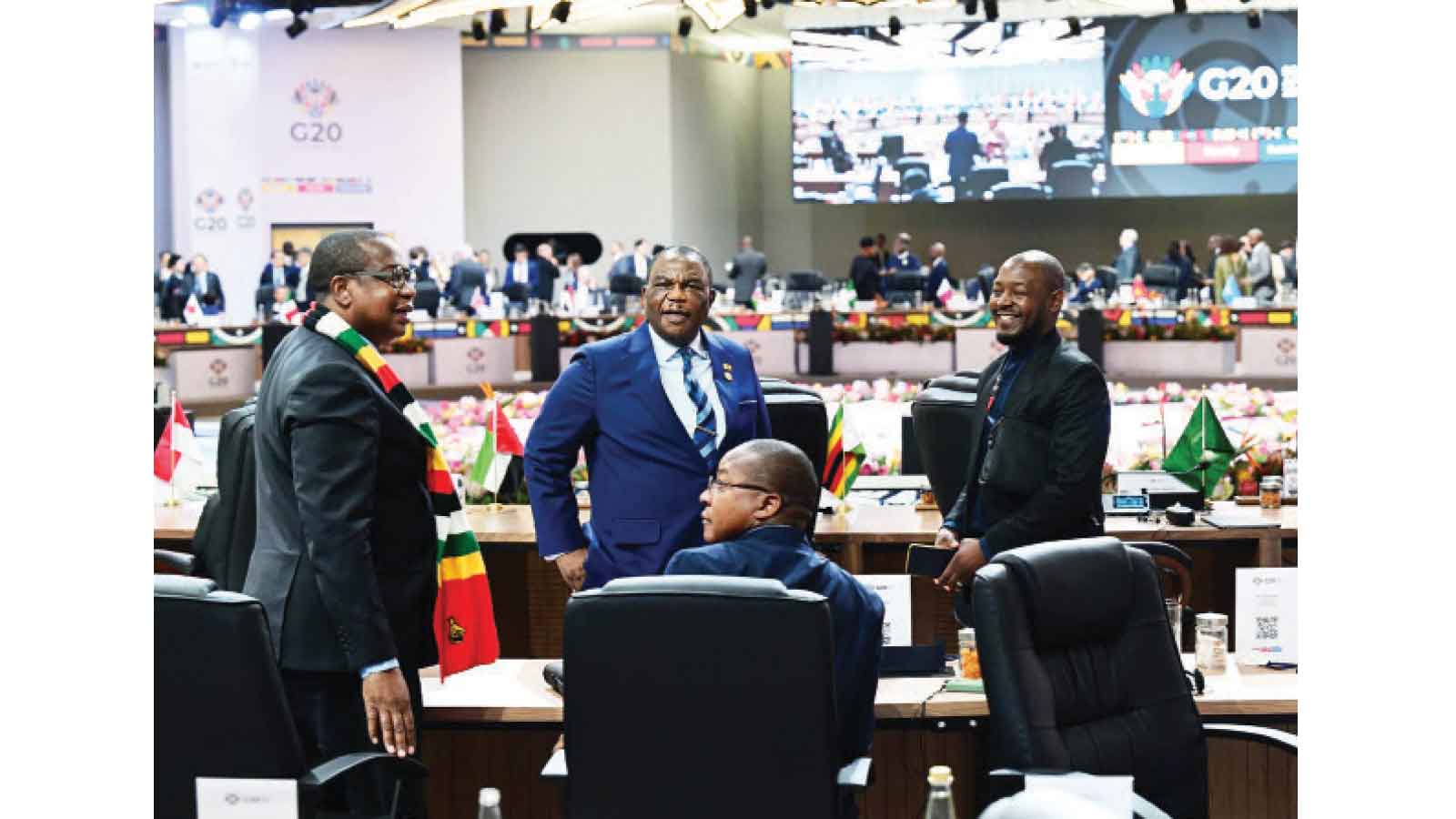
Mukudzei Chingwere in JOHANNESBURG, South Africa
THE current global economic transition towards a green and digital economy, leveraging strategic minerals such as lithium, cobalt, and rare earth elements, will be a failure if the Global South—supplying a significant portion of these minerals—fails to accrue commensurate benefits, Vice President Dr Constantino Chiwenga has said.
He was addressing world leaders gathered for the G20 leaders’ summit, where he is representing President Mnangagwa.
VP Chiwenga also warned against African countries being treated merely as spots for extraction without fitting value addition and development.
In its declaration, the Summit committed to establishing the G20 Critical Minerals Framework (CMF) to leverage critical minerals for sustainable development, inclusive growth, and resilience. Through this framework, the aim is to ensure that mineral-producing countries, particularly in the Global South, fully benefit from their resources, thus guaranteeing an inclusive and resilient global economy.
“As the world navigates the twin transitions towards a green and digital economy, our collective mandate is not merely to accelerate progress, but to ensure that this transformation is fundamentally inclusive, equitable, and leaves no one behind,” said VP Chiwenga.
“The global drive toward clean energy has correctly positioned critical or strategic minerals such as lithium, cobalt, and rare earth elements, among many others, at the core of the next industrial revolution. Many of these resources are found in the Global South, particularly Africa. Yet, a regrettable structural imbalance persists as mineral-rich African nations are often reduced to the extraction of raw materials, leaving gaping holes, while the essential value, jobs, and technology accrue elsewhere.
“It is unacceptable that the Global South bears the environmental and social burdens while the Global North captures the greater value through processing and advanced technology,” said VP Chiwenga.
He called for a commitment to local beneficiation and value addition, advocating for technology transfer that enables developing nations to progress beyond mere extraction to active participation in global manufacturing and innovation.
VP Chiwenga also spoke about the importance of establishing transparent and equitable value chains to ensure responsible sourcing and fair compensation for resource-rich countries.
“As we transform global industries, we must decisively place people at the centre of sustainable development,” said VP Chiwenga.
“Artificial Intelligence is undoubtedly reshaping the world, offering immense opportunities for increased productivity, innovation, and service delivery. However, if left ungoverned, it risks deepening inequality, displacing workers, and compromising data privacy.
“Artificial Intelligence must be a tool for human development, not for exclusion. Therefore, a shared responsibility to collectively develop global standards for ethical and transparent Artificial Intelligence is essential,” said VP Chiwenga.
He stated that the G20 must lead by promoting fair data use and accelerating technology transfer to the Global South.
“A fair and just future will not emerge by chance. It can only be built through decisive policies that fundamentally link critical or strategic minerals to decent work and digital innovation for social justice.
“Zimbabwe stands ready to collaborate with all partners to ensure that the green and digital transitions become true engines of inclusive growth. Let us build a future where prosperity is shared, technology is humane, and development is sustainable,” said VP Chiwenga.
South African President Cyril Ramaphosa stated that the declaration from the summit reflects a renewed commitment to multilateral cooperation.
“We have discussed how we can make the world a place where the aspirations of all people for a decent life, lived in peace and dignity, may be realised,” said President Ramaphosa.
“Today, we have adopted the Leaders’ Declaration of the G20 South Africa Summit, in which we outline the far-reaching actions we have agreed upon to build a better, more equal, and sustainable world.
“The Leaders’ Declaration is a profound affirmation of the value of multilateralism and the importance of dialogue. As the leaders of the G20 and Guest Countries, let us continue to walk this path together, guided by empathy, strengthened by cooperation, and united by the responsibility we have towards this generation and the many to follow,” said President Ramaphosa.
The Chief Executive Officer of the World Trade Organisation (WTO), Dr Ngozi Okonjo-Iweala, challenged Africa to strengthen its resolve and fully take charge of its critical minerals.