

 Chronicle Editor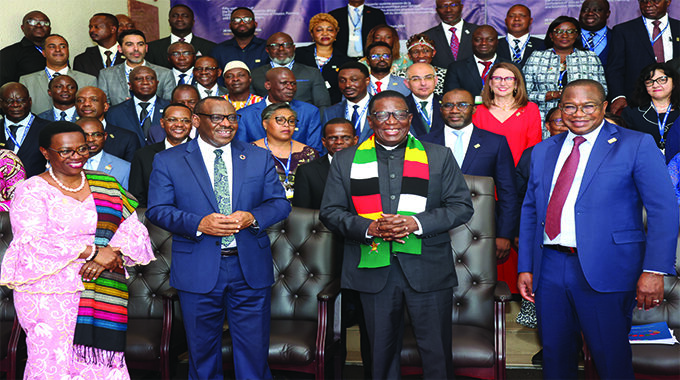
Mashudu Netsianda in Victoria Falls
AFRICAN countries should scale up investments in climate proofing, technology absorption, and adaptation towards building greater resilience of communities and nations against climate change while capitalising on the continent’s vast natural resources to grow local economies, President Mnangagwa said yesterday.
Zimbabwe has already taken bold and decisive steps to mitigate climate change through the adoption of the climate-proofed ‘Pfumvudza/Intwasa’ programme, which has proved effective in boosting yields at household level.
Increased investments in dam construction and revitalisation of irrigation schemes, are also being prioritised to increase food production outside rain-fed farming, promote aqua-culture, increase hydroelectricity generation, and mainstream processes for guaranteed food security.
Binding provisions to carbon credit management and policing of environmental degradation remain at the core of Government focus. The accelerated growth of Zimbabwe’s agriculture sector under the Second Republic, is also indicative of the country’s carbon credit base increase.
Officially opening the 56th Session of the United Nations Economic Commission for Africa (Uneca) Conference of African Ministers of Finance, Planning, and Economic Development in Victoria Falls yesterday, President Mnangagwa said building climate-resilient infrastructure is critical in driving green industrialisation that is inclusive, sustainable and eradicates poverty while creating more jobs.
“To this end, climate financing instruments must be leveraged to reap maximum benefits from the vast natural resources of the continent. As African countries, we have the weighty responsibility to boldly and decisively tackle the challenges faced by our respective economies,” said the President.

“We must look from within and among ourselves for solutions. We cannot afford to bury our heads in the sand. I, therefore, challenge you to pursue robust and innovative measures to unlock maximum benefits from our natural resources, which essentially starts with the sharing of ideas through deeper collaborations.”
President Mnangagwa said Zimbabwe has developed and is already implementing strategies and plans to curb the escalation of greenhouse gas emissions.
“To date, the National Climate Change Response Strategy has been adopted to provide a comprehensive and strategic approach to adaptation, mitigation, technology, financing, public education and awareness,” he said.
Through the Second Republic’s economic blueprint, the National Development Strategy (NDS1), Zimbabwe is increasing agriculture production and productivity, with emphasis on irrigation development, especially among communal and smallholder farmers.
Agriculture is the backbone of the national green economy hence the agro-ecological tailoring of Zimbabwe’s farming sector is also supporting industrial growth and resultant employment creation.
Through Statutory Instrument (SI) 150 of 2023, Zimbabwe has exhibited its dedication to regulating the carbon credit market and providing a legal framework necessary for ensuring sustainable environmental management and mainstreaming contribution towards global efforts to reduce or remove greenhouse gas emissions.
Zimbabwe has been actively participating in international negotiations on climate change and is among the first countries to sign and ratify the United Nations Framework Convention on Climate Change, followed by its ratification of the Kyoto Protocol.
In Southern Africa, the ongoing El Nino phenomenon is currently affecting weather patterns, with the agriculture and energy sectors negatively impacted.
“These realities necessitate structural shifts towards resource-efficient, non-polluting, equitable models of economic growth. Hence, it is commendable that this year’s session will discuss financing solutions, technology developments as well as policy options and opportunities for the transition to inclusive green economies in Africa, among other aspects,” said President Mnangagwa.
He said the adoption of multi-pronged pathways is thus crucial for inclusive green economies, which must not only aid in poverty eradication but also safeguard ecological thresholds that support human development, health, and well-being.
Africa must, therefore, remain cognisant that the movement towards clean technologies presents immense opportunities to unlock the continent’s huge natural resource and human potential, said the President.
“We must be proactive and mobilise financial resources from both domestic and international sources to facilitate the adoption of clean and low carbon technologies. While the climate change challenges we face remain immense, they are surmountable,” he said.
Africa accounts for less than five percent of the global greenhouse gas emissions and has natural environment capital that reduces the effect of carbon emissions.
Because of this, the President further challenged the Global North to bear the burden and face up to their responsibilities by honouring their commitments to realise the transformations needed on the climate action agenda.

On its part, he said Africa should leverage its vast forest resources to garner more finances for sustainable development.
“This includes leveraging on the increasing carbon markets, which are expected to keep growing. Let us capitalise on collaboration as African States to mobilise resources for financing our transition towards inclusive green economies,” said President Mnangagwa.
“Furthermore, whilst Governments have the mandate to deal with emerging challenges, businesses have the innovation, technology, and drive to deliver on the solutions we need. Programmes in this regard must be scaled up.”
Through investments in science, technology, and innovation, the transition to inclusive green economies must aid in the development of technologies that emphasise sustainability, resource efficiency, and emissions reductions.
The President said this must in turn facilitate and accelerate improvements in the economic and social well-being of people in Africa.
“No matter what difficulties may come our way, we must focus on a people-centred development philosophy that leaves no one and no place behind; one that builds synergies among nations and promotes balanced development across the continent,” he added.
“Together with unity of purpose, we can indeed build the ‘Africa we want’, ‘Brick upon brick, stone upon stone, and step by step.”
Noting how the world is undergoing major turbulence and transformations, mainly on account of production activities, President Mnangagwa said these, in turn, were negatively impacting ecological systems and social equity, resulting in imbalances between and within countries, while spurring climate change, biodiversity losses and non-inclusive growth.
As a result, he said the effects of climate change are increasingly constraining African countries from exploiting their rich natural resource endowments, in a sustainable manner, leading to diminishing returns along economic value chains.
“Heat waves, floods, tropical cyclones, and prolonged droughts are having devastating impacts on communities, economies and livelihoods. Large numbers of people, especially in Africa and the Global South in general are increasingly at risk of being thrown into vulnerability,” said the President.
The UNECA Conference of African Ministers of Finance, Planning, and Economic Development is one of the premier forums on the continent for dialogue and exchange of views among the African ministers and governors of central banks on issues pertinent to the development agenda of Africa.
This year’s conference runs under the theme: “Financing the Transition to Inclusive Green Economies in Africa: Imperatives, Opportunities, and Policy Options.”



 Blessing Chizhande
 Online Reporter