Online Reporter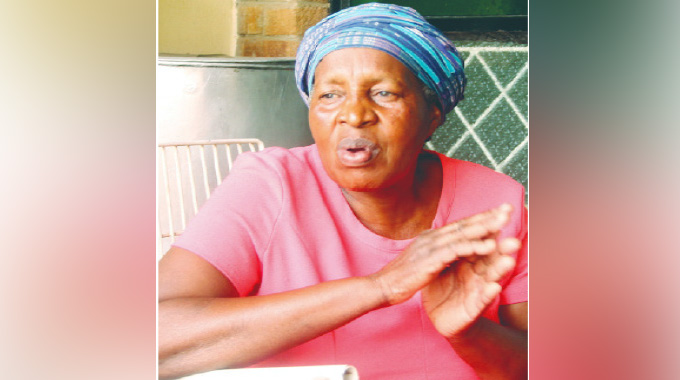
ON 19 October 1978, Rhodesian forces launched a deadly aerial and ground assault on Mkushi Camp, a facility for ZPRA female combatants, resulting in the death of hundreds of women freedom fighters. Some were captured in that assault. Among those captured during the attack was one of the female combatant instructors, Cde Phinah Sibanda, pseudonym Cde Mqandweni Godlwayo. As part of commemorating the 47th anniversary of that tragic attack, we republish the interview our Assistant Editor, Mkhululi Sibanda (MS), conducted with Cde Sibanda in November 2022. Below are excerpts from that interview. Read on . . .
MS: Let’s resume our conversation by taking us through your training programme.
Cde Sibanda: During our training, we covered various subjects such as topography, where we learnt how to use a compass, obstacle crossing, commissariat lessons, military communication, reconnaissance and so on. We were also taught how to set up an ambush, lay mines and handle weapons. After completing the very intensive training, I was selected to be among a group of 50 who were made instructors for the second intake. We began training the second group at Mkushi. I was in the medical corps and worked at the dispensary, which was staffed by seven comrades. It was during that time that I fell in love with Cde Kumbirai (Lucky Sibanda), who was one of our instructors at Mkushi. He is now my loving husband, we rekindled our relationship soon after independence.
MS: Let’s move on to the 19 October 1978 bombing. Take us through the events of that day.
Cde Sibanda: That day, around 11am, I was conducting a class as part of my instructor duties, teaching recruits medical lessons. Earlier, Kumbirai had suggested we go hunting, but I couldn’t as I was on duty. My company, D Company, had gone for breakfast though it wasn’t really breakfast, as it consisted of just isitshwala. On my way back from the kitchen, the bombing started. I quickly ran past an anthill (isiduli) heading towards the armoury, but it seems the enemy forces spotted me. Unfortunately, I was wearing the cream-coloured combat gear of the first group, which made me visible. A helicopter crew spotted me and started firing, but missed. As I ran past the armoury, I looked up and saw paratroopers being dropped. The entire atmosphere turned red, umkhathi waphenduka waba bomvu.
MS: What did you do at that point?
Cde Sibanda: I kept running westwards. The Rhodesians’ tactic was to drive us towards the raging Mkushi River so that some would drown or fall prey to crocodiles. As I moved west, I saw some comrades turning back to avoid the river and the encirclement by enemy forces. It was a desperate situation, we couldn’t jump into the river, yet the enemy was closing in. I changed direction too and dashed into a thicket, hiding among the shrubs. While hiding, I saw some girls who had been captured by the Rhodesian soldiers being marched in my direction. One of them spotted me and pointed, shouting, “Comrade Phinah, phuma sesikubonile.” One of the Rhodesian soldiers yelled, “Another terrorist, do you mind, John?” That’s how I was flushed out of hiding. I was surrounded by huge white soldiers, it felt unreal, like a nightmare. I had never imagined falling into Rhodesian hands, but there I was, staring death in the face. I could smell death. We were then force-marched to a spot where other captured girls sat under a tree. Despite them having surrendered, the Rhodesians, in their cruelty, shot them dead right in front of us, summarily executing defenceless captives. It was horrific. We waited for our turn.
MS: What was going through your mind as you watched your comrades being killed in cold blood?
Cde Sibanda: I was waiting for my turn. But honestly, when I saw the others being shot, my fear of death vanished. I wanted them to kill me, to end it so I wouldn’t have to witness more horror. After the shooting, they ordered us, three or four of us who had just been captured to carry their kits. I refused, saying they were too heavy for me. I wanted to provoke them into shooting me. We then passed the parade square and reached an area near the dispensary, where there was an anthill. About 10 of us were made to sit down. We were handcuffed. When the soldiers moved away, some suggested we hide inside pits near the dispensary. I and a few others refused, but those who entered the pits were killed when the Rhodesians returned and threw grenades inside. We later asked to use the toilet. They mockingly told us to relieve ourselves where we sat, still handcuffed and clothed. Then they lined us up again and pushed us down, shooting some of the comrades once more. After some time, they led us out of the camp, eight girls in total. We crossed Mkushi River and walked to their base, which had numerous drums of fuel, showing it was being used to refuel aircraft during the bombing. There we found Cde Ntatshana, our camp’s chief of logistics, tied to a tree, his hands and feet fastened so tightly that he couldn’t move an inch.
MS: So the Rhodesians left Mkushi with nine captives?
Cde Sibanda: Yes, eight girls and one man, Cde Ntatshana.
Among the captured girls were Sithabile and Samukeliso, who had trained at Mwembeshi. From that base, we were flown in a low-flying helicopter. On the way, we saw a man who appeared to be hunting; the Rhodesians shot him dead. We eventually reached what I believe was Kariba. The Rhodesians blindfolded us with black cloths and threw us into cells. They demanded that we reveal ZPRA’s strategies and threatened to throw us into Kariba Dam if we refused. They were rough but didn’t beat us excessively, mostly kicking us with their boots.
One injured girl died in the cells due to lack of medical attention. After several days, we were flown out again, then transferred into a car. We were now seven girls and Ntatshana. When they finally removed our blindfolds, we saw a sign reading Essexvale, now named Esigodini. There, we found another captured guerrilla being severely beaten. From Esigodini, we were blindfolded again and transported in a car with tinted windows to Bindura in Mashonaland Central Province, where we were held.
MS: How was it in Bindura?
Cde Sibanda: Security was extremely tight. Captured guerrillas from both ZPRA and Zanla were kept there. Others told us that people taken away in a certain car never returned, the Rhodesians killed them. Later, I was made to assist Cde George, a captured Zanla combatant, in providing medical care to other captives. Although the Rhodesians harassed us for information, one senior soldier defended us, saying we were too young and too far from the senior command to know ZPRA’s strategies. When Cde George escaped from captivity, I got into serious trouble, the Rhodesians accused me of helping him. Eventually, Samukeliso and I were transferred from Bindura to Bulawayo, where we were kept under tight guard at a house in Lockview. Their aim was to recruit us into their spy network. They would take us to public places to identify guerrillas.
MS: What happened next?
Cde Sibanda: That’s when a dramatic incident occurred. A member of Zapu’s intelligence unit (NSO), Cde Tafara, together with a colleague whose name I can’t recall, staged a daring rescue. The Rhodesians had left us unattended, and Tafara came in movie-style and whisked us away. It was a typical guerrilla operation. It seems our intelligence unit had been searching for us and carried out the dramatic rescue in Bulawayo. I was then taken to the home of the late Alderman Nick Mabodoko, a former Bulawayo Mayor, businessman and Zapu member. From there, I was moved to Mabodoko’s farm at Dundubala along the Bulawayo–Victoria Falls Road in Umguza District, where I stayed in hiding until the ceasefire. The Rhodesians searched for us, but in vain. After the ceasefire, I reunited with my family. Later, when I visited Gwayi River Mine Assembly Point to see my brother, Phebion Ncube Malaba, who had also joined the struggle, I was pleasantly surprised to find Kumbirai there. He had thought I was dead. We rekindled our love, demobilised and transitioned to civilian life in 1982.
MS: From the military, what was your next move?
Cde Sibanda: In 1983, I enrolled at St Pius in Njube, Bulawayo, under a scheme for ex-combatants, to resume my education. Besides formal secondary education, I also studied bookkeeping, typing and office work. I had wanted to train as a nurse, but marriage made that difficult. My husband and I decided to start a business, which we managed together. Our marriage has been blessed with five children — three sons and two daughters. At present, I’m involved in the War Veterans League in Ward 18. We also own a plot at Lochard in Insiza District, where we do farming.