Chronicle Editor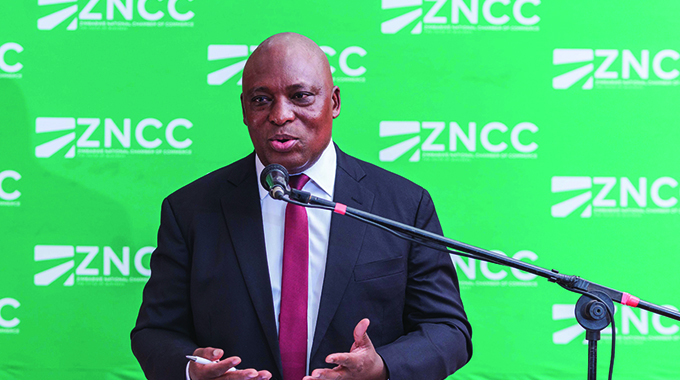
Harare Bureau
THE Reserve Bank of Zimbabwe (RBZ) says there is no justification for the domestic market to continue to experience the challenge of shortage of change given that the central bank has released a cumulative 55 million worth of Zimbabwe Gold (ZiG), including small notes and coins, since the new currency was introduced on April 5 this year.
RBZ Governor, Dr John Mushayavanhu yesterday said the apex bank had released into the market notes and coins enough to meet the needs of the travellers, especially for small change purposes.
Dr Mushayavanhu said he had a schedule that showed that every branch of the banks in Zimbabwe had adequate stocks of both ZiG notes and coins, yet change remained a huge problem across the domestic market.
He said this when he met stakeholders from the public transport sector at his offices in Harare to share notes on the challenge of small change in the domestic market and explore solutions to address the sticking issues.
The meeting was a first of its kind between the bank and key stakeholders in the public transport sector.
Representatives came from the Greater Harare Commuter Association (Ghaco), Harare Youth Transporters Association (Hayta), Integrated Taxi Rides Association (Itra), Bulawayo United Passenger Transport Association (Bupta), Bulawayo City Transit, Tshova Mubaiwa and Vuka Uzimele Transport Association (Vuta), among others.
Ministry of Transport and Infrastructural Development’s Chief Director-Transportation Systems Development and Management, Dr Loveness Masuka, also attended the meeting, along with the Acting Commissioner of Road Motor Transportation, Mr Dzingai Mafusire.
Dr Masuka said their presence at the meeting demonstrated the Government’s commitment to addressing the challenges in the public transport sector and ensuring a conducive environment for private operators to thrive at a time when the Government is incapacitated to provide adequate mass public transportation services.
Dr Mushayavanhu said the bank had doubled down on efforts to ensure the wider distribution of notes and coins across the economy to alleviate the challenge of shortage of change, which has been linked to limited availability of cash, especially small denomination notes and coins.
The limited availability of small denominations and coins has resulted in higher costs of transportation and the use of unsafe alternatives such as unverifiable coupons, which pose the risk of fraud to desperate and unsuspecting travellers.
Amid the change crisis, the public is also being ripped off as they are being made to pay 10 ZiG as the equivalent of US50 cents for short trips yet given the official rate of about 13,40 ZiG/US$1, 10 ZiG equates to roughly US70 cents.
Even some reputable businesses have seized the opportunity around the limited availability of change in the market to force customers to spend beyond their budget or accept inconvenient alternatives.
However, Dr Mushayavanhu said it was baffling to hear that the market was experiencing problems of small change when the central bank had given all banks enough stocks of small notes and coins to meet the demand from the public.
“As the central bank and as monetary authorities, we are concerned with reports that we are getting where the issue of change has become a topical issue. We are told that fares have been increased to round them up to a dollar for a trip that should cost US50 cents.
“We are also told that sometimes people are being paired with strangers so that the two of them pay a dollar and they will sort themselves out when they disembark.
“Obviously, as monetary authorities this is something that worries us. What we would like to say to you is that we have minted and printed enough notes and coins for the public to be able to pay you what is the equivalent of a journey, which is 50 cents if it is a short journey or Seven ZiG if the person is paying in ZiG.
“So, we do not understand where the problem currently emanates from. We have given banks the currency that they need and we expected that you, as the transport operators, would go to the banks and get the money so that you can give your commuters change.
“It was also our expectation that the commuters would go to the banks and withdraw enough money for them to be able to pay for a single fare, but we do not know where the wheels have fallen off.
“Last week, we had to introduce additional measures where we requested Homelink to implement, with effect from today (Monday), what we call swipe for ZiG facility to try and extend and increase the distribution points for ZiG,” he said.
Unfortunately, the central bank Governor said, the arrangement was decontextualised through social media to mean the central bank was trying to disintermediate banks.
Dr Mushayavanhu said the central bank was only attempting to complement what banks were already doing or supposed to do.
“We have given the banks the money, but the money does not seem to be moving,” he said.
“The next stage is that we should find other means of making sure that the ZiG notes and coins find their way to the public. So, we are really concerned about this issue and we would want to hear from you as the people who are interacting with the commuting public to say; where is it where the wheels have fallen off? What is it that we can do to make sure that we do not inconvenience the travelling public?”
Under normal circumstances, Dr Mushayavanhu said members of the public who require ZiG notes and coins should be able to approach any bank and request cash in exchange for their ZiG balances.
Passenger Association of Zimbabwe national co-ordinator, Tafadzwa Goliati, said from the survey they did in many parts of the country, they discovered that the biggest challenge was access to small notes and coins.
“We did our own survey, including in rural areas and discovered that change is a problem. Also, the 10 ZiG denominations were only available in very limited amounts, the banks did not have the cash as well.
“We think the Governor should send officials (from the bank or Homelink) with the cash for distribution around public transport termini, starting with a pilot project in Harare and see what the uptake would be like because every day we hear stories about fights over change.
“Some of the disputes turn fatal and operators at times get assaulted over change disputes. In other instances, passengers are given fake coupons made by unscrupulous people taking advantage of the change issues, which are rejected by operators over things like incorrect signatures.
“Since authorities banned illegal money changers, who have since disappeared, we request officials from Homelink to go to the bus termini in the mornings and afternoons so that people can get change,” said Goliati.



 Online Reporter