

 Online Reporter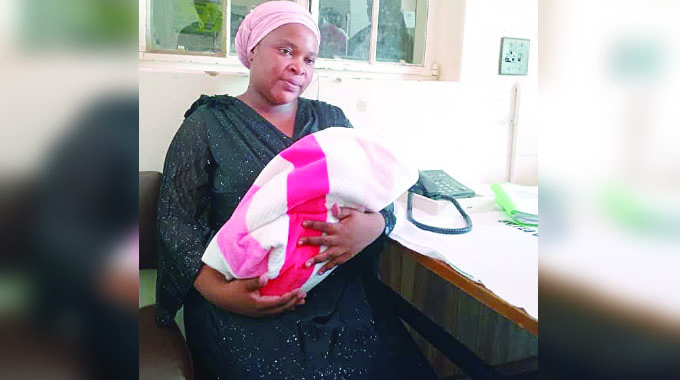
Robin Muchetu, Senior Reporter
MEDICAL experts say the 405 grammes baby born at United Bulawayo Hospitals (UBH), is one of the extremely rare cases of severe premature survival in the world as a majority born this early do not survive due to their size.
“We have never had a baby less than 1 000g survive at UBH,” said a doctor.
Current data available notes that the survival of such babies weighing 400g and below is very uncommon, with the earliest record of the world’s tiniest baby having been reported in the USA, weighing 373g in 1936 and the latest record being from 2024, also from the USA, weighing 285g.
Baby Christwish Chingini was born on 30 November 2024 at 28 weeks, weighing just 405g and miraculously survived and was on Friday afternoon discharged from UBH weighing just over 1 800g.
An average full-term baby weighs about 2 500g.
The baby was delivered via Caesarian section. The hospital said the mother could now take care of the baby away from the institution, despite the baby still being relatively small.
Confirming the birth, Matron Thandeka Thaka from UBH, in charge of Lady Rodwell Maternity Home, said the baby, aptly named Christwish, is a success story.
“We are excited as an institution, especially as Lady Rodwell Maternity that this is a success story. She was born severely premature. A mother is supposed to be 40 weeks pregnant for her to deliver, but she was delivered at 28 weeks plus six days. The baby has been with us for about four months. It is a touch and go for a baby that small because everything is underdeveloped, lungs, breathing pattern, feeding pattern and everything else. When the baby is now going home like this, we are pretty excited,” said Matron Thaka.
She said while they do not credit themselves solely for the baby’s survival, she said the institution’s staff worked hard to ensure the baby was kept alive and safe.
“It is a milestone for UBH,” she said gleefully.
She said they aimed to discharge the baby at 2 000g weight, but they had to reach a compromise as the mother had been in hospital for four months and wanted to be discharged. She is a primary school teacher at a local school.
The mother, Ms Rachel Mhlanga, presented at UBH already in preterm labour and delivered on the same day.
The baby was supported by the Continuous Positive Airway Pressure machine, which kept her breathing airways open until she could breathe on her own.
Upon being discharged, the baby was taken through a transfontanelle ultrasound scan to rule out hydrocephalus, owing to its small size and the results proved that indeed she was in the clear.
Ms Mhlanga was relieved to have been discharged after the long hospital stay.
“I am happy to be discharged, I thank God because alone we would not have done it. I am happy with the help and care we received from UBH. My blood pressure was too high when I came to the hospital and I was told they could not wait any longer but to deliver me for both our safety.
“A scan revealed that my placenta had ruptured and there was no amniotic fluid protecting the baby and that the baby was too small. I was immediately operated on, as there was no way the baby was going to grow devoid of the fluid,” she said.
The hospital informed her that they would deliver the baby but outcomes were uncertain and she agreed.
“I assumed the baby had died as it was too small, but to my surprise when I came to the special care unit, I found her alive. The baby grew after that, I was also delighted when I started seeing progress to the point where she was removed from oxygen. It was not an easy process, but I stayed optimistic. The nursing staff worked very hard in supporting me emotionally, which was critical for me at that time.
“They uplifted me a lot and I am grateful,” she said.
When the baby was delivered, they could not ascertain the gender as it was undeveloped, which traumatised the 30-year-old mother, who had never experienced such.
In January 2025, the doctors discharged Ms Mhlanga, but the baby remained under special care and she would spend the day at the hospital and leave the baby overnight with the nursing staff.
“I then returned to the ward and have been here for a month doing kangaroo care. Today, she is 1 810g, she was feeding via tubes. She only started breastfeeding at 880g,” she added.
Ms Mhlanga has two other children who were full-term babies. She had nothing but warm words for her husband who she said visited them daily at the hospital, offering support during her difficult time.
Dr Tonny Nyamutowa, a specialist paediatrician and the Head of Department in the Paediatrics Department at UBH, who is the doctor who was attending to the child said the birth and survival is indeed a miracle.
“It is a milestone for UBH and Zimbabwe to have a baby of 405g surviving, as you know, pre-term babies have their challenges as they come before their time. These are breathing problems because of underdeveloped lungs, low blood, infections, the immune system not that strong and they may develop feeding problems, but I would like to congratulate the team in the nursery for such a sterling job, staying with the patient for 115 days and on oxygen for three months. Above all, there is God who takes care of us and gives us the wisdom to take care of these patients,” he said.
He attributed the success story to teamwork in the nursery saying he was also assisted by Dr Nyashadzashe Chasawuka who was manning the nursery during the period the baby was born and the nurses and matrons who also played a critical role in managing the baby.
Dr Nyamutowa applauded the mother of the baby for her perseverance and patience throughout the long journey, saying it was not an easy wait.
He said UBH is a force to reckon with for mothers who want to deliver their babies there saying they are geared up for any challenges.
He also highlighted that the survival rate of such babies is extremely low worldwide.
“The survival rate of these babies is very low, even in first-world countries, most of these babies do not make it. This baby here responded well to medications, which added to its survival. Such cases do happen, of extremely low birth weight children but their survival is not so good. This case is historic not only to UBH but the whole nation and world,” he said.
— @NyembeziMu.


