Nyore Madzianike-Senior Reporter
GOVERNMENT’S Rural Development 8.0 programme is placing guaranteed water access at the centre of efforts to industrialise rural communities, reduce poverty and drive economic transformation in line with Vision 2030.
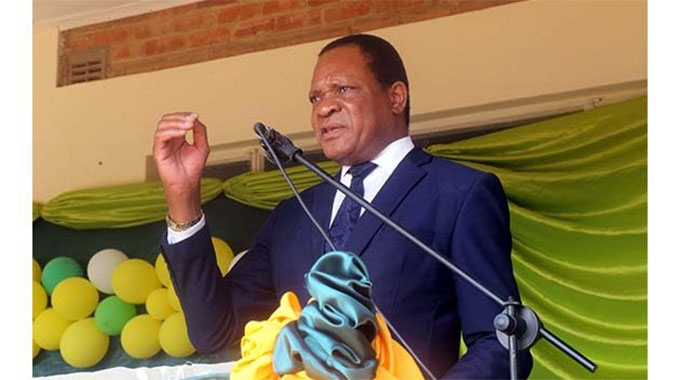
This was said by Lands, Agriculture, Fisheries, Water and Rural Development Minister Dr Anxious Masuka while responding to questions in the National Assembly on Wednesday.
He said the Presidential Rural Development Programme recognises water as both a constitutional right and a critical economic enabler capable of unlocking productivity, food security and income-generating opportunities in communal areas.
“It is in this context that water, as a constitutional right and as an economic enabler, is being provided in villages across the country,” he said.
Government has set an ambitious target to drill 35 000 boreholes across 35 000 villages nationwide, with priority being given to the drier agro-ecological Regions Four and Five, which are more vulnerable to drought and climate variability.
“The target is to drill 35 000 boreholes in 35 000 villages, but the prioritisation in terms of policy is starting with the drier areas in Regions Four and Five. Resources permitting, we should have completed that drilling in those regions,” said Dr Masuka.
He said the strategy gained urgency following the severe 2024 drought — described as the worst in nearly four decades — which prompted Government to introduce drought mitigation centres focusing on the most arid districts.
Implementation of the drilling programme is coordinated through a decentralised framework, with Ministers of State for Provincial Affairs and Devolution overseeing stewardship and monitoring, while technical execution is handled by the Zimbabwe National Water Authority (ZINWA), which compiles drilling plans and site selections.
On regulatory compliance, Dr Masuka explained that existing provisions under the Zimbabwe National Water Authority Act and the Water Act require prior notification before water abstraction.
“Yes, in terms of the existing Zimbabwe National Water Authority Act and also the Water Act, you have to inform the regulator that indeed you want to abstract water so that if there are any impediments to the quantities that you want to abstract, they will be able to relay that,” he said.
However, Government is reviewing both pieces of legislation to align them with the accelerated drilling programme and emerging technological capabilities.
“We are currently reviewing both the Zimbabwe National Water Authority Act and the Water Act in light of the accelerated drilling programme that we are undertaking.
“We are waiving that notification requirement because we now have technology that will enable us to know where drilling has taken place without physical notification. So that is in transition now,” he said.
Minister Masuka told legislators that as of December 2025 Zimbabwe had 53 000 watering points, including 41 000 boreholes.
Of these, 4 807 boreholes have been drilled under the Presidential Rural Development Programme, with 1 700 converted into Village Business Units — integrated rural production hubs — of which 1 200 are already complete.