Chronicle Editor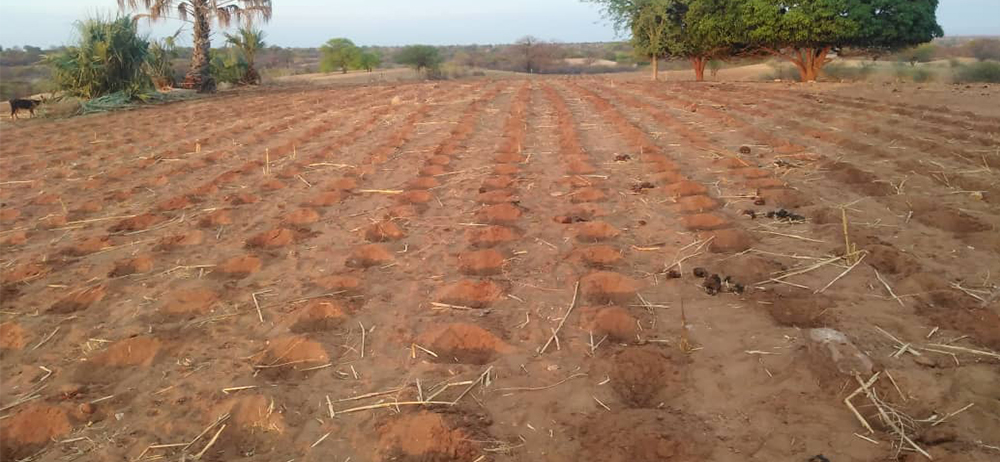
Leonard Ncube [email protected]
DRIED up and broken down boreholes, compounded by the unavailability of alternative water sources such as dams, characterise some parts of Binga District where each homestead is reportedly being restricted to two buckets of water per day from few available boreholes.

For example, Tinde ward has eight villages with a population of 5 516 people according to Zimstat 2022, and all depend on 27 boreholes that are either broken down or less effective leaving villagers facing critical water challenges.
One of the villages, Mpati, in the same ward, has no single borehole because of the hilly terrain and villagers walk long distances to fetch from neighbouring villages for domestic use and watering livestock.

The whole of Binga, with 25 Wards and a total of 159 982 people, 72 393 of them male and 87 589 female, faces a critical shortage of water despite proximity to the Zambezi River.
“People take turns to fetch water from boreholes. They get at least two buckets per day, some fetch in the morning, others in the afternoon and some in the evening so that everyone has access to the little available water,” said Tinde Ward 18 Councillor Akubhekisizwa Mathema in an interview.
He added: “Villagers understand the crisis hence they know they have to give each other a chance.”

The Partnership for Social Accountability (PSA) project that focuses on Sexual Reproductive Health Rights (SRHR) and is being implemented by Basilwizi Trust, a non-governmental organisation operating in Binga, has given a lifeline to some youths through gardening projects.
PSA was initiated in January 2020 in partnership with SafAids, Action Aid Zimbabwe and Voluntary Media Council of Zimbabwe (VMCZ), with a focus on sustainable livelihoods, food security, agriculture, empowerment for women and youth, linkages to local markets and value chains.
The PSA mentorship programme is being implemented across five Southern African countries.

Locally it is being done in Binga and Mutoko, targeting a cross-section of the community, including youths between 14 and 24 years.
Basilwizi, the implementing partner, is undertaking the project in Sianzyundu Ward 9, Simatelele Ward 8, Saba-Lubanda, and Tinde ward, working with traditional leaders, local authority, Ministry of Health and Child Care, Ministry of Primary and Secondary Education and media through VMCZ.
Armed with skills from the mentorship programme, one of the mentees, Ms Exodus Munkuli (24) from Siameja Village, Saba Ward 9 established a keyhole garden where she is growing various kinds of vegetables.
The unique key-shaped garden at her parents’ homestead was flourishing when journalists visited the village in July under a VMCZ and Basilwizi media tour aimed at capacitating journalists with skills for social accountability reporting, strengthening watchdog role and fostering a more informed and empowered citizenry.
Then, Ms Munkuli would ride a bicycle laden with a 20-litre container to get water 7km away to water the garden.
The scorching Binga sun and long queues at Siameja village’s only water source did not deter Ms Munkuli who would wake up before the first rooster crows, determined to beat the rush and secure life for her vegetables, tomatoes, carrots and okra.
She needed eight 20-litre buckets to nurture the garden and would strap a crate to her bicycle carrier, down the path to the community water tap.
Sometimes she would ride more trips to water her sheep and goats.
While the garden still exists, a shortage of water has affected the crop.
With its innovative design — a raised bed with a central reservoir for water retention — the keyhole garden stands as a symbol of Ms Munkuli’s resilience, a demonstration of her resourcefulness in the face of climate challenges.
The keyhole design, with its central reservoir for water retention, is particularly apt given Binga’s scorching climate.
More importantly, it represents the seeds of hope she’s planting — for herself, her community and a future brimming with self-reliance.
Ms Munkuli started the keyhole garden in 2020 after joining the mentorship programme, when many were idle due to the Covid-19 lockdown.
Instead of buying goodies using money she got from attending workshops, she bought goats and sheep which have multiplied to more than two dozen.
The ordinary bicycle from the Basilwizi Trust mentorship programme is a valuable tool for her work. Her father and mother, both community health workers, also received bicycles through the programme.
“Water is a challenge but the garden is still there. We now get water 15km away and my parents have joined in to help me. The three of us ride to the tap put by Whitestone Pentecostal Church about 15km away to get 6 to 8 buckets and we do this twice a week.
“We wish we could get a solar-powered borehole and a jojo tank at home so I can expand my garden and make it commercial. We have a ready market at Sianzyundu Business Centre but for now, we only produce for home consumption because of lack of water,” said Ms Munkuli.
Ms Munkuli is a true pathfinder and attributed the challenges to the failure by authorities to provide services.
Not only is she the sole owner of a keyhole garden in the Saba area, but she’s also the only young woman to venture into livestock farming in the community, owning over two dozen goats and sheep.
She has fallen victim to human-wildlife conflict after hyenas were part of her flock.
She is undeterred either by climate change, predators or lack of water as she closely shepherds her flock while tending her garden, and Intwasa/Pfumvudza plot.
She is an inspiration to her community and urges young people to take charge of their destinies and embark on self-reliant projects.
To her, being part of innovative networks is key, especially in a district that suffered historical imbalances due to marginalisation.
“Our leaders are aware of the water challenge but they have done nothing. We need a dam as a solution. I have received much support from Agritex who trained me on keyhole gardening, especially with design and layout guidance,” said Munkuli.
In a community where teenage pregnancy and early marriage are prevalent, Munkuli’s path is an anomaly as she rejects the notion of relying solely on handouts, driven by a burning desire for self-sufficiency.
The second-born in a family of three, she defies expectations with a vision to become an agricultural teacher and a beacon of hope for her community, empowering others to achieve food security.
She urged young people to be self-reliant even in the face of climate change, societal pressures and historical marginalisation.
“I had no experience with SRHR services, how to educate others and how to conduct outreach sessions to my peers. Through this project, I have learnt to choose what’s right for me. I now participate in community activities and attend village meetings,” said an empowered Munkuli.
Another mentee from the same programme, Ms Lithini Moyo (20) from neighbouring Tinde Ward 18, lost her flourishing vegetable garden to drought two months ago.
She is part of a group of 25 young people empowered through PSA in Tinde, and with nine others, they started a vegetable garden, waking up as early as 4am to draw water from the Tinde River.
For Ms Moyo, the garden was a source of livelihood for her one-year-old daughter and addressed food security and income in her family.
The collective effort in the garden exemplified the power of community and resourcefulness in the face of adversity.
She appealed to authorities to build a dam for the community.
“We lost all our vegetables after the well dried up in July. The council has not done anything on the water issue. We need boreholes and even a dam for sustainable water supply and unlock agricultural value.
“With water, we can produce and sell our vegetables as far as Kamativi where there is a ready market because of the mines. After losing my garden I have decided to embrace Intwasa farming for the first time and I have prepared three plots as we wait for input distribution. We have been trained by agricultural extension officers but we are let down by the unavailability of water. I think authorities should seek partners to drill boreholes. They should also invest in dams to do away with this crisis,” said Ms Moyo.
She said the PSA programme has capacitated young people with SRHR knowledge and reduced teenage pregnancies, early child marriages and school dropouts.
The PSA project aligns with National Development Strategy 1, especially on capacity building, youth, women and community empowerment, accountability, building partnerships and monitoring as the Second Republic drives towards Vision 2030.
It also helps the country achieve Sustainable Development Goals.
Basilwizi Trust director Mrs Danisa Mudimba said the programme capacitated youths to participate in decision-making, especially in budgeting and service delivery.
She recently led the youth network to Harare for a national budget engagement and expressed concern about the lack of monitoring and evaluation of local and national projects.
She said climate change was affecting food security hence the need to build resilience.
“We advocated for uptake of SRHR issues by young people and we have noticed that uptake keeps improving each year. There was a 35 percent increase between April and June this year from around 1 385 youths to over 2000. This is because of the awareness,” said Mrs Mudimba.
She implored young people to actively participate in budget meetings and local authorities to be accountable to the community by fulfilling promises.
Mrs Mudimba said the community was happy because they participated in the ward budget consultative meeting in Simatelele on 18 October and Tinde for the national consultation last month.
“We encourage local authorities to do awareness campaigns before rolling out budget consultation meetings so that no one is left behind, in line with the national agenda. What is missing is the oversight role, we need quarterly district or ward review meetings, monitoring and evaluation to assess the performance of the budget. We are grateful the Office of President and Cabinet has been periodically monitoring Government projects and this has given traction to some of the projects such as the Civil Registry office. At least we are seeing change from the time we started the PSA programme,” she said.
Mrs Mudimba said Binga needs more extension workers, about three per ward, as most wards have a single officer instead of the required three to educate communities, especially on Intwasa and improve food security.
She said community participation is key to community and national development.
She appreciated the media for playing a crucial role in highlighting SRHR and community issues and VMCZ for helping build relations.
She said gender-based violence, teenage pregnancies, early marriages and climate change-induced drought are some of the challenges, with poverty the main driver as girls become more vulnerable.
Tinde Ward 18 councillor Akubhekisizwa Mathema acknowledged the crisis but said the local authority has platforms for engagements.
He said the council pins hopes on partnerships with development partners like Amalima Loko who have water and sanitation programmes in the district.
“We need dams as a permanent solution. The nearest weirs are almost drying. We are grateful that the national budget team visited Tinde recently and these issues were raised by the community which expressed concern that they will not benefit from the nearby Gwayi-Shangani Dam which targets to supply Bulawayo,” he said.
Ms Sithembinkosi Phiri, an Agritex officer in Tinde ward encouraged young people to be actively involved in community projects and embrace the Intwasa/Pfumvudza model.
She bemoaned over-reliance on rain-fed agriculture due to the unavailability of dams.
Ms Phiri urged communities to grow small grains which are resilient to drought.
“We have serious water challenges as there are few boreholes in Tinde. A majority of them are non-functional hence we wish they could be fixed and new ones drilled. Weirs in Tinde and Manzasya are silted, so we need alternative methods of water harvesting,” she said.
VMCZ national programmes officer Ms Caroline Kuhudzai praised media for the crucial watchdog and social accountability role, adding that the PSA project had helped media to bridge the gap between communities and decision-makers, highlighting local needs and holding stakeholders accountable, ensuring transparency and responsiveness in governance.
“By investigating and reporting on issues that affect communities—such as resource allocation, public service delivery, and policy implementation—the media holds institutions and leaders accountable for their actions.
“In Binga and Mutoko, the media has played a significant role in driving development by raising awareness on issues related to resource access, infrastructure, markets, and services,” she said.
Ms Kuhudzai said there has been increased responsiveness to community challenges as shown by positive outcomes in both awareness and action on development issues.
She said the PSA approach has not only informed the public but also fostered meaningful engagement and accountability that directly benefit the community.
-@ncubeleon


 Online Reporter