Online Reporter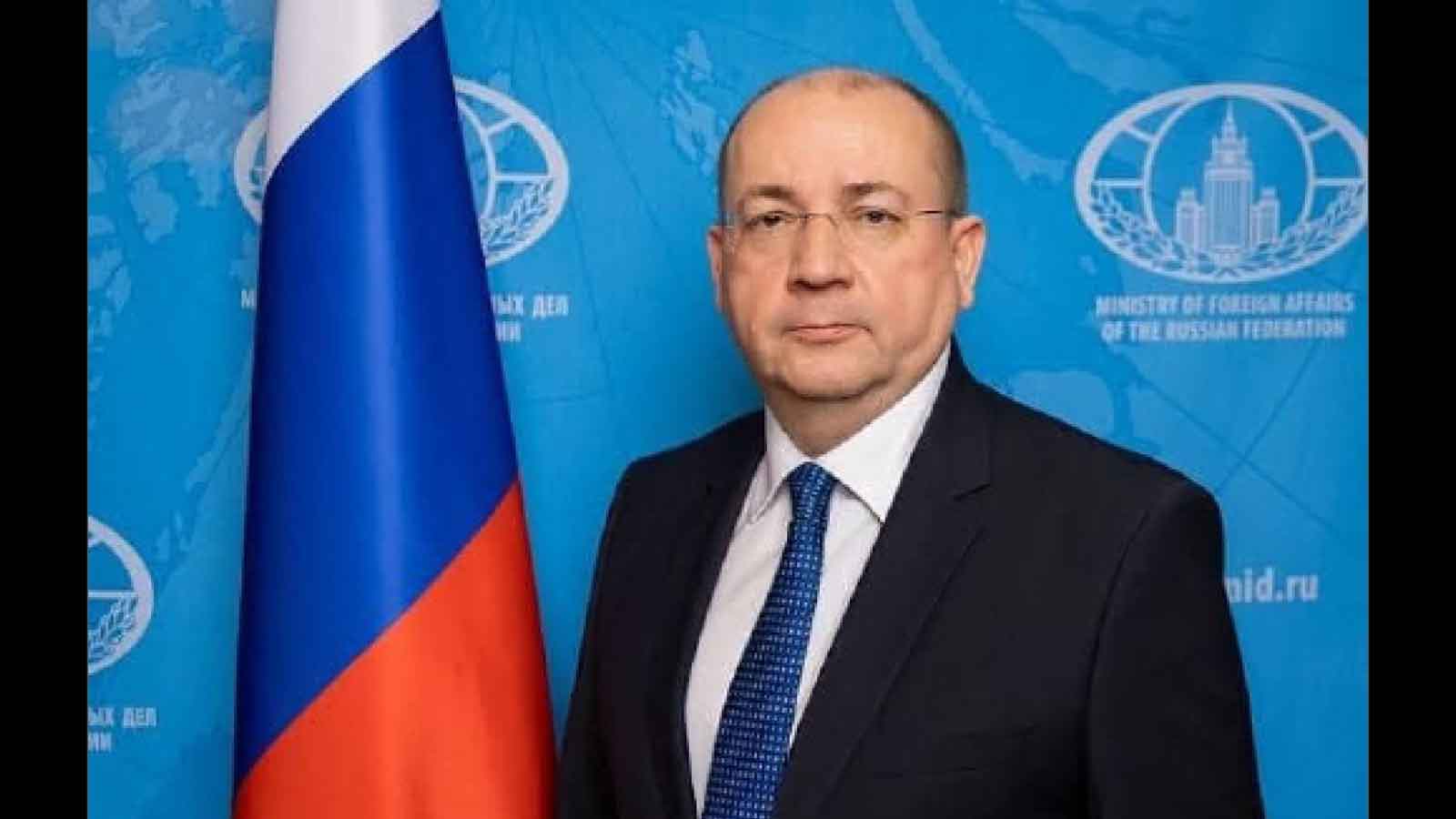
ZIMBABWE and Russia are consolidating their relations across various sectors, and at next month’s Third Russia-Africa Summit and Economic and Humanitarian Forum 2026, the two countries are looking forward to discussing the launch of new projects in Zimbabwe. Ambassador of the Russian Federation to Zimbabwe Sergei Berdnikov (SB), in an interview with Zimpapers Politics Hub’s Gibson Nyikadzino (GN), opened up on the future of Zimbabwe-Russia relations.
Below are the excerpts:
GN: What is the current state of economic relations between Zimbabwe and Russia, considering the vast economic opportunities both countries offer across various sectors?
SB: I would like to underline that we are seeing a trend towards bringing Russian-Zimbabwean relations to a new level of practical cooperation. While our bilateral political ties have historically been robust, both Governments are actively focused on expanding investment and financial mechanisms to match that political goodwill with concrete economic outcomes.
In recent years, our bilateral relationship has progressively expanded into a broad-based economic partnership through active cooperation across agriculture, fertiliser supply, mining, energy, education, science and technology.
My priority as the Ambassador is to strengthen relations between our brotherly nations and expand practical interaction across key sectors.
GN : Which key sectors are advancing the momentum of ties between the two countries?
SB: For example, recent initiatives such as establishing institutional links between commodity exchanges like the Saint Petersburg International Mercantile Exchange (SPIMEX) and the Zimbabwe Mercantile Exchange (ZMX) are setting the foundation for direct exchange-based trade and alternative settlement channels.
We have extended invitations to the relevant Ministers to participate in the Russia-Africa Economic and Humanitarian Forum, which will take place on the sidelines of the Third Russia-Africa Summit on October 28-29, 2026.
We expect that this direct engagement will impart momentum to the advancement of economic ties, drive trade growth and pave the way for substantive agreements on projects that serve the mutual interests of our nations.
GN : Zimbabwe formally applied to join the BRICS economic bloc, and Russia strongly supports Harare’s integration aspirations. What mechanism, as allies, can you present through BRICS to align your aspirations with multipolar global governance principles, considering that Zimbabwe joined the BRICS New Development Bank?
SB: Russia views Zimbabwe’s integration into the BRICS framework as a natural alignment with shared principles of multipolarity, sovereign equality and equitable economic development.
Following Zimbabwe’s formal admission into the New Development Bank, Russia and other member states could provide institutional support to help Harare access non-conditional, long-term financing.
This mechanism would target infrastructure development, energy security, digital transformation and industrial value addition, bypassing Western regulatory mechanisms.
Russia and other BRICS members advocate a greater role for developing countries in global governance and international institutions, and we could provide support for Zimbabwe’s participation in working groups, forums and summits.
GN: What steps are being taken to implement recent memoranda of understanding (MoUs) signed in mining, agriculture and infrastructure? Are there challenges that need to be overcome to ensure the smooth implementation of the MoUs?
SB: Our esteemed Governments are actively moving from the formal signing of documents to practical execution through dedicated, practice-oriented roadmaps.
Rather than allowing these MoUs to remain static documents, joint inter-agency working groups are already establishing clear milestones, project pipelines and legal frameworks across energy, infrastructure development, sports, education and so on.
Through this continuous direct coordination, our teams are turning MoUs into real projects that deliver tangible results for the benefit of both nations.
We are expecting that the Third Russia-Africa Summit will become a major platform for signing a series of bilateral documents.
GN: Are there new Russian private investments planned for Zimbabwe’s energy and mineral sectors? If so, which energy and mining projects are Russian companies embarking on?
SB: In the context of deepening strong and cordial relations between Russia and Zimbabwe, the emphasis is being placed on projects in various spheres of economic cooperation and social development through the joint efforts of State-owned and private companies.
I foresee new Russia-Zimbabwe projects under way in mining, agriculture, healthcare and education.
Unlike models centred purely on raw resource extraction, current Russian private and State-backed investments in Zimbabwe operate primarily through equity partnerships with local State-owned enterprises, strictly adhering to national mineral beneficiation policies.
For the mining sector, joint ventures with a deep domestic processing orientation remain a key driver.
ALROSA, the world’s largest diamond producer, together with the State-owned Zimbabwe Consolidated Diamond Company, continues large-scale geological exploration work.
Also, there is ongoing inter-governmental cooperation with the world-leading Russian company Rosatom on research into the possible implementation of small-scale nuclear power plant technologies, which are capable of providing autonomous and stable energy supplies to large industrial and mining clusters in Zimbabwe.
The Russian side is ready not only to invest money but also to share scientific and technological achievements, as well as experience in upgrading energy facilities, transport and communication infrastructure and more with its African partners.
GN: How are the two countries implementing anti-sanctions mechanisms to boost and protect businesses in their respective countries?
SB: Russia and Zimbabwe are pursuing different but complementary approaches to strengthening economic resilience in the face of external restrictions.
Russia has developed alternative payment and financial-messaging systems, expanded settlements in national currencies, diversified trade and logistics, and introduced extensive State support for domestic producers and exporters.
Zimbabwe, for its part, is strengthening the ZiG, improving foreign-exchange and capital-flow management, supporting SMEs’ access to foreign currency and diversifying its external economic partnerships.
For bilateral relations, these measures create scope for practical cooperation in national-currency settlements, banking connectivity, trade finance, export insurance, SME support and the development of direct Russia-Zimbabwe supply chains.
The objective should be to ensure that legitimate Russian and Zimbabwean businesses can maintain stable trade and investment flows despite external financial and economic restrictions.
GN: What joint technological projects can local institutions expect in higher education and ICT development from this cooperation?
SB: Noteworthy is the approach of Rosatom. Before setting up and operating small-scale nuclear power plants, Zimbabweans are enrolled in Rosatom’s quota-based programmes at Russian universities, so that all graduates are employed and gain experience working at Russian energy facilities.
This approach underscores our focus not only on commercial partnership but, above all, on assisting the Republic of Zimbabwe in development, job creation and strengthening the country’s energy sovereignty.
We also have large-scale capacity-building initiatives such as the National Cybersecurity Training Programme, developed with Russian cybersecurity organisations Cyberus Foundation and KOMIB, which are establishing hands-on training frameworks. Students and young professionals can count on access to leading Russian developments and platforms for skills development.
Education and skills development for students remain one of the main directions of Russia-Zimbabwe cooperation.
Our Presidents share the view that successful development of a country and nation is impossible without the fundamental training of young people.
Investments in education, joint research programmes and academic exchanges are direct contributions to our countries’ sovereign and prosperous futures.
In this regard, I am sure that the Third Russia-Africa Summit and Economic and Humanitarian Forum will bring more opportunities for both sides to launch new projects in Zimbabwe.