admin
admin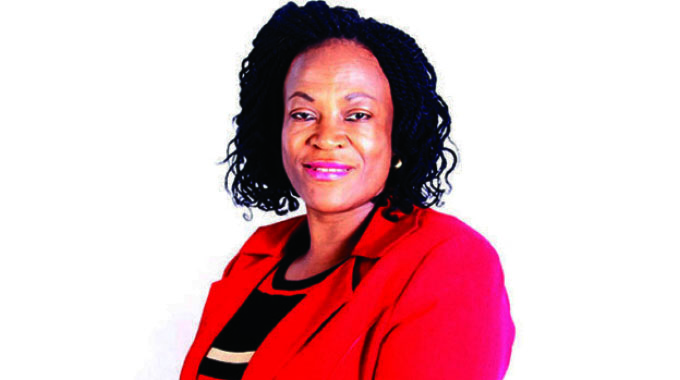
This week, Association of Healthcare Funders of Zimbabwe (AHFoZ) chief executive officer, Ms Shylet Sanyanga is looking into issues of quality assurance.
Quality assurance in the medical aid industry refers to monitoring of important aspects of patient care consistent with available resources.
1. What do the terms fraud, waste and abuse mean in the medical aid industry?
There is medical aid Fraud, Abuse, Waste and Error. Medical aid fraud occurs when a health care provider or member deceives an insurer/funder in order to receive greater reimbursement. For example, a healthcare service provider may claim from a medical aid a reimbursement for services not rendered to a patient. Another aspect of medical aid fraud is the issue to do with card fraud. Card fraud is when a registered member intentionally gives his/her membership card to a non- registered member so that he/she can use the card to receive service from a medical practitioner. This is usually between friends and relatives. This can be done individually by the member or in connivance with the service provider. If a member agrees to sign a medical aid claim form when service has not been rendered, the member becomes an accomplice. Taking non-medical items from a pharmacy and claiming to medical aid is an act of fraud.
2. Is it possible for a service provider and a member to defraud a fund?
Yes; through conniving. This is when both service provider and the member agree to commit fraud. This can take different forms such as signing many claim forms or signing for services not rendered or card exchange.
3. What constitutes waste in the medical aid industry?
Waste is using medical aid benefits in a way that is inefficient and wasteful. Examples of wasteful behaviour is when one uses a specialist as the first port of call for access to healthcare or going straight to a tertiary hospital without going through the referral system. Charges at specialist level are more expensive than at lower levels of care. In some instances, people prefer rushing to the 24hr emergency rooms after hours and they present with non-urgent complaints such as routine BP check or common cold. Emergency rooms are meant for emergencies. Their charges are higher than consulting a general practitioner. General practitioners are the gatekeepers. They are well trained to treat and to refer to specialists at the rightful time. In situations where there are not enough doctors, nurses step into those shoes of gatekeeping and refer accordingly.
Whilst general practitioners are expected to refer to specialists for expert intervention, specialists are also expected to refer back to GPs after carrying out the specific specialist interventions. It is not necessary for a grown up child to continue going back to the pediatrician who was present during delivery, unless the child has complications requiring continued monitoring by a specialist pediatrician.
Some chronic conditions can be monitored by a GP after being stabilised by a specialist physician and the physician can still monitor at less frequency.
Statements such as “my physician”, “my child’s Paed”, “my gynae” excetera tend to be common.
However, these have a potential for wastefulness when simple services are being obtained from a very high level supplier as high level services cost more.
Zimbabwe has a very clear referral system, which promotes effective management of patients from grassroot level to tertiary level, both in Government and private sector.
Patients have a right to request to be referred to a specialist if there is no meaningful progress and can also request to be referred back to their GP if there is confirmation that condition is stable.
The preference to go to the doctor after hours for convenience costs more, unless the doctor routinely opens at night.
Overservicing by a service provider results in waste of resources.
Examples of overservicing:
• Excessive reviews for minor ailments
• Requesting excessive blood tests for minor ailments such as flue
• Treatment of the whole family, where one member visits the doctor with a
condition like flu or diarrhea and the doctor decides to treat the whole family before they are sick
• Self-referrals by a doctor to his own other facilities. For example a doctor may
be running other services like radiology or laboratory and refer patients to these units
• Monthly consultations for prescription purposes for patients on chronic medications
Abuse: When members seek for health services unnecessarily, for minor conditions or returns to the service provider too frequently (over -utilisation), for no good reason or when one literally fakes illness. For example, one may visit a doctor to ask for an “Off-sick” note instead of applying for a “Day-Of”, for purposes of conducting social activities. Some lonely people find it reassuring to visit a doctor for no apparent reason, but to have someone to talk to.
On the part of the service provider, best medical practices are not followed, leading to costs and treatments that aren’t needed, ( overtreating, overprescribing).
In some instances, the service provider may deliberately choose to claim under a wrong tariff which pays more instead of using the correct tariff which pays at the correct level.
Regrettably, abuse is rampant and in some instances some service providers may request too many laboratory tests, some of which may not be necessary. This is common in instances where the service provider also runs a laboratory and an X-Ray unit or has friends running such investigative services. This is done to push numbers.
Error: This is when a service provider makes a genuine mistake in choosing a wrong tariff code, or inserting a wrong medical aid number.
5. What are the implications of Fraud, Waste and Abuse to both the fund and individual members?
Fraud, waste, abuse and error lead to financial losses of the fund and threaten its viability and sustainability. On the members’ side, limits will be depleted to the extent of failing to cover the member when real need arises.
Fraud, Waste and Abuse may lead to quick depletion/exhaustion of the individual members’ limit. Emergency rooms and 24 hour units are considered as hospitals and visiting them with minor ailments will deplete a members’ hospital benefits which will be needed in real emergency cases like accidents and hospitalisation. Exhausting benefits earlier will mean a member may not be able to get financial assistance when real need arises.
It should be noted that healthcare fraud is an offence, which may lead to prosecution.
6. To what extent do patients have control over treatment/tests or procedures offered for their ailment?
Patients have a right to information on how their medical aid operates. They should enquire with their medical aid information on what their package covers and the global limits applicable. From the service providers , patients have a right to information pertaining to their health and the interventions being employed, including the diagnosis, the tests being ordered and the reasons for the tests.



 Online Reporter