Vusumuzi Dube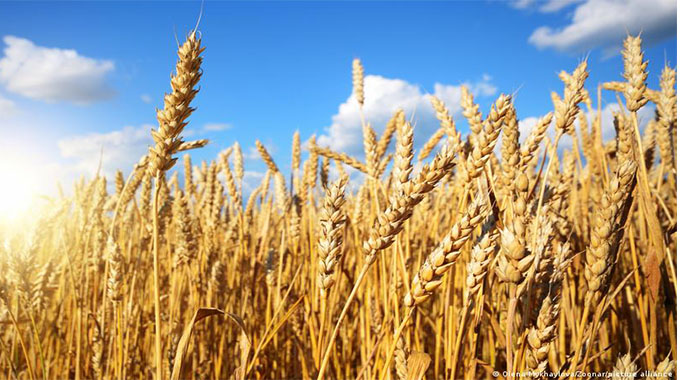
Judith Phiri, Business Reporter
THE Ministry of Lands Agriculture, Fisheries, Water and Rural Development has urged farmers to stop planting wheat past the 15 June deadline as well as make fireguards to avoid unnecessary losses of their wheat crop to veld fires.
The warning comes in the wake of increased planting target for wheat from 85 000 hectares to 90 000 hectares.
In a statement on Tuesday, the Ministry’s permanent secretary, Dr John Basera said any further planting is discouraged and must stop as the planting window has closed.
“The Ministry of Lands Agriculture, Fisheries, Water and Rural Development wishes to thank all the wheat farmers for supporting the thrust towards wheat and flour self-sufficiency. Farmers are hereby advised that the optimal wheat planting window closed on the 15th of June 2023 and any further planting after this date is discouraged and must stop.
“Late planting of wheat negatively affects yields, reduces quality and exposes the wheat crop to risk of destruction by early rains. Focus should shift and be redirected towards effective good agronomic practices, disease and weed management, irrigation management and scheduling,” he said.
He said farmers should approach their nearest Agritex office or agricultural extension officer for the necessary wheat growing backstopping support and agronomic advice.
Dr Basera encouraged farmers to make fire guards to avoid unnecessary losses due to veld fires.
Last year, wheat valued at close to US$1 million was destroyed in separate incidents, with preliminary investigations pointing to possible acts of sabotage in most cases.
By October 2022 veld fires accounted for more than 250 000 hectares during the fire season, which began on July 31.
Despite this, wheat production output increased by 25 percent from over 300 000 metric tonnes in 2021 to 375 000 metric tonnes in 2022, against a national annual requirement of 360 000 metric tonnes, leaving a surplus of over 15 000 metric tonnes.
The production figure for the 2022 winter season was the highest ever achieved since 1962 when wheat was first grown in Zimbabwe.
Meanwhile, as the quelea bird breeding season has ended, the Ministry has also urged farmers to be on the alert of any quelea flocks seen in their districts and provinces.
The red-billed quelea is the most damaging pest of wheat, sorghum and millet in Zimbabwe.
Quelea is a small passerine bird of the weaver family Ploceidae, native to sub-Saharan Africa and the southern race of quelea, breeds in arid areas that are predominantly border areas in Zimbabwe forming part of Parks and Wildlife Estates with the neighbouring countries.
The Agricultural and Rural Development Advisory Services has said early identification of quelea roosting sites will prompt early control before wheat reaches the soft dough stage that is critical in wheat growth.



 Online Reporter