

 Online Reporter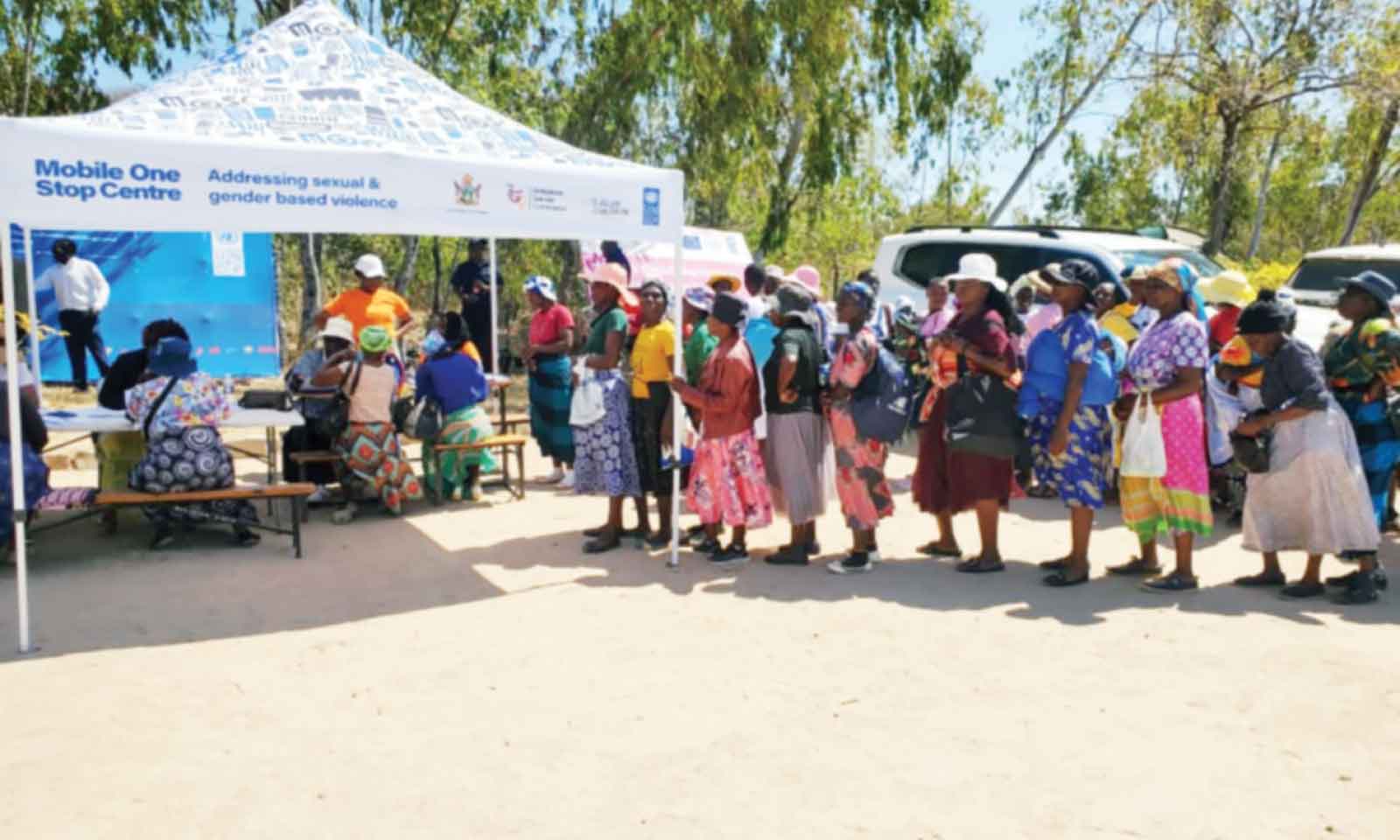
Theseus Shambare
Features Writer
The sun had long dipped behind the ridges of Nenguwo in Marondera West when Tawanda saw what he had been trying so hard to unsee.
It was just after 6pm. His wife had left home in the morning, saying she was running errands in Marondera town.
But there she was – laughing, leaning into another man at a shopping complex.
The same man whose number he had seen countless times on her phone.
The same man she had sworn she “barely knew”.
For weeks, he had convinced himself he was imagining things. But that evening, as he trailed them from a distance, the truth unfolded with painful clarity.
There was chemistry. There was intimacy. There was everything a married man dreads to see.
When he finally confronted them, the “lovebirds” denied all wrongdoing: “We are just old friends who met by chance,” they insisted.
But the tension simmered. His wife, sensing she was losing the argument, turned on him — hurling a flurry of insults meant to strip any dignity he still held.
Overwhelmed, humiliated and shaking with anger, he threatened to beat her.
He did not touch her. She ran. An hour later, police officers arrived at his homestead.
She had reported him for domestic violence.
He spent two nights in police custody, sleeping on a cold concrete floor, replaying every moment that had brought him to that cell.
And when the case was finally withdrawn, his wife arrived with relatives—hands on her hips—acting like a saviour rescuing a condemned man. Yet he knew the truth.
She had wielded the law—meant to protect victims—against him.
As Zimbabwe and the world commemorate 16 Days of Activism Against Gender-Based Violence, stories like Tawanda’s rarely make it past the village gossip mill.
The campaign’s messaging: “UNiTE to End Digital Violence against All Women and Girls”, heavily—and correctly—emphasises violence against women and girls.
But somewhere in the shadows of this noble cause, men are bleeding too.
Not with fists, sometimes. Men are not always struck with fists, but they are wounded in ways that leave scars just as deep—through humiliation, betrayal, digital shaming, the weaponisation of the law, social ridicule and emotional manipulation—and too often, these wounds never receive the bandages they so desperately need.
In Mutoko, another man recently learned how public a private heartbreak can become.
After catching his wife with a lover, instead of comfort or counsel, he found himself trending online.
His crushed expression turned into memes; strangers joked about his misfortune. In today’s digital arena, a man crying is treated as comedy, a cheated husband becomes content for online consumption and a broken family turns into a viral joke.
Even women sometimes mock men openly, declaring, “Who wants a poor man? Handsomeness is in the pocket”. Such “jokes” deepen hidden crises, fueling depression, toxic masculinity, risky hustles, criminal shortcuts and a silence that can prove fatal.
Zimbabwe’s GBV crisis does not pick a side. Women and children are suffering too—often brutally.
Nowhere is this clearer than in rural Chindenga, Mutoko.
During a recent Mobile One-Stop Centre (MOSC) outreach, villagers shared stories that would chill even the strongest heart.
One man lifted his shirt to reveal a thick, uneven scar across his arm.
“She pressed a burning log against my skin. I screamed. I could smell myself burning,” he said.
His story shook the community because male survivors seldom speak.
Shame, stigma and the fear of ridicule keep them silent.
But alongside him stood women whose pain is no less harrowing.
A mother of three described marriage as a “cage”, where every attempt to leave invited more violence.
A 14-year-old girl whispered how she was exchanged for goats and forced into marriage: “I wanted to stay in school. Instead, I became a wife.”
According to the Ministry of Women Affairs, at least 20 GBV cases are reported monthly in every district of Mashonaland East – over 240 cases per district annually.
National surveys show that one in three Zimbabwean women has experienced physical violence, while one in four has faced sexual abuse.
Cases involving men, however, remain largely hidden, unreported, or unrecognised.
Across the region, the crisis mirrors the same. UNFPA reports that in Zambia, 36 percent of women aged 15 to 49 have endured physical violence.
In Malawi, Afrobarometer lists intimate partner violence as the most widespread form of abuse.
Violence – whether physical, emotional, or digital — has no gender.
But its effects are universal: poverty, broken families, trauma, lost education and cycles of silence.
Recognising these deep scars, the Government, in partnership with the UNDP, Zimbabwe Gender Commission, and Judith Neilson Foundation, launched mobile one-stop centres.
These centres bring key services directly to rural communities, offering medical care, psychosocial counselling, legal assistance, economic empowerment support and civil registration.
All of this is provided in a single safe space — one tent, delivering all services under one roof.
“What we are seeing through the MOSC is men opening up for the first time. It shows us that violence is not one-sided; it affects everyone.
“That type and level of gender-based violence against men is something they are usually embarrassed to talk about,” said Ms Chidochashe Mugangiwa, a legal officer with the Zimbabwe Gender Commission.
Since January, MOSC teams in Nyanga, Mashonaland West and Matabeleland South have reached 5 717 people, including 223 legal aid cases, over 1 600 civil registration documents issued, 1 300 reproductive health clients (most first-timers) and 600 counselling sessions.
UNDP’s Dr Ayodele Odusola (represented by Ms Tafadzwa Muvingi) emphasised: “MOSCs are not just about responding after violence. They are about prevention, empowerment, and dignity.”
Zimbabwe Gender Commission chairperson, Mrs Margaret Mukahanana-Sangarwe, said, “Violence does not choose gender or geography. MOSCs ensure that no one — woman, man, or child — is left behind.”
Traditional leaders, including Chief Chimoyo, echoed.
“Our people are hurting in silence. MOSCs bring the justice they were denied for years,” he said.
As the 16 Days of Activism surge through the nation, Zimbabwe must redefine its fight against gender-based violence.
Will men continue to suffer in silence while women fight to be heard?
Will children inherit the quiet scars of broken families, or will communities rise before it is too late? In this nation, every survivor – seen or hidden – waits for justice, for dignity, for hope.
The question now is not who will heal, but whether Zimbabwe will summon the courage to confront every wound, every story, before the silence becomes permanent.
*Not his real name



