
Word From The Market
Tina Nleya
ONE of the most common measures of success in farming is the amount harvested.
Farmers proudly speak of tonnes per hectare, the number of cattle sold or the number of crates delivered to the market.
Indeed, increasing production remains fundamental to improving food security and farm profitability.
However, as agricultural markets become more competitive and consumers become more discerning, quantity alone is no longer enough. The modern agricultural marketplace rewards both quantity and quality.
A farmer may produce the highest yield in the district, but if the produce fails to meet the expectations of buyers, retailers or consumers, much of that effort may not translate into higher returns.
In today’s market, quality has become a major determinant of price, market access and customer loyalty.
The customer buying journey begins long before the product is consumed.
Whether purchasing tomatoes at a local market, oranges in a supermarket or beef from a butcher, consumers first buy with their eyes.
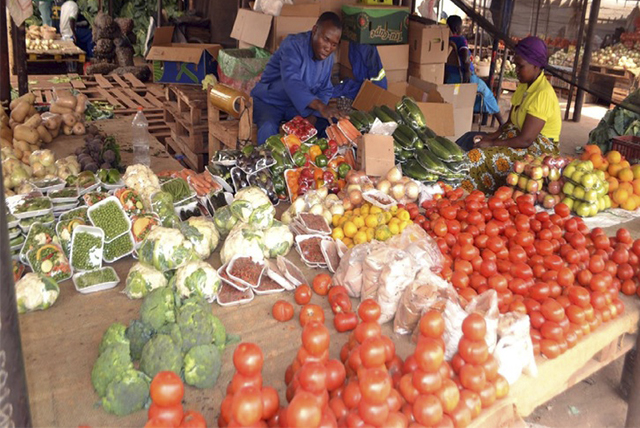
Appearance creates the first impression and often determines whether a product is picked up or left behind. Consider two baskets of tomatoes displayed side by side. One consists of firm, evenly coloured, blemish-free tomatoes with a healthy shine.
The other contains tomatoes that are bruised, cracked or unevenly ripened.
Even before considering price, most consumers instinctively reach for the visually appealing product. They associate appearance with freshness, safety and quality.
The same principle applies across almost every agricultural commodity.
For fresh produce such as tomatoes, cabbages, onions, citrus fruits and avocados, buyers are looking for uniform size, vibrant colour, firmness, cleanliness and freedom from pests and diseases.
Produce that arrives damaged or poorly handled during harvesting and transportation quickly loses value in the marketplace.
As Zimbabwe continues to strengthen its horticulture sector, farmers should recognise that quality has become an important competitive advantage.
Supermarkets, processors and export buyers increasingly demand produce that meets specific quality standards.
These standards are not designed to disadvantage farmers but to ensure consumers receive products that meet their expectations.
Today’s farmer is not only competing with neighbouring producers but also with imported products that often share the same supermarket shelf.
Consumers may have the choice of purchasing locally produced oranges or imported ones.
They may compare Zimbabwean tomatoes with those sourced from neighbouring countries. In these situations, quality becomes a powerful differentiator.
Price certainly influences purchasing decisions, but where products are similarly priced, appearance, freshness and consistency often determine the final choice.
Quality is equally important in livestock production. Zimbabwe’s beef industry has long operated on recognised grading systems that reward farmers who produce higher-quality animals. Rather than paying a single price for all cattle, the market differentiates prices according to quality.
Current producer prices illustrate this clearly. Beef producers receive an average of US$4,50 per kilogramme for super grade cattle, compared to US$3,20 for choice grade, US$3,10 for commercial grade and US$3 for economy grade, while manufacturing grade averages US$1,60.
These price differences demonstrate that better animal husbandry, nutrition, breeding and finishing practices directly translate into higher returns for producers.
Farmers are not simply paid for the weight of the animal, but also for the quality of the meat it produces.
The cotton industry provides another practical example of quality-based marketing.
Producer prices for the 2026 marketing season vary according to the grade of cotton delivered. Grade A cotton attracts US43 cents per kilogramme while Grade B receives US41 cents.
Although the price difference per kilogramme may appear modest, when multiplied across several tonnes of production, quality can significantly increase a farmer’s income.
Clean, properly handled cotton that is free from contamination consistently commands better prices than poorly managed harvests.
The lesson across these commodities is clear: Markets reward quality.
Achieving quality begins long before harvest. It starts with selecting appropriate seed varieties, engaging in recommended agronomic practices, maintaining good soil fertility and implementing effective pest and disease management. Crops that experience stress during production are less likely to meet market standards.
Harvesting practices are equally important.
Picking produce too early or too late can affect shelf life, taste and appearance.
Rough handling during harvesting and transportation often results in bruising and mechanical damage that reduces market value.
Post-harvest management is another area where farmers can significantly improve competitiveness. Proper grading, sorting, cleaning and packaging help create a professional product that appeals to buyers.
Mixing different sizes, colours and quality grades within the same package not only reduces its visual appeal but may also lower the price offered by buyers.
Farmers should also remember that quality extends beyond appearance. Increasingly, consumers are concerned about food safety, hygiene, traceability and responsible production practices.
Export markets, in particular, demand compliance with phytosanitary standards, pesticide residue limits and internationally recognised quality assurance systems.
As Zimbabwe seeks to expand agricultural exports and increase participation in regional and international markets, maintaining high-quality standards will become even more important. Buyers are looking for reliable suppliers who can consistently deliver products that meet agreed specifications.
Quality also builds trust. A consumer who repeatedly purchases fresh, attractive and good-tasting produce is more likely to become a loyal customer.
Retailers similarly prefer suppliers who consistently deliver products that satisfy their customers and reduce post-harvest losses.
Ultimately, successful farming should not be measured solely by the quantity harvested, but by the value created.
Producing larger volumes remains important. However, ensuring market-preferred quality products ensures that farmers maximise returns from every kilogramme they sell.
Tina Nleya is AMA’s marketing and public relations manager. She can be contacted on email: [email protected]. Word From The Market is a column produced by AMA to promote market-driven production.
In agriculture, every harvest tells two stories. The first is how much was produced.
The second, and often the more profitable story, is the quality that reached the market.
Farmers who pay equal attention to both quantity and quality will be better positioned to compete, secure premium prices and build sustainable businesses in an increasingly competitive marketplace.