Online Reporter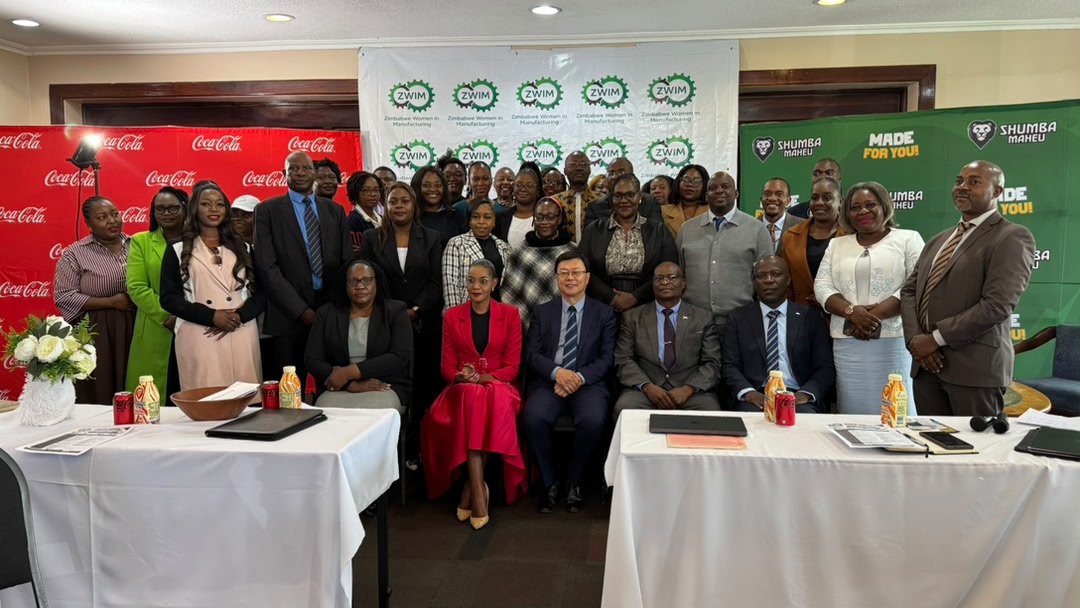
Takunda Gambiza
Herald Reporter
THE Government has hailed the launch of Zimbabwe Women in Manufacturing (ZWIM) as a major milestone in promoting inclusive industrialisation, saying women must play a leading role in driving economic transformation and the attainment of Vision 2030.
Speaking at the launch of the organisation, Women Affairs, Community, Small and Medium Enterprises Development Minister Monica Mutsvangwa, represented by Deputy Minister Kevin Mutimbanyoka, described ZWIM as a strategic platform that will empower women entrepreneurs to participate meaningfully in industrial development.
“Today is more than the launch of an organisation. It marks the birth of a movement that seeks to position women at the centre of Zimbabwe’s industrialisation agenda,” said Minister Mutsvangwa.
She noted that women account for approximately 56 percent of Zimbabwe’s small and medium enterprises sector, making them a critical force in the country’s productive economy.
Despite their strong presence in SMEs, she said women remain underrepresented in formal manufacturing due to challenges that include limited access to affordable finance, modern technology, industrial infrastructure, machinery and lucrative markets.
“The opportunity lies in unlocking the enormous potential that exists among women entrepreneurs and enabling them to transition into competitive manufacturing businesses capable of serving domestic, regional and international markets,” she said.
Minister Mutsvangwa said ZWIM would provide a platform for networking, mentorship, skills development, technology transfer, investment promotion and policy advocacy while giving women manufacturers a unified voice in engaging Government and industry stakeholders.
Industry and Commerce Minister Mangaliso Ndlovu, represented by the ministry’s Director of Industrial Development, Mr Dayford Nhema, described the launch as a defining moment for Zimbabwe’s industrial development agenda.
He said the manufacturing sector currently contributes 14,9 percent to the country’s Gross Domestic Product and remains a key pillar of economic growth and industrialisation.
“For too long, the manufacturing landscape has been heavily male-dominated. If we are to achieve a prosperous and empowered upper-middle-income society by 2030, we cannot afford to leave half of our nation’s talent and entrepreneurial potential on the sidelines,” said Mr Nhema.
He said women-led enterprises continue to face barriers in accessing industrial financing, technology, infrastructure and export markets.
“ZWIM is the timely solution our economy requires. It will serve as an institutional bridge that helps women-led enterprises transition from informal and micro-scale operations into formalised, competitive and sustainable manufacturing businesses,” he said.
Chinese Ambassador to Zimbabwe, Mr Ding Zhou, congratulated the association on its formation, saying women’s empowerment was essential to industrial growth and economic prosperity.
He reaffirmed China’s commitment to supporting Zimbabwe’s industrialisation efforts through trade, investment and skills development initiatives.
Mr Ding highlighted China’s recent decision to grant zero-tariff access to imports from 53 African countries with diplomatic relations with Beijing, including Zimbabwe, saying the measure would create new export opportunities for local manufacturers.
“Stronger exports will help attract more investment in local processing and manufacturing, which in turn will create more jobs and boost foreign currency earnings,” he said.
ZWIM founding president Ms Rairo Gunguwo said the association was established to ensure women take their rightful place as industrial leaders and key contributors to national development.
“Today marks a signal that Zimbabwean women are stepping boldly into the future of industry — not as spectators, but as builders, producers, innovators and leaders,” she said.
Ms Gunguwo said the organisation aims to establish a strong network of women manufacturers across all 10 provinces while strengthening participation in regional, continental and global value chains.
She said industrialisation and value addition remain critical to Zimbabwe’s economic transformation and called for stronger collaboration between Government, financiers, development partners and industry stakeholders to unlock growth opportunities for women-led enterprises.
“Women have the capacity to transform industries, create jobs and drive economic growth. What is needed is an enabling environment that allows them to fully realise that potential,” she said.