Online Reporter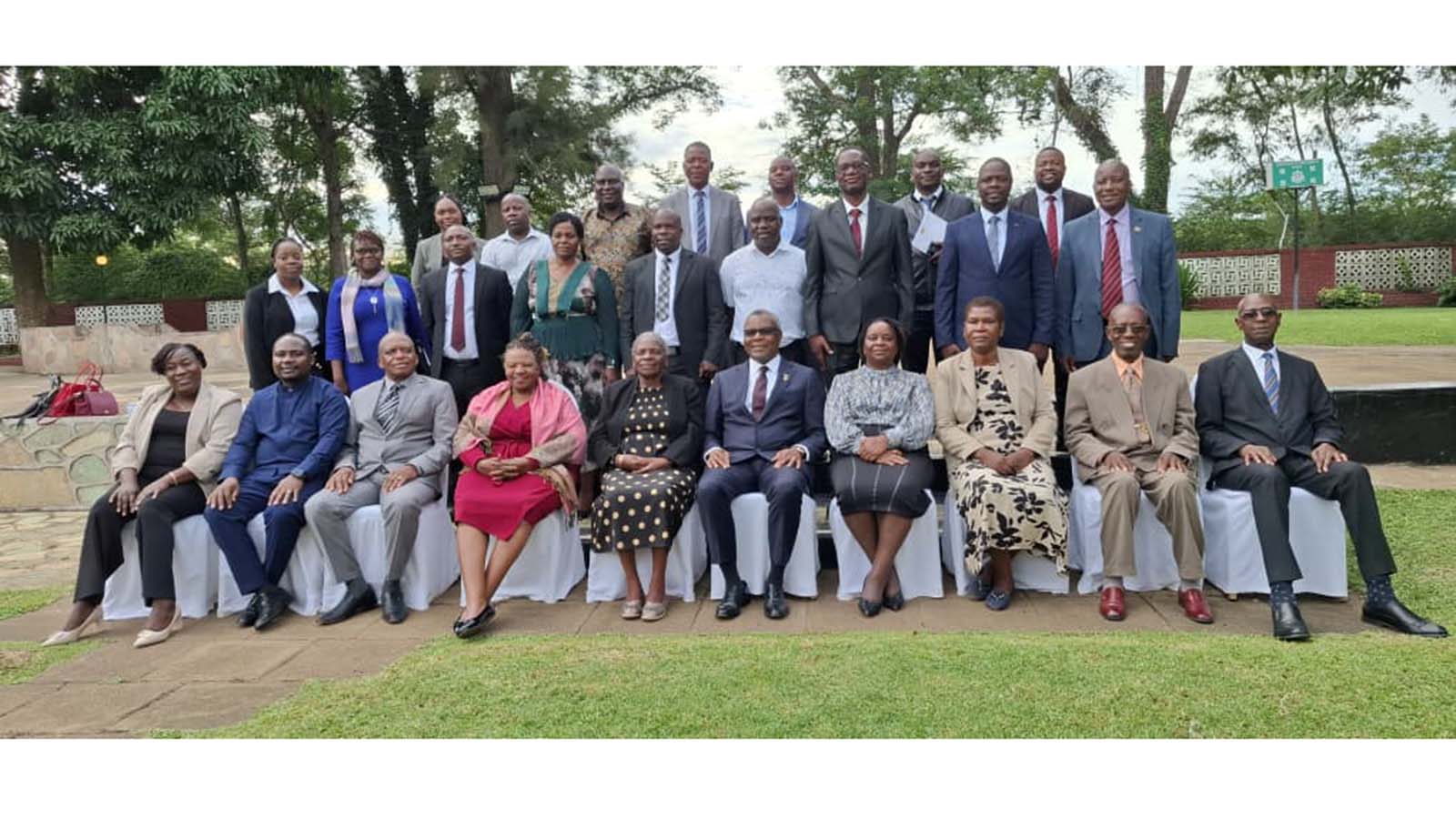
Walter Nyamukondiwa in Kadoma
The seven-member Zimbabwe Defence Forces Services Commission (ZDFSC) is currently undergoing a two-day induction workshop to familiarise itself with the operations and structure of the Defence Forces.
The workshop is expected to help the commissioners ease into their constitutional mandate of regulating and administering the welfare and conditions of service for members of the Zimbabwe Defence Forces (ZDF).
Public Service Commissions chairperson, Dr Vincent Hungwe, officially opened the induction workshop, calling on the commissioners to play a transformative role in implementing their mandate.
“Your elevation to this high office reflects the confidence that His Excellency Dr Mnangagwa has in your judgement, integrity and capacity to steward matters of profound national consequence,” said Dr Hungwe.
“It is also a solemn call to national duty, and the few that usually respond tend to be the transformative agents in the direction in which betterment lies.”
President Mnangagwa appointed the six members of the ZDFSC in 2025, with chairperson Dr Hungwe becoming the seventh member.
Dr Hungwe said the commission undergirds the operational readiness, welfare integrity and professional stability of the Defence Forces of Zimbabwe.
The effectiveness of the commission, he said, depended on its capacity to adapt to the rapidly changing technical landscape.
“The commission’s effectiveness is increasingly linked to its ability to leverage modernisation and automation,” said Dr Hungwe.
“The commission is encouraged to explore digital tools for workforce planning, performance monitoring and data-driven decision making, ensuring that oversight is timely, precise and responsive.
“This means innovative governance, digital reporting dashboards, workflow automation and predictive analytics to anticipate challenges and optimise interventions that are future-ready.” He said the ZDF should adapt to the evolving battle theatre, characterised by the use of unmanned aerial vehicles including drones, precision-guided missiles, and advanced intelligence, surveillance, and reconnaissance (ISR) systems.
“We have to be asking questions. We are familiar with what has been happening in the past, the armies of the past, soldiers of the past, and operations of the past,” he said.
“Will they remain the same into the future? I think that because of these constant changes that are being observed in our operating environment, we have to ask questions about how we prepare ourselves for that future.
“Clearly, there are certain technologies and innovations that become very urgent and imperative. We are seeing what is happening elsewhere.”
Engagements in the battlefield, he said, had changed and required appropriate technologies and competencies.
The induction workshop aims to equip the commissioners with the necessary knowledge and tools to effectively carry out their mandate in supporting the country’s defence forces.