Online Reporter
Nqobile Bhebhe, Zimpapers Business Hub
ZIMBABWE’S entrepreneurial sector has for a long time been living in a financing trap.
While small and medium enterprises (SMEs) contribute nearly 60 percent of the country’s Gross Domestic Product
(GDP) and account for the bulk of new business creation, very few evolve into large, listed companies.
The challenge has never been a shortage of entrepreneurial talent or market opportunities.
Rather, it has been broadly acknowledged as a lack of access to affordable, long-term capital needed to transform promising enterprises into sustainable corporations.
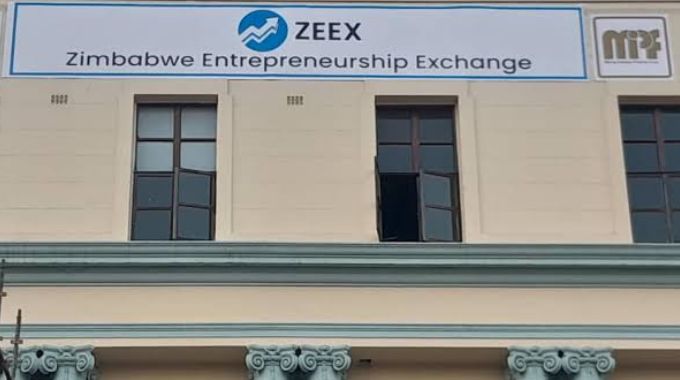
The launch of the Zimbabwe Entrepreneurship Exchange (ZEEX) in Bulawayo marks a significant shift in efforts to close the financing gap by creating a structured capital-raising platform tailored specifically for emerging businesses.
Far more than another securities exchange, ZEEX is designed as an enterprise development ecosystem that guides businesses through successive stages of growth before they eventually graduate to the Zimbabwe Stock Exchange (ZSE) or the Victoria Falls Stock Exchange (VFEX).
By addressing structural barriers that have historically kept SMEs outside mainstream capital markets, including stringent collateral requirements, limited equity financing and demanding listing requirements, the platform seeks to deepen Zimbabwe’s financial markets while accelerating industrialisation under Vision 2030 and the National
Development Strategy 2 (NDS2).
Delegates at the launch said Zimbabwe’s financial architecture has traditionally left entrepreneurs with two difficult choices.
Commercial banks often require collateral beyond the reach of most SMEs, while the ZSE and VFEX are designed for mature businesses with established governance structures, audited financial statements and sizable operations.
Between these two financing avenues lies a vast funding vacuum that has prevented many small businesses from scaling up.
That is the gap ZEEX seeks to fill.
“Instead of expecting entrepreneurs to leap directly from informality to public listing, the exchange provides a carefully engineered growth ladder that enables businesses to build governance, financial credibility and investor confidence one stage at a time,” said entrepreneur Ms Susan Mathibela during the launch.
“It transforms capital raising from a once-off event into a continuous journey.”
The exchange is a high-technology, entrepreneurship-focused capital market designed to broaden financing opportunities for SMEs operating within Zimbabwe’s rapidly evolving economy.
It is built around four key pillars: ZEEX Private Markets, ZEEX Public Markets, Invoice Discounting and the Bond Holding Company (BHC), each addressing different financing needs as businesses mature.
Under ZEEX Private Markets, entrepreneurs can raise capital through structured private placements without immediately listing on the exchange, allowing businesses to attract sophisticated investors while strengthening corporate governance.
The ZEEX Public Markets platform enables companies that have matured sufficiently to raise capital through public offerings before their securities begin secondary market trading.
For many SMEs, however, the immediate challenge is not expansion capital but working capital.
To address this, ZEEX introduces an Invoice Discounting Marketplace where businesses can convert unpaid invoices into immediate cash instead of waiting 30, 60 or even 90 days for customers to settle outstanding payments.
By selling verified invoices to investors at a discount, companies improve cash flow while investors earn returns from short-term receivables.
The exchange also introduces the Bond Holding Company, which enables issuers to secure debt while providing investors with stronger collateral protection, making financing more accessible for smaller enterprises that may struggle under conventional lending conditions.
A presentation by the Zimbabwe Stock Exchange illustrated how ZEEX has been structured as a gradual progression rather than a one-time financing event.
The journey begins with informal enterprises; that is, every successful listed company starts somewhere.
For many entrepreneurs, that beginning is often a backyard workshop, roadside factory or small family business operating largely outside the formal financial system.
Using the example of “Miles”, a small nail and metal fabricator operating from a garage in Kuwadzana, the ZSE demonstrated how many SMEs remain constrained not by lack of demand but by lack of capital.
Without financing, business expansion stalls.
Without growth, productivity remains low, ultimately limiting Zimbabwe’s industrialisation ambitions.
The second stage focuses on unlocking trapped cash through invoice discounting.
Instead of waiting months for payment, entrepreneurs upload verified invoices onto the platform where investors purchase them, releasing immediate liquidity while simultaneously building a financial track record that enhances future credibility.
Once businesses formalise operations, appoint directors and produce audited financial statements, they graduate to ZEEX Private Markets.
At this stage, companies can issue SME bonds, structured debt, convertible instruments and private equity with the assistance of accredited ZEEX sponsors.
The Bond Holding Company further strengthens investor confidence by safeguarding collateral on behalf of investors.
Businesses demonstrating operational consistency and financial discipline then progress to ZEEX Public Markets.
Here they issue prospectuses, invite retail investor participation and begin continuous share trading, ZSE said.
Beyond raising capital, public listing improves transparency, enhances corporate governance, strengthens brand recognition, facilitates employee share ownership schemes and establishes market valuation through price discovery.
The final stage is graduation to Zimbabwe’s premier exchanges.
Companies that would have matured through the ZEEX ecosystem migrate to the ZSE or, in the case of export-oriented businesses seeking United States dollar capital, the VFEX.
By then, they have developed audited financial histories, strong governance systems and investor confidence required to attract institutional and international capital.
Speaking during the launch, Zimbabwe Stock Exchange chairman Mr Martin Mushambadope stressed that ZEEX complements rather than competes with the ZSE and VFEX.
“There are unintended consequences of migration and I will speak to this. There is no migration that is going to happen from bigger exchanges such as VFEX and ZSE.
“The idea is, we want ZEEX to be an incubator and when the entities grow they can list on VFEX and ZSE. So we won’t allow an entity that currently sits on VFEX or ZSE to migrate to ZEEX. That must be very clear,” he said.
His remarks come after several companies migrated from the Zimbabwe Stock Exchange to the VFEX in recent years to take advantage of incentives available under the offshore financial centre framework.
Government officials said locating ZEEX in Bulawayo carries historical significance.
Speaking during the launch, Bulawayo Minister of State for Provincial Affairs and Devolution Judith Ncube welcomed the decision.
“Bulawayo carried the distinction of being home to one of the very first stock exchanges established around 1896.
“In launching ZEEX in Bulawayo, the ZSE is not creating something entirely new for the city.
“In many respects, it recognises that it is a home for finance and enterprise.”
Women’s Affairs, Community, Small and Medium Enterprises Development Minister Monica Mutsvangwa said the
platform reflects years of engagement between Government and entrepreneurs.
“The ZSE has played an important role in introducing entrepreneurs to the opportunities available within
Zimbabwe’s capital markets as it transforms years of dialogue, capacity building and institutional collaboration into a practical financing platform.”
Finance, Economic Development and Investment Promotion Minister Professor Mthuli Ncube noted that ZEEX represents a deliberate intervention aimed at correcting historical imbalances in access to finance.
“ZEEX is a deliberate and necessary intervention to correct a long-standing imbalance, one where the very businesses that anchor our economy have had the least access to the capital markets that could help them grow.”
“The establishment of ZEEX gives these businesses the tools to formalise, to scale and to access the kind of patient capital that has historically been reserved for large corporates. ZEEX is a direct, practical expression of the policy intent set out in our National Development Strategy (NDS2).”
Stockbroker Mr Elvis Mphini said the significance of ZEEX extends beyond financing SMEs.
“It introduces entirely new investment instruments including SME bonds, REITs, Exchange Traded Funds (ETFs), structured debt and invoice discounting, expanding opportunities for pension funds, insurance companies, asset managers and retail investors alike.”
“More fundamentally, it deepens Zimbabwe’s capital markets by creating a sustainable pipeline of future ZSE and VFEX listings.”
He said instead of waiting for large corporations to emerge naturally, Zimbabwe now has an institutional mechanism for deliberately nurturing tomorrow’s listed companies.
“For an economy pursuing industrialisation under Vision 2030, that distinction is profound. Every thriving corporate was once a small enterprise. ZEEX institutionalises that journey.”
“It gives Zimbabwean entrepreneurs something they have seldom enjoyed, a regulated bridge between ambition and capital. And if that bridge succeeds, the next blue-chip company on the ZSE or VFEX may not begin in a corporate boardroom. It may begin, as many great businesses do, in a modest garage.”
While welcoming the initiative, Bulawayo trader Mr Thandolakwe Masuku said sustained awareness campaigns will be critical if ZEEX is to achieve its intended objectives.
“Many SMEs still have limited knowledge of how capital markets work or how they can participate on ZEEX. The authorities need to roll out continuous awareness and financial literacy programmes across the country so that entrepreneurs understand the opportunities available,” he said.
“If awareness remains low, there is a real risk that a platform with enormous potential could become underutilised.
The success of ZEEX will depend not only on creating the market but also on ensuring SMEs have the knowledge and confidence to use it.”
The launch of ZEEX is seen as representing more than the creation of another securities exchange.
Delegates at the launch said it is an ambitious attempt to formalise thousands of small businesses, mobilise domestic savings into productive investment, deepen the country’s capital markets and create a sustainable pipeline of companies capable of graduating onto the ZSE and VFEX.
They noted that if successfully implemented and supported by widespread awareness programmes, the exchange could become one of the country’s most important instruments for industrialisation, enterprise growth and job creation.