Online Reporter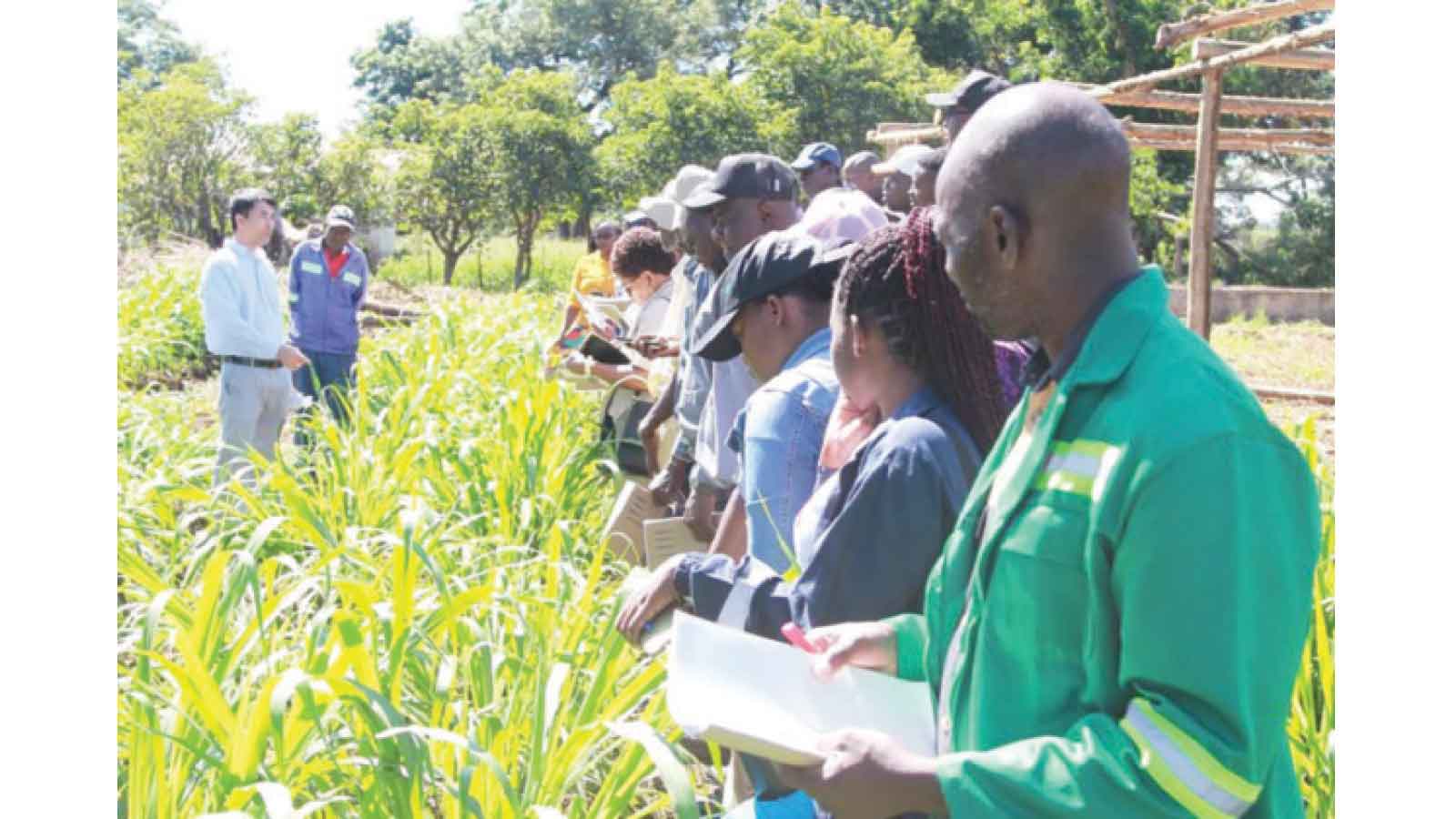
Kuda Bwititi-Politics, Foreign Affairs and Opinions Editor
“Give a man a fish and you feed him for a day; teach a man to fish and you feed him for a lifetime.”
This timeless proverb is widely cited whenever China carries out capacity building and human resources development programmes across Africa.
Agriculture stands as one of the core fields where China extends assistance to African nations, including Zimbabwe. With China’s zero tariff policy being officially implemented since May 1, agricultural cooperation is earmarked to bring more economic income to African people and foster sustainable business opportunities capable of boosting overall national economic growth.
The tangible and far-reaching contributions made by Chinese agricultural experts have been widely acknowledged by African governments and local communities and deserve in-depth review and research.
Evolution of China-Africa agric cooperation
China’s agricultural cooperation with Africa dates back to the 1960s and 1970s, initially serving as an important bond of diplomatic solidarity.
As China pushed forward domestic market-oriented reforms in the 1980s and 1990s, its foreign aid philosophy gradually shifted toward mutual benefit. Technical assistance was combined with commercial joint ventures for win-win results. Drawing on its own experience of feeding nearly 20 percent of the world’s population with merely 9 percent of global arable land, China began to shift from a single grant-based assistance model to a diversified, market-oriented, mutually beneficial and sustainable cooperation model.
Such cooperation became more systematic after the establishment of the Forum on China-Africa Cooperation (FOCAC) in the 2000s. During the 2006 FOCAC Beijing Summit, China officially launched the Agricultural Technology Demonstration Centre initiative. At present, over 50 such centres have been built across Africa, advancing agricultural modernisation through targeted technology transfer and professional capacity training.
Chinese expert teams focus on adapting high-yield crop varieties, especially hybrid rice and corn, to local soil conditions. They also introduce practical land-saving farming technologies such as plastic film mulching and row sowing for smallholder farmers. Apart from providing on-site training for local farmers and agricultural technicians, modern Chinese agricultural cooperation has expanded to downstream industrial chains. Under frameworks such as the China-Africa Agricultural Science and Technology Innovation Alliance, priority is given to agricultural product processing, cold chain logistics and agricultural mechanisation, helping Africa’s agricultural sector upgrade from primary crop cultivation to modern commercialised industries.
In Zimbabwe, China began sending agricultural experts in 2009, with successive teams stationed there ever since. As of 2026, Zimbabwe is working with the sixth Chinese agricultural expert group, which arrived in September 2024 and will stay until September.
The expert team maintains close cooperation with Zimbabwe’s Ministry of Agriculture. Chinese experts are deeply involved in local agricultural education and carry out hands-on practical training in partnership with local agricultural colleges.
In particular, the zero tariff policy has further opened up the Chinese market to more African agricultural products. Take African bird’s eye chilli as an example. The crop enjoys great planting potential in Zimbabwe and has already achieved sound export results in Rwanda, which successfully exports such products to China.
Chinese experts have formulated tailored scientific planting plans in light of local climate and soil conditions, including rational planting density, integrated pest management and standardised post-harvest preservation technologies, to meet international market quality requirements.
In demonstration villages, local farmers are trained to grow bird’s eye chillies together with okra, sesame and other crops that enjoy promising export prospects in China.
The bird’s eye chilli promotion programme perfectly caters to market demand in China, a major importer of chillies used for sauce production, spice processing and pharmaceutical manufacturing.
Local institutions are also exploring more staple and export-oriented crops such as sweet potatoes and rice.
Practical achievements of agric cooperation demonstration platforms
So far, with the help of Chinese agricultural experts, Zimbabwe has built two major agricultural demonstration villages dedicated to technology promotion and rural revitalisation, located in Zvimba of Mashonaland West Province and Shamva of Mashonaland Central Province respectively.
The first demonstration village was established in Murombedzi, Zvimba in 2019 and has achieved remarkable outcomes. Maize yield of participating local households reaches 4 to 6 tonnes per hectare, far higher than the 2 to 3 tonnes per hectare recorded by ordinary farmers. Solar-powered irrigation systems have been installed to ease drought impacts, and farmers have been organised into standardised specialised cooperatives with operational regulations compiled by Chinese experts.
The second agricultural demonstration base was officially launched in Zindi Village, Shamva on May 14, 2025. Equipped with a solar irrigation system with a daily water supply capacity of 55,000 litres, the base has helped local farmers achieve an average maize yield of 5 tonnes per hectare and more than 3,200 local residents have received professional technical training here.
In addition, the China-aided Juncao Technology Project, officially launched in February 2025, has held 14 training sessions and set up 25 demonstration sites nationwide in Zimbabwe. The technology uses specially cultivated juncao grass to grow edible fungi, produce livestock feed and make organic fertiliser, fully fitting Zimbabwe’s demand for eco-friendly and climate-adaptive integrated agriculture.
Zim’s success stories replicated across Africa.
The agricultural technology demonstration Centre in Dakawa Village, Tanzania, built in 2011, offers valuable practical experience. The centre mainly focuses on rice planting technology promotion and has achieved outstanding results. A local farmer named Zulfikar Mituro saw his rice yield surge from 3.56 tonnes per hectare to 8.55 tonnes per hectare after receiving training from Chinese experts. With the increased income, his family bought a house in town and all his children are able to attend school. Notably, Mituro now takes part in China’s agricultural technology exchange tours every year to pass on his acquired skills to more farmers, forming a powerful ripple effect beyond demonstration bases.
The agricultural demonstration village launched in Matangi Tisa, Nakuru County, Kenya in October 2022 provides another practical reference model. Built under the framework of Belt and Road Initiative and South-South Cooperation Agricultural Education, Science and Technology Alliance, the project is jointly run by Nanjing Agricultural University of China and Egerton University of Kenya.
Based on the China-Zambia Agricultural Technology Demonstration centre, the soybean-focused Science and Technology Backyard launched in Zambia in 2023 has lifted local soyabean yield by nearly 40 percent.
Optimisation paths and future prospects for in-depth co-operation
Such successful cases keep emerging. Zimbabwe is well-positioned to fully seize the valuable opportunities brought by in-depth China-Africa agricultural cooperation. Given existing achievements and broader market access brought by preferential policies, targeted measures need to be implemented as follows:
First, expand the demonstration village model to all ten provinces of Zimbabwe in light of local agricultural ecological conditions and focus on cultivating crops with confirmed export advantages for the Chinese market.
Second, deepen inter-university cooperation. The experience of Kenya and Malawi shows that direct cooperation between Chinese and African universities can foster sustainable independent technical capabilities that will not be affected by expert team rotations.
Third, integrate local agricultural cooperation projects into the FOCAC cooperation framework. During the 2021 FOCAC Ministerial Conference, China pledged to carry out 50 agricultural aid projects and train 500 agricultural professionals for Africa. Zimbabwe should actively make full use of these commitments and propose cross-border e-commerce pilot zones supported by FOCAC funds.
Fourth, prioritise youth and women participation in agricultural development. Drawing on Zambia’s experience in training 500 core farmers, Zimbabwe should set clear training quotas and pay special attention to female farmers, who are major contributors to local food production yet lack sufficient professional training resources.
The zero tariff policy has opened up favourable market access for Zimbabwean products. With strong support from Chinese agricultural technologies and professional experience, Zimbabwe can steadily adapt to and meet China’s market quality and quarantine standards, so as to secure stable and long-term export shares in the Chinese market. Chinese agricultural expertise is essential not only for yield improvement, but also for helping local producers understand market rules, quality certification requirements and efficient market supply modes in China.
Supported by China’s preferential tariff policies, advanced agricultural technologies and mature market experience, Zimbabwe can effectively break the bottleneck of single raw material exports. Through advancing industrial chain extension, brand building, modern logistics and cross-border e-commerce, Zimbabwe is able to upgrade its agricultural sector toward high-value, standardised and traceable product trade.
Such cooperation empowers Zimbabwe to achieve independent and sustainable agricultural modernization, bringing tangible economic and social benefits to local communities. As a typical example of win-win South-South cooperation, the China-Zimbabwe agricultural partnership will keep injecting strong impetus into bilateral friendly relations and the building of a closer China-Africa community with a shared future.