Online Reporter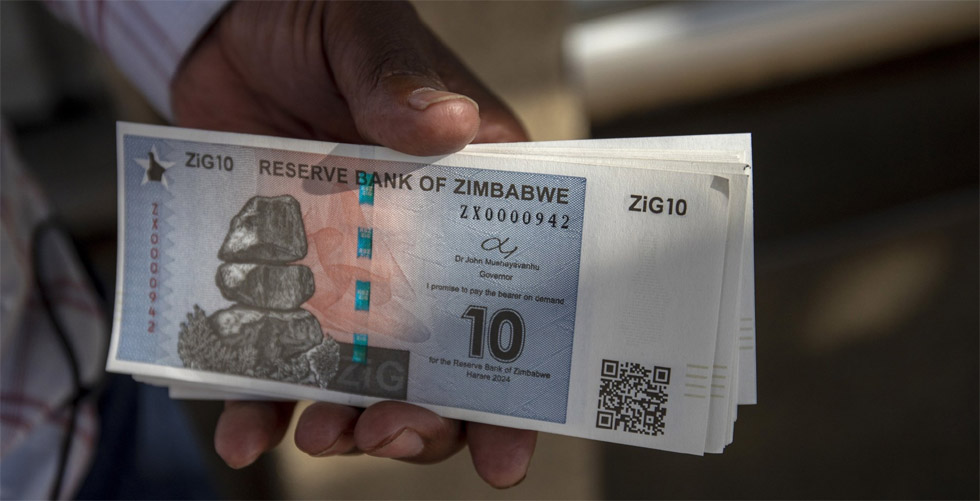
Ray Bande
Senior Reporter
THE stabilisation of the Zimbabwe Gold (ZiG) currency has yielded positive service delivery results for local authorities across the country – with Mutare City Council achieving a significant 49,67 percent improvement in budget performance mid-year.
The introduction of the ZiG in April 2024 marked a significant milestone towards economic stability, with even the International Monetary Fund (IMF) acknowledging its stabilising effect on the economy.
The City of Mutare’s improved budget performance was revealed during a half-year budget report engagement with stakeholders held at Mutare Hall on Monday.
In his report, Mutare City Council Town Clerk, Mr Blessing Chafesuka, attributed the improved budget performance to the relatively stable exchange rate that has been prevailing since the introduction of the gold backed local currency.
Mr Chafesuka said the exchange rate has, however, been very stable, and that is why the council’s budget performance is at 49,67 percent.
The half-year budget review engagement with stakeholders was aimed at informing the 2026 budgeting, and gather views on improving the budget performance.
However, it is the stability of the local currency that took centre stage, as it enabled the local authority to meet most of its targets, with some ratepayers paying for services in the ZWG, while others make payments in hard currency. Apart from Mutare City Council, most local authorities in Manicaland and across the country have also managed to meet basic service delivery standards, such as consistent refuse collection, improved potable water supply, and minimal road maintenance works, thanks to the ZiG stability that has kept purchasing transactions viable for both suppliers and local authorities.
Apparently, the ZiG has completed its longest period of stability since its launch in April 2024, increasing confidence about prospects for prolonged price stability, improved investor confidence, and recovery in household spending power.
Analysts and business leaders say the steady exchange rate has started to reduce inflationary pressures and encourage transactions in the local currency, dissipating scepticism over whether the stability would last.
The new currency has held its ground, consigning to the past the memory of the country’s troubled past, when inflation in July 2008 rose to its highest level, wiping out all local currency savings in the process.
The economy had not experienced any prolonged currency stability between February 2019, when the local unit was reintroduced, and April 2024, when the ZiG was launched.
The Zimbabwe Gold experienced significant devaluation and depreciation since its relaunch in 2019, following a hyperinflation-induced 10-year hiatus, leading to reduced confidence and a widespread reliance on the US dollar for transactions.
However, the picture has changed.
Monthly inflation in Zimbabwe has mostly been declining since February 2025, due to sustained tight monetary and fiscal policies and the stability of the ZiG.
Business leaders, economic analysts, and authorities have been paying close attention to the trajectory of monthly inflation, as its computation over a given year-long period determines the annual rate.
The low inflation, even dropping to negative rates, has averaged around 0,5 percent to 0,6 percent from February to July 2025.
According to the Reserve Bank of Zimbabwe, the monthly inflation rate is projected to average below three percent for the remainder of the year, and potentially revert to the low levels seen between February and July 2025.
The prolonged local currency stability has seen the gap between the official exchange rate and the parallel market rate, which affects local currency prices, falling from 100 percent at one point to around 26 percent.
The Central Bank forecasts annual inflation to fall below 30 percent by the end of 2025, following a temporary peak in September 2025 due to a base effect from 2024 price increases.
For the ordinary Zimbabwean, whose incomes were often eroded by persistent currency swings, the positive impact of the more stable ZiG is already being felt through prolonged price stability and other essentials such as public transport fares.