Online Reporter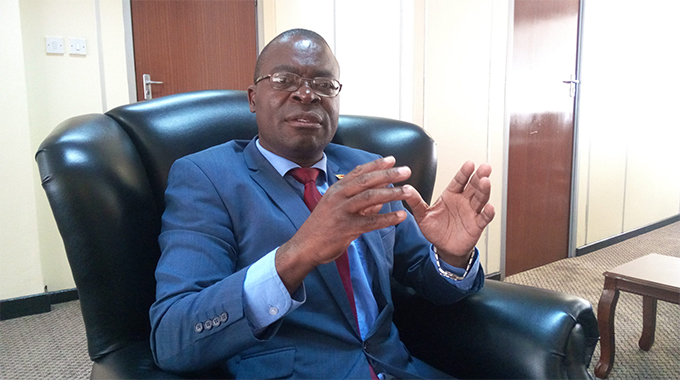
Mukudzei Chingwere
Herald Reporter
AMID ongoing efforts to position itself as a key player on the global stage, Zimbabwe is doubling down on a foreign policy grounded in sovereign equality and economic diplomacy.
Last week, Cabinet approved the new Foreign Relations and International Trade Policy.
Speaking recently, Foreign Affairs and International Trade Minister Prof Amon Murwira underscored the country’s desire to engage with the world “as a confident and dignified partner.”
“Zimbabwe believes in the sovereign equality of nations, big and small. So, that is our principle first and foremost,” he said.“When we are interacting with any nation, big or small, the primacy is the national interest of Zimbabwe.”
Prof Murwira said the country must see itself as neither marginal nor inferior in international relations.“Zimbabwe is ready to engage as a confident, dignified partner rooted on its heritage and focused on its future and always committed to the principles of Pan-Africanism and a shared African destiny,” he said.
“In our interactions with any country, we are guided by our doctrine on foreign relations. Basically, getting rid of the colonial mindset of being small. We are not small as we are Zimbabweans.”
Prof Murwira emphasised that Zimbabwe’s foreign policy was increasingly geared toward economic diplomacy — leveraging partnerships to enhance trade, investment and development.
“Our whole policy is on economic diplomacy at the end of the day, the policy is for the dignity and prosperity of Zimbabwe, because Zimbabwe is what it is because of the economic endowments that it has,” he said.
“At the beginning of the Second Republic, you will find out that our external trade receipts were in the region of US$2 billion; as at the end of last year, our external trade receipts were in excess of US$7 billion.”
That surge, he said, reflects the country’s efforts to reassert itself in regional and global markets.
Nigerian-based academic and political scientist, Dr Prolific Mataruse, said a well-articulated foreign and trade policy was key for a country’s broad aspirations.
“A well-articulated foreign and trade policy, just as the one just enunciated by the Government of Zimbabwe, helps all actors, domestic and foreign, appreciate our national standpoint,” he said.
“Foreign policy is both a craft and vast multi-layered technical field. Your action or inaction, that is, what you choose to do or not do, has to be part of an elaborate plan. Every decision a nation takes must be fed from and into a strategic plan. One cannot afford to be lax on this chess board of national interests as the stakes are high and the consequences can be far-reaching.”