admin
admin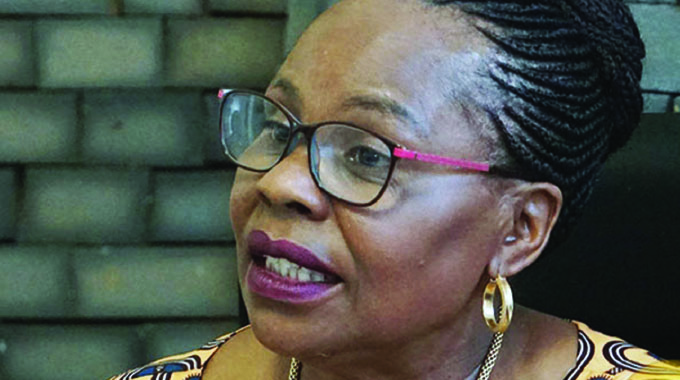
Richard Mahomva
Interview
As part of extending solidarity to the People’s Republic of China on the occasion of the 20th Communist Party of China (CPC) Congress, Richard Mahomva (RM) had an exclusive interview with the Minister of Information, Publicity and Broadcasting Services Senator Monica Mutsvangwa (MN) to reflect the Africa-China relations given China’s increased cooperation with Zimbabwe in various areas of socio-economic and political development.
RM: Honourable, using Zimbabwe as a case study how do you describe China’s overall relationship with the rest of Africa?
MN: Zimbabwe and China, as does China and Africa, are historically intertwined. Our contemporary relations can be traced to as far back as the 1940s. This history is significant because it is shared between China and Africa’s combined population of 2,6 billion people, implying over a quarter of the world’s total population.
So, to say Zimbabwe and China or China and Africa are partners insinuates mere bilateral formality, yet we are in fact a grouping of sister countries and this bond transcends convenient terms in conventional diplomacy.
Together, we have realised breadth-taking growth in the economic domain, along with socio-political cooperation. In terms of economic cooperation, China-Africa trade has grown from a paltry US$10 billion in 2000, to today’s US$250 billion. That’s an astronomical growth rate.
On the diplomatic, political and social relations front, relations between the two trade partners have also continued to blossom. As you know, China is a long-standing partner to the African continent as witnessed by the support it rendered to several liberation movements, including those in Zimbabwe, as African states fought for their independence.
China armed African national liberation movements as well as provided guerrilla training. It thus played a pivotal role of providing military support to the Zimbabwe struggle, including ensuring that more than 75 percent of Zimbabwe’s guerilla combatants and current army generals received military training either in China or by Chinese Military instructors in Tanzania during the Chimurenga armed struggle.
Our own President, Cde Dr E.D. Mnangagwa is a Chinese trained combatant. He was among the pioneering groups which China opened its doors to when our people decided to take up arms against the colonial regime.
That long standing historic relationship has been cemented in post-independent Africa through strong economic ties where Africa and China have worked together to develop our economies for mutual benefit.
Therefore, China is an invaluable strategic partner to Zimbabwe and the continent. China has invested in developing infrastructure and helping us to build capacity for production in agriculture, mining and manufacturing.
You may recall that China was the first big power to realise the potential of Africa and its youthful and dynamic population. This culminated in the establishment of the Forum for China-Africa Cooperation (FOCAC) in 2000.
FOCAC has been held regularly in alternative African and Chinese capitals and this has resulted in the pioneering of new grounds of international cooperation.
The European Union, the Russian Federation, Japan, India, and Turkey have since followed suit in holding summits with African nations.
China’s domestic investment in infrastructure has paid huge dividends to Africa, especially with the advent of the Belt and Road Initiative, which I think is one of the most critical and consequential economic initiatives of the 21st century, both in magnitude and impact, spanning across three continents and beyond.
We have also witnessed huge scores being recorded in the area of telecommunications cooperation with Chinese companies offering high quality and reliable equipment at affordable cost. This has since been extended to railway and port development.
A new and even more exciting phenomenon is the arrival of private Chinese capital on the African investment scene. As China breeds its own crop of billionaires, some are venturing into Africa in a big way.
Zimbabwe is benefiting from the modular rolling out of a Carbon Steel Ecosystem through investment by Tsingshan Holdings Group.
The transformational project kicked off with ferrochrome on the Great Dyke Selous in 2013; then to coking coal in Hwange 2021; and finally the ongoing carbon steel plant in Manhize. Therefore, as the world advances towards the Fifth industrial revolution, the construction of the largest steel plant in Africa will catapult Zimbabwe’s economic prospects.
RM: What are your reflections on China’s support for multilateralism and dialogue in support of global peace and security?
MN: China has emerged as one of the leading global voices dedicated to non-aggression and peaceful resolution of conflicts.
Beijing has always championed the sovereignty of nations in the ambit of the United Nations Organisation. This is attested to by the nation’s participation in, and voluntary funding of peacekeeping and development focused initiatives around the world.
As we speak, China has become one of the leading contributors to multilateral institutions like the United Nations and through this support has helped to contribute to world peace, fight disease, hunger and poverty and help spur growth and development of countries, especially in Africa.
Noteworthy is its outstanding contribution to UN Peace-keeping operations, much to the benefit of Africa. It has also been a positive counter force to the historical exploitative as well as divide and rule malign conduct of the post-imperial West. After all, China has never colonised other nations. China’s development never haemorrhaged other civilisations as is being done by countries that have placed us under economic sanctions. China is not a warmonger. From the outset, China has made it clear to the world that all its policies are predicated on ‘Building a Shared Future of Peace and Prosperity for all Mankind’.
By contrast, the US has never stopped waging and supporting warfare directly and by proxy. Iraq, Serbia, Libya, Afghanistan, Syria, Ukraine, Yemen, Ethiopia have been wrecked by American pursuit of foreign aggression. Furthermore, China has also written off debts for African country as a way of helping them bounce back from global economic shocks and this is guaranteeing their economic stability and welfare.
Critically, China is also using its financial clout to re-orient the IMF-World Bank Institutions towards roles more supportive of developing nations, particularly on the African continent. It recently availed its quota of IMF Special Drawing Rights to developing nations, and this is commendable. At the same time, it is cancelling some of the African concessionary debt, which gives countries indebted to it room to grow sustainably. In terms of global geo-politics, China is actively using the Brazil, Russia India, China and South Africa (BRICS) as an alternative counter weight to the malign aspects of Western powers, which has given a strong voice to historically marginalised States to dictate the pace and direction of global economic and political developments.
In that regard, despite the increasing use of impulsive and unilateral sanctions to coerce other nations, which is now a permanent feature of US policy, China’s interventions have allowed sanctioned states like Zimbabwe to starve off from economic strangulation. The Asian Infrastructure and Investment Bank is challenging the World Bank as it offers less onerous and un-politicised finance to developing nations. Other Chinese policy banks like EXIM Bank and China Development Bank as well as commercial banks like ICBC have been active in the funding of African projects across all sectors.
RM: What is your take on the misuse of international institutions or instruments like sanctions by some states?
MN: It is a well-established and documented principle of China that has always been opposed to the misuse of international institutions to punish or unfairly treat other nations. For example, in our case, China has opposed the imposition of illegal western sanctions and has previously used its seat on the UN Security Council to veto attempts to impose measures aimed at crippling our country when Zimbabwe embarked on the Land Reform Programme. Today, our people are proud owners of the land of our birthright because China stood with us against some members of the United Nations Security Council who sought to militarily intervene and reverse our reforms. Thereafter, China assisted with agricultural inputs and helped us to resuscitate our tobacco sector.
China has been consistent in calling for non-interference, respect for sovereignty and mutual cooperation in order to resolve differences. We are grateful for the support China has rendered to us as a nation, for standing with us in our time of need and becoming an all-weather friend that we continue to depend on. China eschews any interference in the internal affairs of other nations. Its growing portion of aid and investment comes with no strings attached. It never lectures African nations on how they should run their affairs, neither does it strive to export its political model. This is a far cry from the constant nagging of the West through the strictures on democracy, human rights and other hectoring messages to African leaders. Unlike Washington and other capitals of the West, Beijing always encourages accommodation as opposed to hegemony and fiat over other nations.
RM: Since the armed struggle to date, how would you describe China’s support to the cause of African liberation?
MN: The support of African liberation movements is the hallmark of China’s reputation. In our case it assisted in training our thousands of our liberation fighters as well as supplying them with arms and equipment. The independence of many nations in the region would not have been possible without that support. The story of China’s development resonates with many African countries. How the country has grown from being a low-income nation to the second largest economy in the world is an inspiration to African nations and a path that we can take a leaf from. Fortunately China is committed to walking with us on this journey. For example, through building infrastructure such as roads, railways and airports and transferring new technologies that will enable economic growth. It’s also committed billions of dollars in support to Africa under the Forum for China-Africa Cooperation, money, which is transformative. Recently China was helpful in ensuring that African nations had access to COVID-19 vaccines at a time the continent was at risk of being left behind as most western nations kept supplies for themselves. It is such unwavering commitment to helping its longtime partners on the continent that makes China special
RM: As Minister of Information in the country, what is your position on the continued misrepresentation of China by some sections of the media?
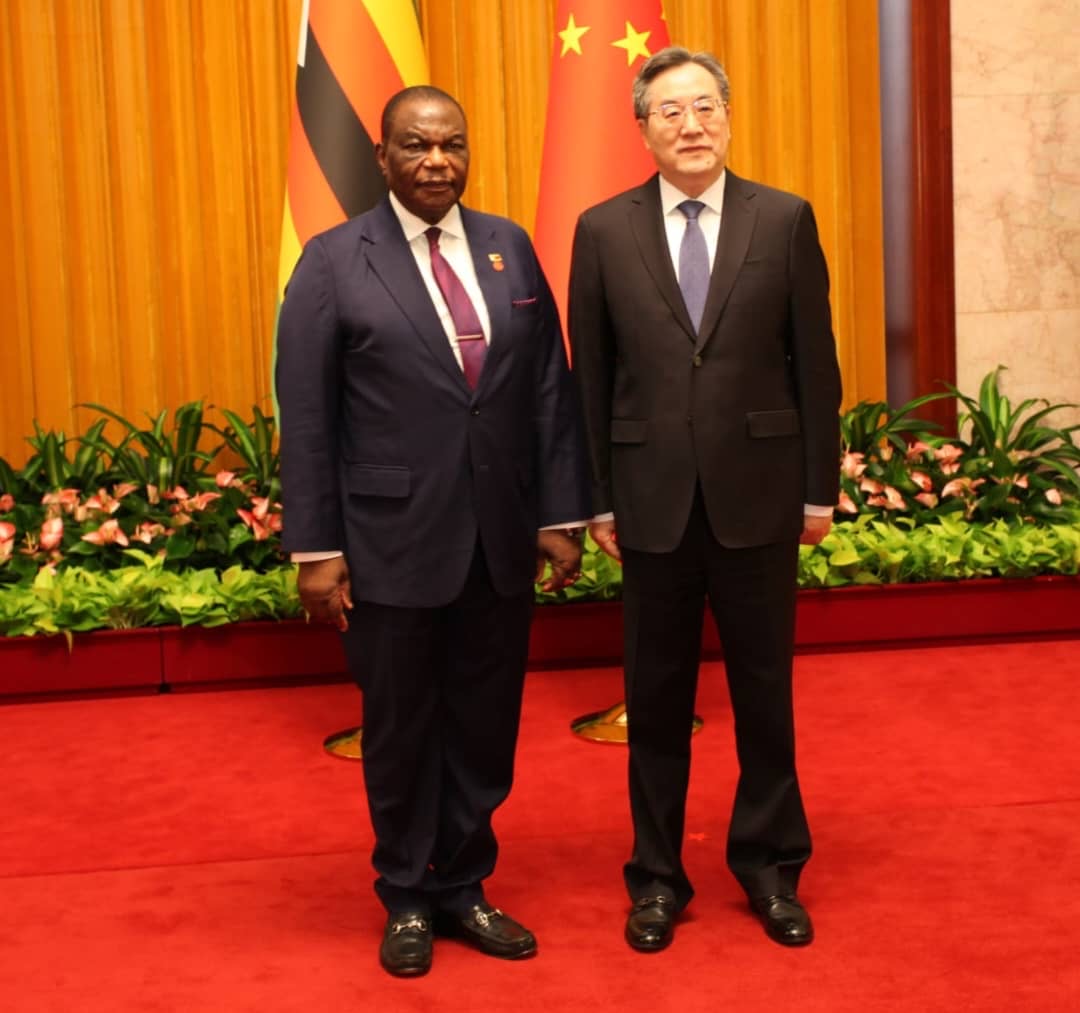
MN: Like China, Zimbabwe continues to suffer an onslaught of negative and false coverage by some quarters. This is unjustified and unfortunate and meant to tarnish the image of both our countries. We are, however, undeterred and will continue to push for engagement and re-engagement and do not seek to interfere in the policies of any other nation. At the height of our land reform programme, we were vilified and ostracised through sustained negative media publicity, and our Government took the decisive position to adopted what came to be known as the Look East Policy. We embraced China and other nations in the Eastern bloc as our major economic allies. In all this, China was our major focal point of fraternal reference. Even as we Engage and Re-engage in our claim to be Friends to all and an Enemy to None, it must be emphasized that we have deep-cutting mutual sovereign confidentialities we share with China. This explains the state visit to China by our President, His Excellency Cde Dr E.D Mnangagwa in April of 2018.
Our agenda is simply to develop our country into an upper-middle income economy by 2030 and we enjoy the support of friendly nations like China in achieving that. Those who are pushing negative narratives are threatened by the potential we have especially as we work closely with partners like China. In the fullness of time their malicious agenda will fail.
RM: Going forward, what are the main areas that you think the China-Africa and Zimbabwe relationship should focus on?
MN: Priority must be accorded to strong collaborations in tourism, academia as well as media exchanges; escalating prospects for integrated research between China, Africa and Zimbabwe’s establishments in different significant areas, such as in infrastructure, mining, manufacturing and technology transfer. The aforementioned areas necessitate sharing of values, information and knowledge to strengthen collective dialogue for genuine investment potential and indeed for sustainable development. In Zimbabwe, China’s involvement has recorded changes of mutually advantageous connections in various sectors of the economy, including the construction of roads, hospitals, schools, mines and the development of textile factories. Zimbabweans can also exploit knowledge from Chinese investments in the local economy.
Furthermore, Chinese investors can be encouraged to invest more in Zimbabwe and Africa as a whole. Zimbabwe needs Chinese entrepreneurs to invest more in the manufacturing sector particularly the local manufacture of beneficiated electronic products such as computer chips, lithium batteries and an assortment of alternative energy products for employment creation, local consumption and export. Additionally, investment from China in large scale infrastructure in construction of commercial buildings, power generation and water supply in accordance with current and future demand can enable Zimbabwe to export, save and earn foreign exchange.
As already alluded to, China being technologically advanced can support Zimbabwe to move beyond being a provider of cheaper raw imports into equipping the country to be able to industrialize and to trade more profitable processed and finished goods, thus improving the country’s participation in world trade.
Africa should pragmatically focus on formulating strategic partnerships aimed at taking maximum advantage of the opportunities presented by the emergence of China on the world stage in all spheres. This is particularly important if the ascendancy of China onto the world stage is to assist in transforming Zimbabwe on the path of tangible economic growth and development. This could be achieved through key reforms, including reducing domestic barriers to entry and exit, and establishing institutions that foster vigorous domestic competition between companies; putting in place effective incentives and discipline to bring about sound governance; and pursuing policies that make domestic labour and capital markets more flexible as well as enhancing productive efficiency including the identification and securing of markets.
Tourism has also been described as key in contributing to economic growth, since the development of new tourism destinations is often accompanied by the arrival of new businesses and non-government players. So, China can assist Zimbabwe by constructing tourism, leisure, sport and recreation facilities.



 Online Reporter