admin
admin
Chief Reporter
Zimbabwe will complete border verifications with neighbouring countries ahead of the African Union 2017 deadline to resolve boundary disputes amongst member states.
The drive is part of AU initiative to promote peace and security on the continent as ill-defined borders are a potential source of conflict, especially when natural resources are discovered in boundary regions.
Colonial demarcations left many national boundaries in dispute after African states gained independence, and estimates are that only a third of borders in Sub-Saharan Africa are clearly defined. Zimbabwe has outstanding border verifications to make with Botswana, Mozambique, South Africa and Zambia.
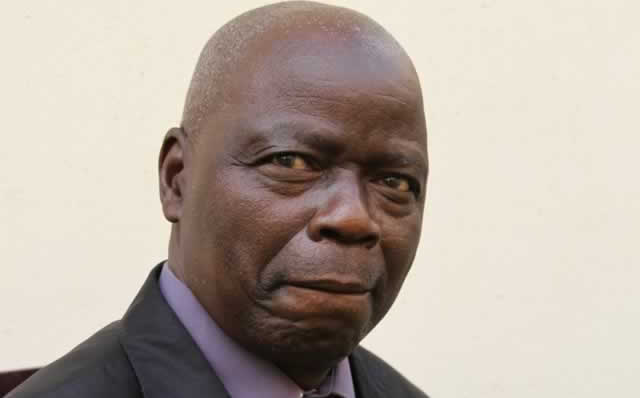
Lands and Resettlement Minister Dr Douglas Mombeshora told The Sunday Mail that authentication of borders was mostly needed for Zimbabwe’s eastern and western boundaries.
“The northern borders and southern borders are not much of a problem because they have rivers, but there is a lot of work that needs to be done for our eastern and western borders.
“We have set a target as a ministry that the verification of borders will be one of our major priority areas in 2016 so that we meet the AU deadline of 2017,” he said.
Dr Mombeshora said there were areas requiring verification between Zimbabwe and Mozambique, given that the two countries share an expansive border.
“With Mozambique, the area that we need to look at is quiet large, given that such the borders stretch for thousands of kilometres and a large option of the borders that we share with Mozambique are not separated by rivers. So there is a lot of work that lies ahead with regards to the borders with Mozambique,” he said.
Regarding Botswana, Dr Mombeshora said sites in the Fort Thuli and Kazungula areas needed verification, and work on that had started though financing for this remained a challenge.
Dr Mombeshora said there were no major challenges in demarcation of borders between Zimbabwe and South Africa as the two countries were mainly separated by the Limpopo River.
He said the only sticking point was the Tri-Point where the two countries also converged with Mozambique.
On the northern border with Zambia, Dr Mombeshora said ownership of some islands in the Zambezi River needed verification.
The minister said meetings had been scheduled with Zambian authorities to resolve the matter. At its 23rd Ordinary Session in Equatorial Guinea in 2014, the AU adopted the Niamey Convention to develop and strengthen good neighbourly relations.
The Niamey Convention is part of the AU Border Programme launched in 2007 for the twin objectives of preventing conflicts and deepening integration.


 Online Reporter