admin
admin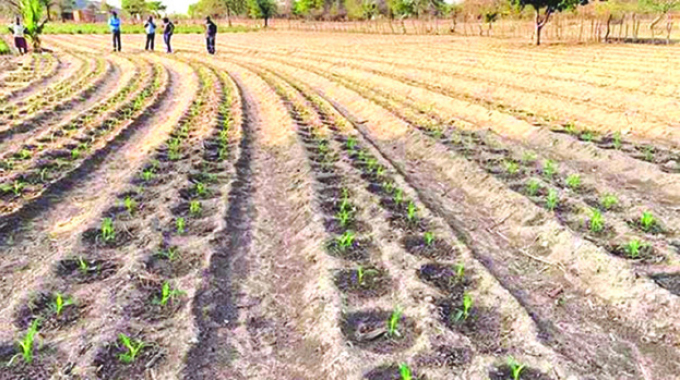
Willard Duri-Correspondent
The El Niño phenomenon poses a global threat to the agricultural livelihoods of millions of people.
In Southern Africa, the impact of El Niño has been felt across all sectors which include: agriculture, water and sanitation, energy, health and education, which leads to food and nutrition insecurity, suffering of vulnerable populations and economic contraction.
As multiple effects of El Niño unfold across the region, unprecedented droughts and floods are ravaging already-vulnerable communities.
Children, adolescents, women, and individuals with disabilities are facing a surge in critical needs, with the region on the brink of an escalating humanitarian crisis.
The 2023-2024 El Niño phenomenon is officially one of the strongest on record, according to the World Meteorological Organisation.
Heavy rains and severe flooding have hammered Eastern Africa, while dry conditions and drought emergencies have spread across Southern Africa.
Women and children have been the most affected due to the reductions in food production, active disease outbreaks, and increasing malnutrition rates.
El Niño has escalated regional climate patterns in Southern Africa as dry conditions and erratic rainfall trigger drought emergencies and widespread food insecurity among children, families, and systems already on the brink.
Drought-induced states of emergency were declared in Namibia, Malawi, Zambia, Zimbabwe, and Madagascar with high humanitarian needs expected across the sub region through early 2025.
Millions of people are in need of food assistance due to below-average harvests and insufficient food stocks, while as many as 3.5 million children will require nutrition treatment services in Angola, Malawi, Madagascar, Mozambique, Namibia, Zambia, and Zimbabwe.
Across the region, governments and regional bodies such as SADC and (Intergovernmental Authority on Development) IGAD have responded to El Niño through the development and coordination of response plans, resource mobilisation, and engagement with partners and other critical stakeholders to build resilience.
Community resilience refers to the capacity to renew, reorganise and restore situations after disruptive incidences. Building resilience implies scaling up measures to reconstruct communities so that they are flexible, adaptable and open to learning because droughts permeate every aspect of human life.
It is imperative that preparedness and response are prioritised through shock-responsive adaptive humanitarian actions that protect and centre vulnerable children and adolescents.
In Zimbabwe, the El Niño induced drought resulted in more than 80 percent of the country receiving below-average rainfall and 12 percent of planted maize damaged.
On average, over 40 million people have been estimated to be food insecure every year by the SADC Regional Vulnerability Assessment Programme over the past five years.
Contributing factors to widespread food and nutrition insecurity according to SADC include pervasive poverty, climate change (prolonged dry spells, frequent droughts and floods), conflicts (human and wildlife), gender disparities, pests and diseases (including human diseases especially HIV), natural disasters and high food prices (affecting agricultural inputs such as seeds, fertilisers and agrochemicals).
Following this season’s devastating El Nino-induced drought, the President declared a National State of Disaster in April.
The declaration has an indicative resource requirement of US$2 billion, for mitigation excluding US$717 million for resilience building.
Government has been investing in irrigation projects to boost agricultural productivity and food production.
Irrigation Development Alliance was also formed in 2021, to rally support, to create and enabling policy environment, and to mobilise private sector resources for accelerated irrigation.
The alliance was also developed and created for risk sharing in which the Government will take some of the risk with farmers taking up 20 percent of the risks, private sector with a minimum of five percent while banks 50 percent risks development.
The Government has also put in place many irrigation schemes to enhance crop production in drier parts of the country. Tokwe Mukosi Dam, the largest inland water body in the country was commissioned to benefit rural households.
Dams such as Lower Gweru, Mushandike, Stanmore, Rupike, Chinyamatumwa, Mashoko, Rozva and Shereni support small scale irrigation schemes.
Each of the schemes benefit an average of 180 households of six members each translating into 7 680 rural beneficiaries.
The Government is also working closely with developmental partners in building resilience by funding community projects that alleviate water shortages.
Water harvesting is an important strategy that reduces water supply shortages. Rain water harvesting subscribes quite well to the concept of Integrated Water Resource Management (IWRM).
This has resulted in the construction of tanks for water harvesting.
Conservation Agriculture (CA) popularly known as Pfumvudza /Intwasa is one sustainable agricultural strategy implemented by Government and developmental partners to empower communities.
Zimbabwe has adopted a twin-pronged approach to climate-proofing agricultural production since 2020, which has seen the country return to national cereal sufficiency.
This has seen farmers in low rainfall areas receiving traditional grains seed while those in high rainfall get maize seed.
Promotion of Pfumvudza/Intwasa has also enabled farmers to get better yields even under low rainfall.
Zimbabwe must emerge from this drought stronger and better-able to withstand future climate induced shocks.
Feedback:
0719411601


 Online Reporter