Gibson Mhaka-Zimpapers Politics Hub
The commissioning of the reconstructed Wanezi Dam, Irrigation Scheme and Solarised Piped Water System in Insiza District recently was more than the completion of a rural infrastructure project.
It signals the continuing evolution of Zimbabwe’s relationship with the United Kingdom, with development cooperation increasingly centred on practical interventions that support national priorities, climate resilience and rural industrialisation.
For many years, relations between Harare and London were largely defined by political disagreements. However, recent engagements suggest that both countries are increasingly identifying areas of mutual interest, particularly in climate adaptation, food security and sustainable economic development.
The Wanezi project, implemented under the Climate Adaptation Water and Energy Programme (CAWEP), illustrates this emerging approach. Rather than focusing on short-term humanitarian assistance, the project represents investment in productive infrastructure capable of transforming rural economies over the long term.
Speaking at the commissioning ceremony, British Embassy Development Director and Deputy Ambassador Dr Joanne Abbot reaffirmed the United Kingdom’s commitment to supporting Zimbabwe’s climate adaptation agenda, emphasising that the partnership is anchored on practical solutions that directly improve livelihoods.
Her remarks are significant because they align closely with Zimbabwe’s own national development priorities under Vision 2030, which places considerable emphasis on irrigation development, climate-proofed infrastructure, food security and inclusive economic growth.
Climate change has become one of Zimbabwe’s greatest development challenges. Successive droughts, erratic rainfall patterns and rising temperatures continue to affect agricultural productivity, particularly in semi-arid provinces such as Matabeleland South. These climatic shocks have reinforced the need to reduce dependence on rain-fed agriculture by expanding irrigation infrastructure and improving water security.
Against this backdrop, the rehabilitation of Wanezi Dam is strategically important.
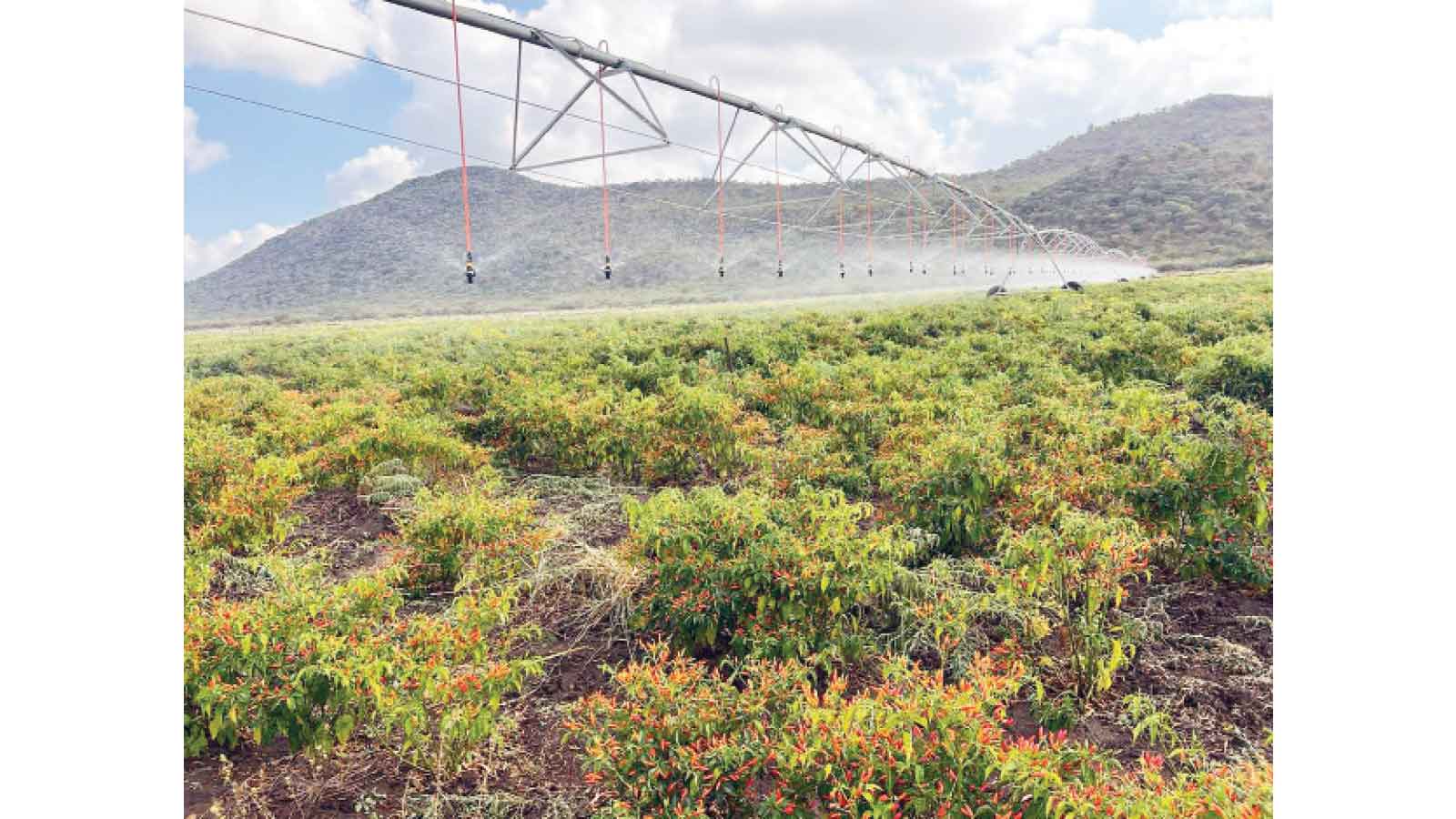
Beyond providing reliable water supplies, the project creates conditions for year-round agricultural production, increased crop diversification and higher productivity. This provides communities with opportunities to move beyond subsistence farming into commercial agriculture, creating additional income streams and stimulating local economic activity.
The inclusion of a solarised piped water system also reflects Zimbabwe’s broader transition towards renewable energy solutions. As the country continues pursuing cleaner and more sustainable energy sources, integrating solar technology into rural water systems reduces operational costs while improving the reliability of service delivery.
Equally important is the project’s emphasis on value addition and market participation.
Dr Abbot noted that CAWEP integrates business development support alongside irrigation infrastructure, enabling farmers to improve productivity, access finance and participate in commercial value chains. This approach resonates with Government efforts to transform agriculture from primary production into a modern, value-driven sector capable of supporting agro-processing industries and rural industrialisation.
The Wanezi initiative also demonstrates the growing importance of climate finance in supporting Zimbabwe’s adaptation programmes.
Developing countries continue to bear a disproportionate share of climate-related losses despite contributing minimally to global greenhouse gas emissions. Consequently, partnerships that mobilise international climate finance have become increasingly critical in helping vulnerable communities build resilience while sustaining economic growth.
The United Kingdom’s support through its international climate finance programme, therefore, complements Zimbabwe’s ongoing investments in dam construction, irrigation rehabilitation and rural development.
The project further highlights the effectiveness of multi-stakeholder partnerships involving Government ministries, the Zimbabwe National Water Authority local authorities, traditional leaders, the United Nations Development Programme, development partners and beneficiary communities.
Such collaborative models are increasingly becoming essential in implementing complex climate adaptation programmes that require technical expertise, financial resources and strong local ownership.
Importantly, Dr Abbot’s reaffirmation of Britain’s commitment reflects a broader diplomatic trend in Zimbabwe’s international engagement.
As the Second Republic continues pursuing its engagement and re-engagement policy, development cooperation has increasingly become a platform through which Zimbabwe strengthens partnerships with bilateral and multilateral partners based on shared development objectives rather than political differences.
For Zimbabwe, the ultimate measure of success will not simply be the completion of infrastructure projects, but the ability of communities to translate improved water security into higher agricultural production, increased household incomes, enhanced food security and sustainable rural enterprises.
If replicated across other drought-prone districts, integrated projects such as Wanezi could become important building blocks in Zimbabwe’s broader climate adaptation strategy while advancing the country’s vision of an upper middle-income economy by 2030.
The Wanezi project, therefore, represents more than an engineering achievement. It demonstrates how climate resilience, infrastructure investment, international cooperation and community participation can converge to strengthen rural economies and improve livelihoods, while reinforcing an evolving Zimbabwe-United Kingdom partnership built on shared development priorities and practical solutions.