Online Reporter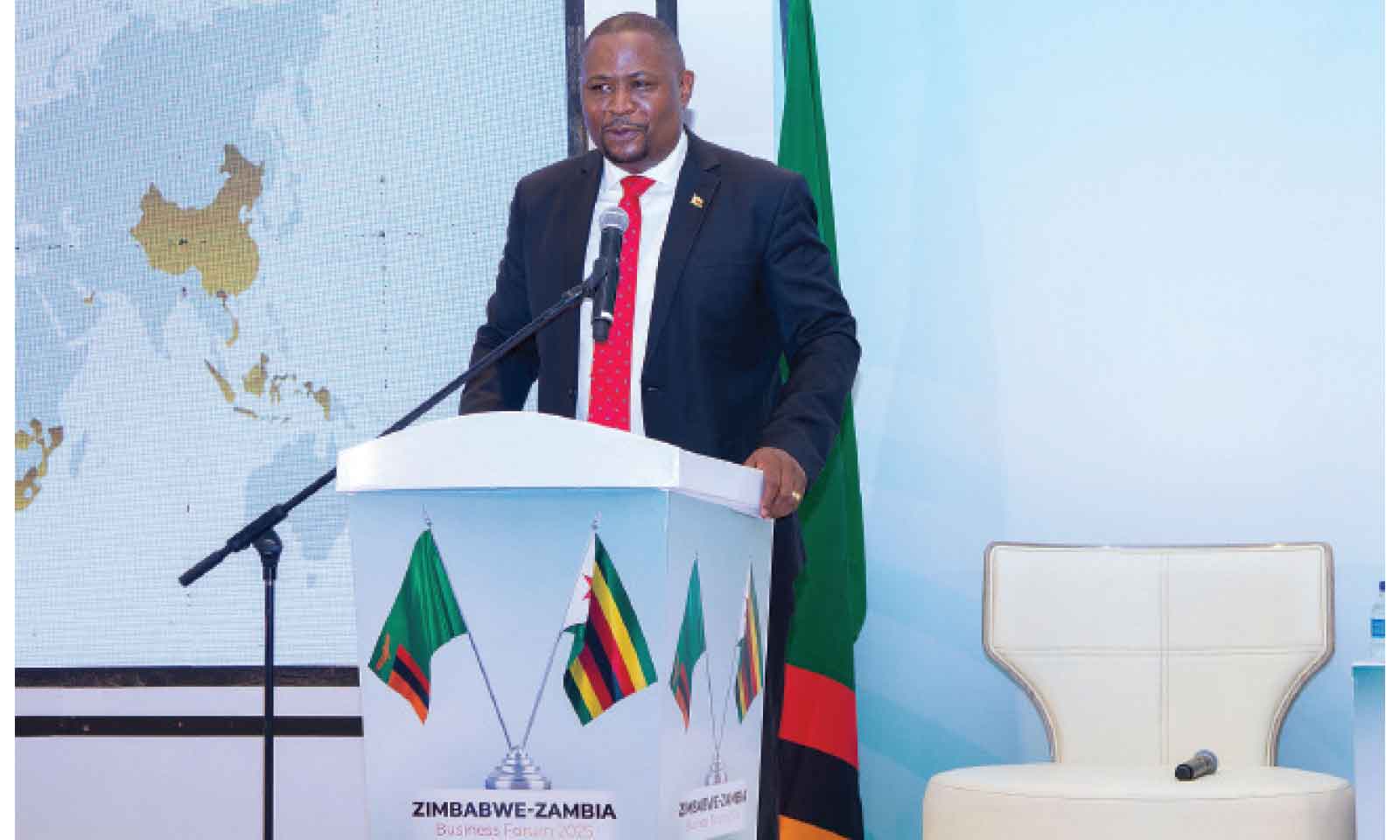
Michael Tome
Business Reporter
ZIMBABWE and Zambia must shift their economic relations from basic trade to joint industrial development to unlock real value for their citizens, national trade promotion and development body, ZimTrade, chief executive Allan Majuru has said.
Speaking at the Zimbabwe–Zambia Business Forum on Thursday, Mr Majuru implored the two countries to move from trading goods to building industries, from moving products to creating value, and from dialogue to measurable results.
He said that while trade between the two neighbours continued to grow, the focus should now be on tapping into high-potential sectors that can drive industrialisation and sustainable growth.
Mr Majuru indicated that the two countries must identify new areas of cooperation, further citing priority sectors as agriculture, agro-processing, manufacturing, construction, mining, energy, and services.
His sentiments come as the two countries have been working on establishing the Common Agro Industrial Park (CAIP) with support from COMESA and the United Nations Economic Commission for Africa (UNECA).
Zimbabwe-Zambia CAIP is a brainchild of an MoU that was signed in March 2021, which marked the launch of the joint industrialisation cooperation program between the two countries.
The programme’s long-term vision is to bolster cotton, wheat, rice, soya beans, sugar, livestock (leather and dairy), and horticulture value chains.
Seen as a vehicle for structural economic transformation, the CAIP seeks to commercialise agricultural value chains through joint ventures that improve productivity, enhancing export competitiveness, and boosting earnings for both economies.
Under this programme, the two countries will collaborate by setting up joint ventures that will enhance earnings from agriculture.
“Our two nations share a common border, and a shared vision of achieving sustainable growth through trade, investment, tourism and industrial cooperation.
“We must ensure that Zimbabwe and Zambia move from trading goods to building industries, from moving products to creating value, and from dialogue to measurable results that benefit our people.
“As we engage today, this forum is an opportunity to consolidate these achievements and identify new areas of cooperation. Some of the priority sectors include agriculture, agro-processing, manufacturing, construction, mining, energy, and services.
“These sectors are key to our industrialisation agenda and hold immense potential for joint investment and value addition. We believe that with the proximity that we have and cultural similarities, we can go beyond this mark,” said Mr Majuru.
Zimbabwe and Zambia are presently largely trading partners, with the latter being Harare’s fourth-largest export destination, accounting for around 9 percent of total exports, a clear indication of the strategic importance of this partnership.
Zimbabwe’s key exports to Zambia include processed foods, agricultural inputs and implements, building and construction materials, energy products, tobacco products, coal, and related by-products.
As the largest off-taker of Zimbabwe’s value-added exports, Zambia plays a pivotal role in sustaining demand for locally manufactured goods.
According to TradeMap, Zimbabwe’s exports to Zambia increased by 175,4 percent from US$60 million in 2021 to US$144,760 million last year, a clear sign of growing confidence and a show of opportunities between our economies.
Zambia Development Agency director of investments, Mr Chimuka Nketani, said the two countries shared a broader vision of regional integration and industrial development, urging stakeholders to translate policy commitments into concrete business ventures.
“Zambia and Zimbabwe, as we all know, share more than a border. We share a vision of regional integration, industrialisation, and sustainable development.
“And so it is our hope that this forum, to a large extent, will help to present an opportunity to all of us to be able to translate that shared vision into practical business linkages,” said Mr Nketani
ZIDA chief executive Mr Tafadzwa Chinamo also highlighted ongoing collaborative projects, including the Lake Kariba Blue Economy Strategy and Investment Plan.
“Earlier this year, ZIDA participated in the validation and launch of the Lake Kariba Blue Economy Strategy and Investment Plan, a joint initiative between the Governments of Zimbabwe and Zambia, supported by the African Development Bank (AfDB) and implemented by the Food and Agriculture Organisation.
“This 10-year, a US$35 million initiative aims to transform Lake Kariba into a vibrant hub for sustainable aquaculture, fisheries, tourism, and renewable energy, directly benefiting more than 3.5 million people who depend on the lake for their livelihoods,” said Mr Chinamo.
With trade volumes rising and cooperation deepening across multiple sectors, Zimbabwe and Zambia are now better positioned to forge a shared path toward industrialisation, sustainable growth, and regional competitiveness.