Professor Mthuli Ncube
I led a delegation attending the World Economic Forum, which convened the 17th Annual Meeting of the New Champions in Dalian, China.
It is basically the summer Davos.
The theme for the annual meeting was “Innovation at Scale”.
The meeting focused on areas such as the new energy minerals and the technology around those minerals.
It also focused on advanced manufacturing and green technologies.
And then also generally, the geopolitical environment; how it is shaping these areas and everything else.
One thing that is clear is that the current geopolitical environment is shaping everything.
When you think about the flow of capital, it is not simply about exchange rate differentials and inflation differentials . . . all those fancy economic terms and so forth.
It is about geopolitics.
Geopolitics is impacting the flow of capital, the flow of trade and even the distribution of growth around the world.
So, basically, dealing with that is a way to go to bring a more peaceful and more balanced world.
Here we are looking at the Middle East and then Europe, where we have two raging wars.
One thing that has been recognised is that for Africa, the cost of capital has gone up. The so-called African premium is a lot higher.
Also, the availability of concessionary capital is a lot lower.
ODA (Overseas Development Assistance) has dropped, as you know.
It has been the case since about a couple of years ago. And there are calls for alternative ways of raising finance to push Africa’s economic growth.
This was loud and clear from the deliberations.
Now, the one thing that has stood out is artificial intelligence (AI) and critical minerals. AI is going to be the biggest driver of development and economic growth going forward.
It will be adopted by companies and governments, however, at different paces and speeds.
But it is so far attracting a large amount of investment into that sector.
If you think of the recent initial public offering from Elon Musk’s company, SpaceX, over US$1 trillion in terms of valuation, this is a lot of money, the scale of which has never been seen before. But its benefits will come through two or three years down the line.
And also, the benefits of AI, two or three years down the line. But then we must prepare for it now and take our place in this new global technological revolution and not be left behind and support the development of data centres across Zimbabwe.
Critical minerals
The other area that emerged as a critical topic is that of critical minerals.
This involves minerals such as lithium, for example, and other rare earth minerals.
I think the question was: How can those who are endowed with the mineral extract maximum value from the minerals?
And here as Zimbabwe, we are able to contribute, having made sure that we have local beneficiation and it is followed through.
We have a law that says companies cannot export unbeneficiated lithium; they should beneficiate it to the level of lithium sulphate, if not lithium carbonate, which can go directly into battery manufacturing.
At the same time, once a company has moved from just lithium mining into manufacturing — because beneficiation is more of manufacturing than mining — then we can extend additional incentives in the form of tax breaks and our special economic zone provisions where we are able to do this.
But clearly, beneficiation is the way to go in terms of these critical minerals.
For those where we cannot beneficiate, we must be able to build laboratories for testing. We are building laboratories for mineral testing, for assaying, to make sure that what we export is well understood.
We must ensure that the composition of the ore or the material is well understood as to which minerals are in there, so that we can then levy the right level of royalties on these minerals and again maximise on value.
Financing
An area that was also discussed at length was that of financing.
We contributed that we need more domestic resource mobilisation strategies to fill the gap in the public sector due to fiscal pressures.
And I was able again to explain some of the sin taxes we introduced, such as the sugar content tax, tax on airtime and data usage, additional VAT (value-added tax) amounts on fast foods — all these create additional fiscal space, although targeted at health, it creates fiscal space elsewhere.
We also sought the promotion of public-private partnerships to crowd in the private sector, which is also critical. The various incentives we offer for importation of equipment in the manufacturing sector in terms of duty-free importation, this also goes a long way in supporting investment in these sectors.
Our exercise of reducing the cost of doing business also adds to supporting investment.
So, other than just mere finance, we also need the requisite incentives to support investment.
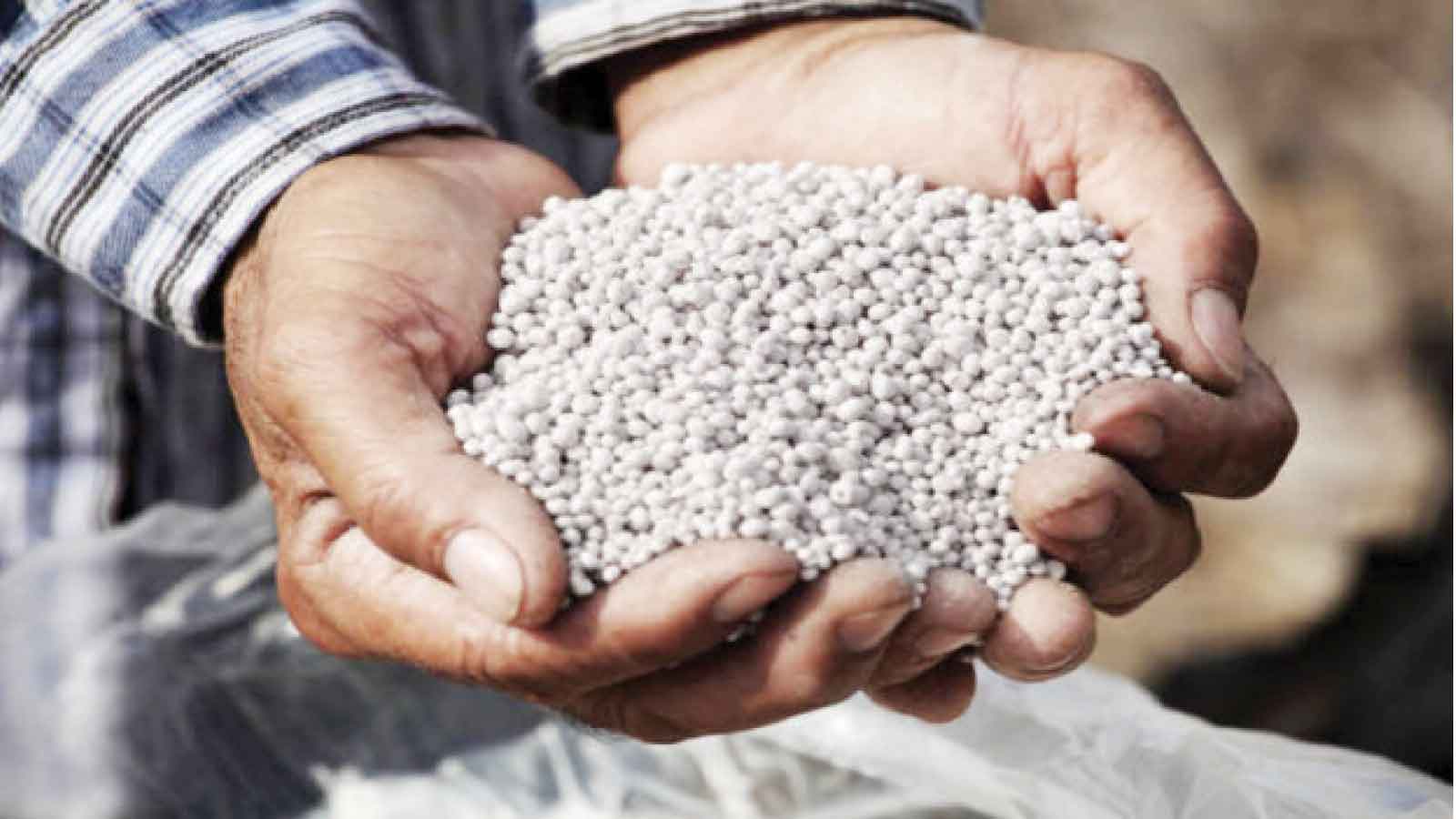
An area that was also discussed is that of fertiliser production, which is also a product of the global disruption that these two wars have caused.
As a result, the price of fertiliser has gone up maybe by 40 percent.
And we see this as an opportunity for us to invest in fertiliser.
So, we are looking to attract companies that will invest in this sector.
On Wednesday, here in Dalian, I was able to visit a company that is manufacturing equipment for the fertiliser plant that is being developed in Norton through Sunny Yi Feng and its partners.
They want to produce urea and other fertiliser products from coal and maybe also other products from Dorowa raw materials.
I also had some very important visits around China to companies that are investing in Zimbabwe or wish to invest in the country.
One of them was, in addition to the fertiliser manufacturing equipment company, Xintai Resources, who are building the Palm River complex in Beitbridge, again to discuss with them progress on their fertiliser investment.
Again, they want to produce fertiliser from coal, urea from coal, and it is clear that they are making very good progress.
And I think that in another year, they will be closer to production of urea. And this is commendable. Zimbabwe can become self-sufficient in fertiliser.
I also visited the China State Construction Engineering Corporation that has built several new cities around the world, including the one in Egypt, in Cairo, and we are keen to work with this company to develop the Mt Hampden new city. And we will be speaking with them further, discussing how best to partner with them to develop the city and how to position it as a viable new city next to Harare.
I also had conversations with the China Rail, who have been keen to support us on the redevelopment and upgrade of our railway network, but also generally want to support us in infrastructure development.
We spoke to them about resource-linked debt instruments that we could use and we want to explore going forward to support our infrastructure development, especially roads and rail.
I was also able to meet with the chairperson of the Zhejiang Huayou Cobalt, which owns Prospect Lithium in Goromonzi.
Through that partnership, we have done an incredible job in lithium beneficiation.
And, as I said earlier, they can now beneficiate up to the level of lithium sulphate and desire to proceed to lithium carbonate.
And they also want to invest in other areas — in the chemicals sector, the mining sector — and we discussed opportunities in exploring these in full. So, you can see our foray in China was not just about the discussions here at the World Economic Forum but also touching base with some critical investors.
I must say that in order to open up avenues to finance our growth going forward, it is important for us to join various financial institutions.
We have applied to join the BRICS Bank, and that membership application is being considered.
I also visited on this occasion the Asia Infrastructure Investment Bank (AIIB), with a view to getting Zimbabwe to join this bank.
We have expressed interest in writing and hopefully we can then engage AIIB to process Zimbabwe’s application going forward.
And the idea is to have choices and alternatives for sourcing capital for both our private sector and also the sovereign aspect, but mainly the private sector, because that is where most of the growth is coming from.
As you know, ZimStat (Zimbabwe National Statistics Agency) published last week that Zimbabwe’s growth for 2025 was in fact 8,3 percent.
This is the latest and final figure.
This is steadying growth, the highest growth in Sub-Saharan Africa, and this is a commendable rate of growth.
We saw agriculture growing at about 11,1 percent; manufacturing at 16,8 percent; the mining sector at 16 percent and the financial sector and insurance growing at 6,1 percent.
Going forward into 2030, we want to maintain a rate of growth of about 5 percent.
That is what we need to achieve upper middle-income society status.
Prof Mthuli Ncube is the Minister of Finance, Economic Development Investment Promotion. He was speaking at the World Economic Forum 17th Annual Meeting of the New Champions in Dalian, China.