Online Reporter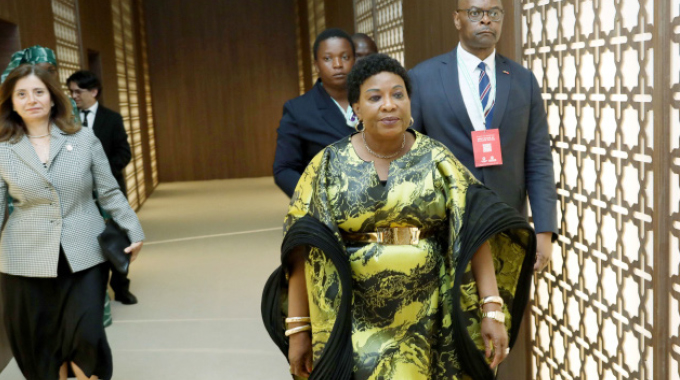
Blessings Chidakwa in Istanbul, Türkiye
ZIMBABWE joined the global conversation on climate action and sustainable waste management as Environment Patron First Lady Dr Auxillia Mnangagwa brought the country’s community-led environmental initiatives to the Zero Waste Forum attended by delegates from 183 countries.
The country — a signatory to the Global Zero Waste Goodwill Declaration aimed at promoting sustainable waste management practices — is making notable progress in environmental protection, reflecting growing international interest in Zimbabwe’s environmental programmes, hence the invitation.
Held under the auspices of the global zero waste movement championed by Türkiye and supported by the United Nations, the forum brought together policymakers, environmental experts and development partners to explore practical solutions to growing environmental challenges, including waste management, climate change and sustainable consumption.
Running under the theme “Road to Antalya: Zero Waste as Climate Action”, the oversubscribed forum positioned zero waste at the centre of global climate policy discussions while serving as a key platform ahead of COP31.
The gathering highlighted how localised interventions in Zimbabwe are contributing to global environmental goals and the transition to a circular economy through resource efficiency.
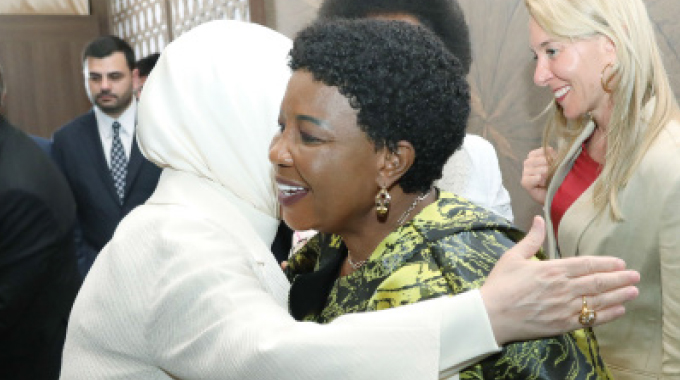
Dr Mnangagwa was invited by the First Lady of Türkiye, Mrs Emine Erdoğan, founder of the Zero Waste Foundation, which promotes and sustains the global Zero Waste initiative.
The invitation recognises her outstanding contributions and unwavering commitment to environmental conservation, with her advocacy for environmental stewardship and community-based sustainability earning international recognition.
Dr Mnangagwa’s participation places Zimbabwe’s community-centred approach to environmental stewardship in the spotlight as nations increasingly seek inclusive, grassroots-driven models to achieve the United Nations Sustainable Development Goals.
Through initiatives promoting recycling, tree planting, nutrition gardens, reforestation, river desiltation and responsible natural resource management, she has championed environmental sustainability at household and community level across Zimbabwe.
As Patron of the Environment, Dr Mnangagwa has spearheaded nationwide tree-planting programmes that have seen more than 28 million trees planted, while also encouraging the production of drought-resistant traditional grains to strengthen food security and climate resilience.
In partnership with the Environmental Management Agency (EMA), she has further advanced waste management and recycling initiatives that have equipped thousands of women, youths, men and people with disabilities with skills that are reducing waste, as well as supporting both livelihoods and the growth of a circular economy.
Majority of beneficiaries are now producing recycled goods for markets beyond Zimbabwe’s borders.
Her participation at the forum reinforced Zimbabwe’s commitment to international cooperation on environmental issues while showcasing practical community-driven solutions that are contributing to global sustainability goals.
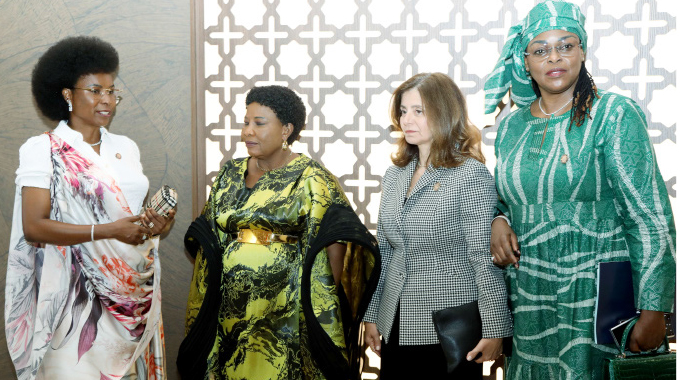
Speaking here, Dr Mnangagwa said communities remained at the centre of environmental transformation, with women, youths and other sectors of society actively participating in initiatives that are helping to build greener and healthier communities.
“We have also launched and rolled out the Zero Waste Movement throughout the country,” she said.
Dr Mnangagwa said the world was facing multiple and interconnected challenges, including climate change, biodiversity loss, environmental degradation, food insecurity, pollution and growing inequalities, making it imperative for countries to rethink how resources are produced, consumed and managed. “The theme of this forum, ‘Road to Antalya: Zero Waste as Climate Action’, speaks directly to the urgent need for practical, inclusive and transformative solutions.
“It sends a clear message to the world that zero waste is no longer merely an environmental discussion; it is now a climate imperative, a development priority and a pathway towards resilient and sustainable societies.”
The First Lady said Zimbabwe strongly supports global efforts that promote zero waste, waste prevention, circular economy approaches, recycling, sustainable production systems, responsible consumption and food waste reduction as part of climate action and sustainable development.
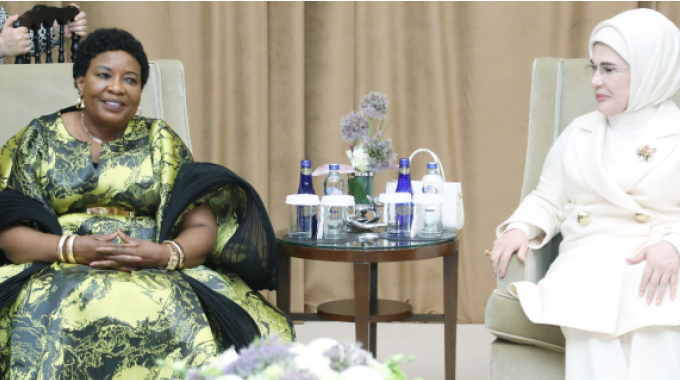
Dr Mnangagwa said while developing countries were already experiencing the devastating effects of climate change, including droughts, floods, cyclones, land degradation, water scarcity, biodiversity loss and food insecurity, mitigation measures were being implemented to address these challenges.
She said sustainable waste management had been prioritised under the National Development Strategy 2 (2026-2030), which focuses on climate resilience, environmental protection, recycling, waste-to-energy initiatives and the promotion of a circular economy.
Dr Mnangagwa said the Geo Pomona waste-to-energy plant, which is under construction, would process about 1 000 tonnes of waste per day and generate between 16 and 22 megawatts of electricity.
Zimbabwe’s enhanced Nationally Determined Contribution under the Paris Agreement, she added, commits the country to a 40 percent per capita reduction in greenhouse gas emissions while expanding adaptation measures, green jobs and socio-economic development targets.
Welcoming the forum’s focus on partnerships and implementation ahead of COP31 in Antalya, Dr Mnangagwa said the transition towards zero waste and circular economies must be just, fair and inclusive.
“The transition towards zero waste and circular economies must also be just, fair and inclusive.
“We must ensure that no one and no place is left behind but instead become central beneficiaries of green jobs and the green economic transformation,” she said.
Dr Mnangagwa said Zimbabwe stood ready to work with nations, partners, cities, businesses, researchers, civil society organisations and communities in advancing practical and scalable zero-waste solutions that contribute to global climate action and sustainable development.
“Together, let us transform ambition into action. Together, let us build cleaner, healthier, greener and more resilient societies. Together, let us ensure that the road to Antalya becomes a road towards hope, partnership, sustainability and shared global responsibility.”
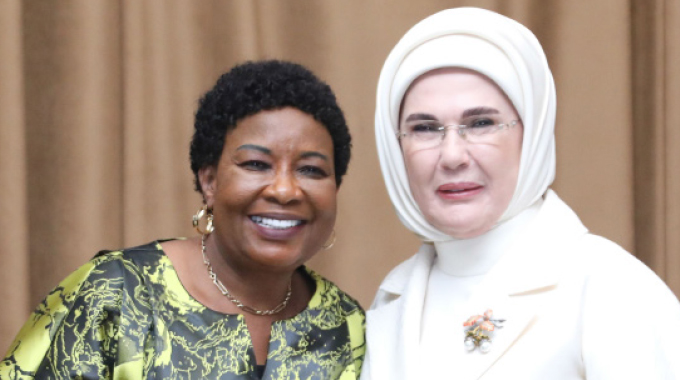
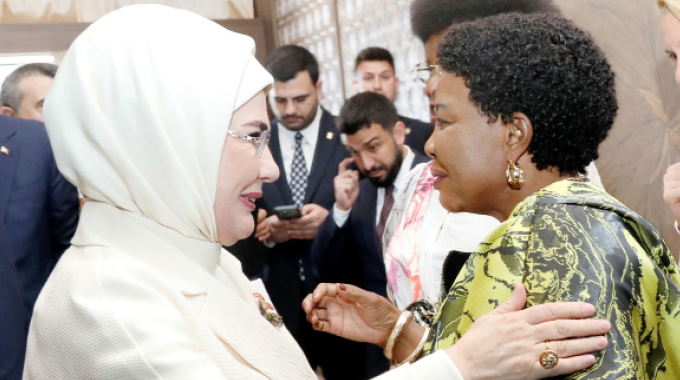
During the three-day forum, Dr Mnangagwa also met the First Lady of Türkiye, Mrs Erdoğan, where they exchanged views on environmental protection and sustainable development.
The First Lady conveyed greetings from President Mnangagwa to President Recep Tayyip Erdoğan and thanked Türkiye for supporting Zimbabwe’s bid for a non-permanent seat on the United Nations Security Council, where it won resoundingly.
Dr Mnangagwa informed Mrs Erdoğan on programmes being implemented through her impactful Angel of Hope Foundation, including drug rehabilitation, environmental conservation, women and youth empowerment, and health initiatives, among several others.
Mrs Erdoğan said that the challenges affecting young people, particularly drug and substance abuse, were similar in both countries, and pledged to support the Angel of Hope Drug Rehabilitation Centre’s endeavours to combat the scourge of drug and substance abuse.
Dr Mnangagwa also presented Mrs Erdoğan with a gastronomy recipe book and welcomed Türkiye’s establishment of an African Culture House, a platform where women from across Africa can bring artefacts and other products to sell and receive fair prices for their goods.
She also commended the growing bilateral relations between the two countries following the opening of Zimbabwe’s embassy in Ankara in 2019.
Zimbabwe’s Ambassador to Türkiye Alfred Mutiwazuka said the main purpose the First Lady Dr Mnangagwa is here to attend the Zero Waste Forum is because Zimbabwe is a signatory to the Zero Waste Foundation, which is a project of the First Lady of Türkiye, Mrs Erdoğan.
“So, in 2023, the First Lady of Zimbabwe signed an agreement with the Zero Waste Foundation in New York, where we pledged to promote the issues to do with environment.
“Now, because of the activities of our First Lady, in terms of environmental awareness, climate adaptation and other community-driven initiatives, the First Lady of the Republic of Türkiye, it fits that Amai Mnangagwa participated in this forum,” he said.
Amb Mutiwazuka said the visit had also opened avenues for practical cooperation between charitable and development institutions in the two countries.
“Out of the concrete interaction between the First Ladies of Zimbabwe and Türkiye, the Embassy in Türkiye will actively pursue concrete cooperation between the Angel of Hope Foundation and the Turkish Red Crescent Society, as well as the Turkish Cooperation and Coordination Agency (TİKA).
“The two First Ladies highlighted the issue of drug and substance abuse, as well as the dangers of early weaning of babies by breastfeeding mothers, as issues which need to be tackled because they are common in both countries,” he said.
Amb Mutiwazuka added: “Her projects, through the Angel of Hope Foundation and other initiatives, as Patron of the Environment in Zimbabwe, have resonated very well with the activities and objectives of the Zero Waste Movement. Hence, they decided to invite her to come to Türkiye.”
On zero waste, Mrs Erdoğan said the culture of excessive consumption was depleting natural resources while eroding society’s values.
“The consumption culture that developed with industrialisation has built a false comfort zone out of plastics on one hand, while severely damaging the common sense and conscience of humanity on the other.
“Thus, humanity is bequeathing to the future a fractured scale of justice along with a heavy ecological burden. Instead of increasing collective happiness by sharing what we have through the ethics of keeping others alive, we turn what we possess into waste,” she said.
Mrs Erdoğan pointed out that they believe human values will heal as much as nature does with its widespread adoption.
“Every year across the globe, 5,8 trillion plates of food go directly into the trash before reaching the people who need them. Over two billion tonnes of food are wasted in fields, on tables, in restaurants and at markets.
“We utilise nearly one-third of agricultural land merely to produce food that will be wasted,” she said.
As the global community intensifies efforts to build a cleaner and more sustainable future, Zimbabwe’s experience, presented through Dr Mnangagwa’s advocacy, demonstrates how community-driven solutions can make a meaningful contribution to global environmental goals.