

 Chronicle Editor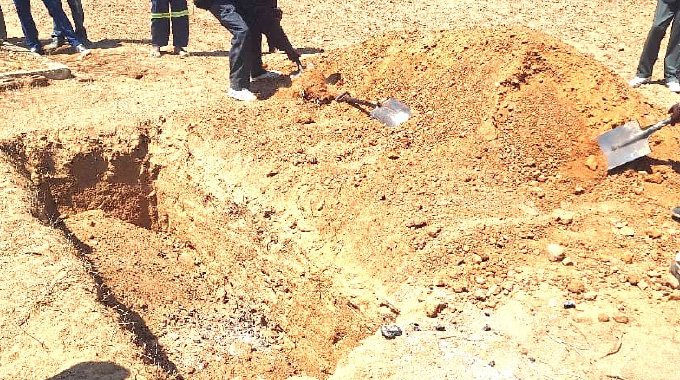
Peter Matika, [email protected]
ZIMBABWE has started exhuming the remains of former South African freedom fighters who were laid to rest on the country’s soil during the struggle against the oppressive and racist Apartheid regime.
The exhumation process, which started early this month, marks a significant chapter in the historical narrative of the liberation movements in Southern Africa. The fallen heroes were part of a smaller group of veterans who participated in the broader regional effort to dismantle colonialism and oppression.
In an interview yesterday, National Museums and Monuments of Zimbabwe (NMMZ) chief curator, Mr Kundishora Chipunza, said the exhumation and repatriation of the remains will mark a significant step in preserving the shared history between Zimbabwe and South Africa.
He said the process had begun with NMMZ having exhumed remains from 10 graves, with an additional five set to be exhumed at Warren Hills Cemetery in Harare today.
“On Friday, the process will continue in Bulawayo where we identified three graves. One is at Athlone Cemetery, while the other two are at Hyde Park Cemetery.
Thereafter, we will proceed to Hwange at a later stage as the process progresses to exhume more of them for repatriation,” said Mr Chipunza.
He said that committees set up by the Home Affairs and Cultural Heritage Ministry play a critical role in assisting with the exhumation process.
Mr Chipunza said both countries have been in constant touch and have set up committees to oversee the process. Veteran freedom fighter, Retired Colonel Tshinga Dube, said the process is necessary in maintaining relations between both countries, as well as creating history for future generations.
“This has been long overdue and it should be done. Let these heroes return to their homes and rest in the land they fought for,” said Rtd Col Dube.
The South African Heritage Resource Agency (Sara) yesterday held a virtual meeting with local journalists to explain the process. The meeting focused on the repatriation of human remains from Zimbabwe and Zambia to South Africa.
Miss Nokulunga Buthelezi from Sara detailed the process, highlighting the identification of graves in Zambia and Zimbabwe.
She said the repatriation follows a six-phase approach, including grave mapping, forensic examination and memorialisation.
“The human remains will arrive on September 25, with a homecoming ceremony on September 27,” said Miss Buthelezi.
The meeting emphasised collaboration, information sharing, and media coverage to educate the public and address societal challenges such as xenophobia.
In her presentation, Miss Buthelezi said a visit to Zimbabwe took place in March where the biggest number of graves was identified at Warren Hills Cemetery.
“The Zimbabwean team assisted with the certification of cemetery records and provided background information on joint operations between Zapu and Zanla. Only three Zapu campaign graves were identified, including that of Bazel February in a Bulawayo cemetery,” she said.
“Zimbabwe has shown committed support and waived the 90-day public notice period for the repatriation programme,” said Miss Buthelezi.
She said South African President, Cyril Ramaphosa is expected to deliver a keynote address at the homecoming ceremony.
“The exhumation and repatriation programme will be launched and provincial burials will happen post-forensic and DNA analysis,” she said.
Mr William Baloyi from the same organisation said the process and collaboration between the two countries was aimed at keeping the public informed and promoting co-operation, among different agencies and authorities.
“The programme was initiated following a Presidential announcement in February 2020 to repatriate the remains of South African liberation struggle members. The initial focus was on Zambia and Zimbabwe due to the high concentration of South African graves in these countries,” said Mr Baloyi.
The South African government early this year visited the country to identify the graves of African National Congress (ANC)’s Umkhonto weSizwe liberation heroes who died in Zimbabwe.
According to a research paper by sahistory.org.zw, ZPRA began helping the MK recruits to cross from Botswana through Southern Rhodesia into Zambia and Tanzania, particularly in the early 1960s.
In 1966, the idea of a military alliance between MK and ZPRA was first mooted with the support of Tanzania and Zambia.
Senior ANC leaders, Oliver Tambo, Moses Mabhida, Duma Nokwe, Moses Kotane, Tennyson Makiwane and John Beaver Marks convened a meeting in Tanzania to discuss military co-operation. Chris Hani was appointed to investigate the possibility of military co-operation between Zapu and the ANC.
The two movements reached an agreement and a joint military and political High Command was formed.


 Online Reporter
 Bongani Ndlovu