admin
admin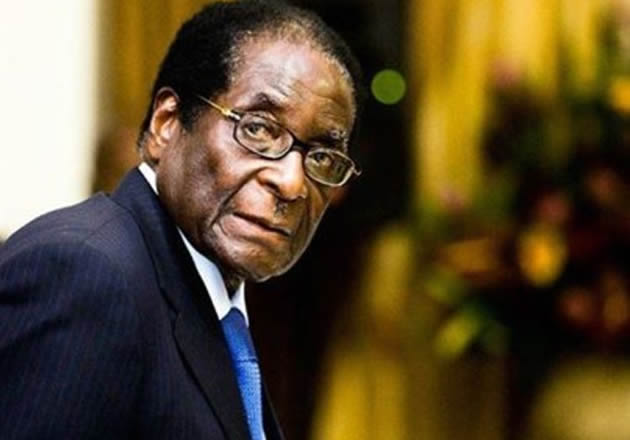
Joram Nyathi Spectrum
ZIMBABWE is too polarised. Zimbabweans have become too partisan. The result is that we have developed a phobia for truthful and honest debate. Before one can make a point on a subject, one must look over one’s shoulder, politically that is, to find out how the point might be taken or construed. The facts are thus massaged to cause as little discomfort as possible to the listener. Truth and principle are accordingly sacrificed.
Nowhere is this issue more poignant than Zimbabwe’s Diaspora.
Last Sunday President Mugabe appealed to Zimbabweans in the diaspora to contribute to the country’s economic turnaround. Was this new, a change of mind? Was that a Damascene moment? Was it an acknowledgement that Zanu-PF has failed to rule?
I ask these questions because the President’s appeal is being treated with unnecessary cynicism, as if he had just experienced an epiphany. Or as if Government ever took a position against the diaspora. All of which is not true.
Let’s acknowledge the basics: Zimbabwe’s economy is in a very bad state. That can be attributed in part to the destructive neo-liberal policies we call structural adjustment programmes launched in 1991/2 which led to the retrenchment of thousands of Zimbabweans. It can also be ascribed to the implementation — not execution — of the land reform programme. Given the stubborn resistance of white commercial farmers, execution of the land revolution was always bound to have elements of violence, which was fairly mild indeed.
Esap and land reform
On the implementation side, the beneficiaries on the whole failed to appreciate the onerous task they were being asked to undertake. Most of them abused inputs freely given by Government. Some vandalised irrigation and other farming infrastructure. Others simply looted what they found on the farms and left. President Mugabe recently expressed his disappointment with the performance of A2 land beneficiaries, those who claimed to have resources but cannot help feed the nation in the event of natural calamities such as this year’s drought.
It so happened that one Morgan Tsvangirai opposed both Esap and the land reform, first as secretary general of the Zimbabwe Congress of Trade Unions and in the second instance as leader of the newly-formed MDC. Business supported the IMF’s austerity measures under Esap and pushed Government to pursue structural adjustment with greater vigour, which meant cutting expenditure through retrenchments and reduced social spending in health and education. Tsvangirai could claim the moral high ground then because he was on the side of the poor, against Government and business.
That’s what gave rise to the MDC as a workers’ movement, as pro-poor.
The land reform turned the tables. Having ditched Esap as unworkable about 1996/7, Government found itself at loggerheads with business and white commercial farmers. British Minister Claire Short’s letter renouncing the Labour government’s role in funding land acquisition in Zimbabwe was the tipping point. The Zanu-PF government vowed to seize land from white commercial farmers without compensation.
Business and white commercial farmers quickly switched sides, now sponsoring Tsvangirai’s bid for political power as a way of securing their interests. Tsvangirai was now firmly on the side of business and commercial farmers and against the land reclamation programme — an issue at the core of the liberation struggle.
From one extreme where he was fighting white capital in the form of Esap, overnight Tsvangirai had made a somersault, preaching the sanctity of white property rights and how the land reform was emblematic of lack of rule of law in Zimbabwe and a violation of human rights. These became the rallying issues in the MDC’s campaign which led to the imposition of sanctions on Zimbabwe by Britain and its Western allies.
Tsvangirai has never explained to Zimbabweans at what point he sealed his bond with white capital, how his MDC became so beloved of white commercial farmers for them to sign cheques worth millions of dollars when only four short years earlier he was their biggest nemesis as head of the ZCTU fighting Esap and the retrenchment of workers who now constituted the bedrock of the MDC’s support base.
It was in this conundrum that Zimbabweans found themselves fighting each other over ownership of the nation’s natural resources and control of the economy in what Zanu-PF termed the Third Chimurenga.
Tsvangirai and his MDC were now on the side of whites, and many of their followers used that to seek political asylum in South Africa, Britain, Australia and the US. That is what gave us the large diaspora population, together with others who had long left the country because of diminishing employment opportunities under Esap, and the pursuit of further education.
GPA on land
Fast forward to the Global Political Agreement of September 15 2008. By that agreement Zanu-PF and the MDC formations managed to seal the status of the land reform programme in Zimbabwe. It was irreversible and everyone had a right to it. It was not a preserve of only those who fought on the side of Zanu-PF in the Third Chimurenga. Land belonged to all Zimbabweans, including those in the diaspora.
President Mugabe’s appeal to Zimbabweans in the diaspora to help in the economic turnaround is simply an affirmation of their Zimbabwean-ness regardless of political affiliation, something already acknowledged in the Zanu-PF economic blueprint, Zim Asset.
It says the country will leverage its natural and human resources, including those in the diaspora, for funding.
The collapse of the white enclave economy has opened many entry opportunities for Zimbabweans with financial resources. Zimbabweans who left for the diaspora were never the target of the land reclamation war but victims of a brand of opposition politics which gave the black working class the delusion of shared interests with white commercial farmers.
Dollarisation
Zimbabwe was in early 2009 forced to adopt a multi-currency regime to combat inflation and price volatility. This worked well in the first few years of the inclusive Government. But it has brought with it a lot of new dynamics for the diaspora. The dominance of the American dollar in the multi-currency mix has worsened a bad situation. While inflation has been tamed and commodities are readily available and Zimbabwe has become a favourite destination for every con-artist and vendor of the most mundane item, the local cost of living has become too high for the diaspora.
Where previously “burning” just US$5 or five British pounds could feed an entire clan or tribe for a week in Zimbabwe, now it is full pay, dollar-for-dollar. Money for groceries in Zimbabwe is what you pay in the US, UK or Canada, if not slightly more. The absence of our own currency has only made the situation that much dire for locals, placing a bigger burden on the diaspora. That burden can only be alleviated if Zimbabweans put aside their oppositional politics and focus on bread and butter issues, on the economy.
Economic recovery is possible if Diasporan Zimbabweans acknowledge that they have a role to play in the new economy, that issues like resource nationalism and economic empowerment have becoming a continental pandemic, not just a Zanu-PF policy aberration. Very soon these shall be settled questions on the continent, when it shall be an embarrassment to promote regime change in the service of white capital.
When President Mugabe says the youths are our hope, he is not talking about youths as agents of white capital but as champions of the rising Africa, the new African who asserts his claim to national economic and political processes, not as an outsider but as a protector of the national silverware from foreign predators. Zimbabwe will benefit from a little less cynicism and more practical commitment by all its sons and daughters.
Let’s acknowledge the uncomfortable fact that asylum or refugee politics are fast losing their lustre as more and more Europeans people visit and see the real potential in Zimbabwe as against an imaginary war zone. They can readily contrast the claims against Zimbabwe with what they see taking place in Iraq, Syria, and Libya, Egypt and Tunisia after the Arab spring liberation and democratisation.
To quote the wise words of American president John F Kennedy far back in 1963: “United there is little we cannot do in a host of co-operative ventures. Divided there is little we can do — for we dare not meet a powerful challenge at odds and split asunder.”
Zimbabwe is faced with a formidable challenge. Yet it remains at odds and split asunder by petty, Trojan horse politics. We can do better, yes we can!


 Online Reporter