Edgar Vhera, Zimpapers Reporter
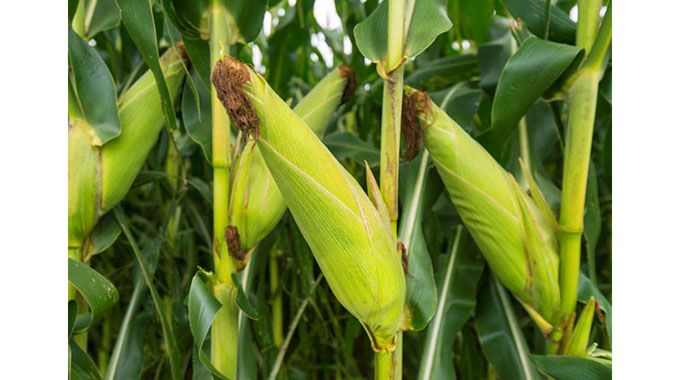
THE gross value of maize production is projected to reach US$1 billion by 2030, underpinned by a strategic transition towards sustainable yield enhancement and a prioritisation of productivity over area expansion, the Agriculture Food Systems and Rural Transformation Strategy 2: 2026-30 (AFSRTS 2) has revealed.
In his foreword to the strategy document, President Mnangagwa stated that Zimbabwe’s transformation from a low-income nation to an inclusive, modern, and prosperous upper-middle-income economy is anchored by agriculture, given the country’s agro-based economic structure.
“This AFSRTS 2 emphasises the resilience of the agricultural sector, based on principles of climate-proofed agriculture, to ensure perennial food security, away from the episodic and weather-determined food security escapades of the past.
“This will assure the nation of food sovereignty, better livelihoods for communities and increased contribution of agriculture to economic development,” he said.
Under the AFSRTS 2 framework, Zimbabwe aims to increase maize output from 2,4 million tonnes in 2026 to three million tonnes by 2030.
“The gross value will increase from US 1 050 billion by 2030. The driver of maize production growth in Zimbabwe has been the area, which shows an increasing trend, but yields suffer during drought years,” the AFSRTS 2 document noted.
The 2023/24 agricultural season was severely hampered by an El Niño-induced drought, which saw production plummet to approximately 600 000 tonnes. As land remains a finite resource, the strategic focus has shifted towards maize intensification (yield growth) rather than extensification (expanding the area under cultivation).
To achieve these targets, the Government is spearheading the widespread adoption of the sustainable intensive conservation agriculture model (Pfumvudza/Intwasa), alongside Information and Communications Technology (ICT)-enabled precision agriculture and enhanced mechanisation.
These initiatives aim to overcome persistent bottlenecks in the maize value chain, including low productivity, inadequate fertiliser use, pre- and post-harvest losses, the use of uncertified seeds, and the escalating effects of climate change.
White maize remains a vital strategic crop, primarily grown by smallholder farmers, and serves as the national staple food.
It supports the livelihoods of over three million people and provides a significant portion of the raw material requirements for the manufacturing industry.
“Beyond economic benefits, maize production plays a vital role in poverty reduction, with every US2,80 in the economy,” the AFSRTS 2 highlighted.
Under the new strategy, investment in irrigation will climate-proof production at the village level through Rural Development 8.0, while national-level stability will be secured through accelerated irrigation development.
“The sustainable intensive conservation agriculture model, Pfumvudza/Intwasa, must become a universal practice by farmers and should not be a prerequisite for receipt of Presidential Inputs only,” the document stated.
Smallholder maize production under the Pfumvudza/Intwasa programme achieved an average yield of 5.3 tonnes per hectare during the 2020/21 season, though this dropped to 1.36 tonnes per hectare in 2021/22 due to drought. Notably, yields under this model consistently outperform the national average.
The agro-ecological tailoring of crops under the Presidential Input Programme (PIP) is set to become the standard. Farmers in agro-ecological Regions 1 and 2 will be required to plant three mandatory maize plots, while those in Region 3 will establish two.
“Inputs distribution under PIP will be timely to get the best harvests and ensure duty-free fertiliser benefits accrue to farmers. Government will continue to announce pre-planting incentive maize producer prices to aid farmers in their planning decisions,” read the AFSRTS 2.
The primary policy objective is to boost agricultural production and productivity to ensure national food self-sufficiency, reduce the food import bill, and mitigate vulnerability to regional and global food shocks.
“Research and development will be intensified to ensure the release of high-yielding, drought-tolerant and fall armyworm-resistant varieties and introduce seed dressing for fall armyworm control,” the document noted.
Farmers not covered by the PIP will have access to funding via the National Enhanced Agricultural Productivity Scheme (NEAPS). Government policies are designed to “crowd in” private sector financing, requiring companies to fund the production of 40 percent of their raw material needs.
The Grain Marketing Board (GMB) will continue to procure produce from the PIP and serve as the buyer of last resort while building the Strategic Grain Reserve (SGR).
Furthermore, the Zimbabwe Mercantile Exchange (ZMX) warehouse receipt system (WRS) will provide input support, deepen market liberalisation, and explore regional and international export opportunities.