Online Reporter
Nqobile Bhebhe, Senior Business Writer
Set against the vibrant backdrop of Zimbabwe’s industrial hub, where commerce and innovation thrive, lies an extraordinary legacy that spans over six decades.
This rich narrative reflects relentless ambition, significant growth, and profound transformation.
Every April, Bulawayo comes alive with remarkable energy during the Zimbabwe International Trade Fair (ZITF).
The annual exhibition transforms the city into a bustling epicentre of economic activity, drawing in thousands of local and international exhibitors, businesses, and entrepreneurs.
The ZITF not only serves as a premier marketplace for trade and investment but also as a vital gathering ground for showcasing cutting-edge products, technologies, and services.
Attendees experience a diverse range of industries, from manufacturing and agriculture to technology and tourism, all converging to forge new partnerships and explore innovative solutions.
As vibrant displays of ingenuity and creativity unfold, the fair stands firmly as a testament to Zimbabwe’s commitment to fostering economic development and empowering its workforce.
The first ZITF exhibition took place in 1960 under the name Central African Trade Fair, when Zimbabwe was still known as Southern Rhodesia.
Originally, the fair aimed to promote regional trade within the Federation of Rhodesia and Nyasaland, which included Zimbabwe, Zambia, and Malawi.
History shows that Bulawayo was selected as the host city because of its strategic location, robust industrial base and well-developed railway links.
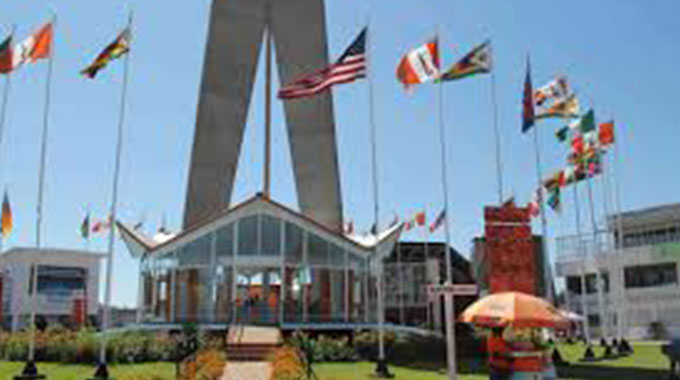
Over the years, the fair has evolved into a significant driver of industrial and commercial growth, solidifying its role as a beacon of opportunity in Zimbabwe’s economic landscape.
It has successfully attracted businesses from Europe, Asia, and neighbouring African countries.
Each year, a carefully curated theme revitalises the fair, encouraging dialogue on emerging opportunities and economic strategies.
The fair has played a crucial role in shaping industries, providing opportunities for Zimbabwean businesses to access global markets, and strengthening the country’s economic presence.
Recently, at a press briefing in Bulawayo, ZITF Company Chairman Mr Busisa Moyo reflected on the enduring journey of the exhibition.
The 65th edition of the ZITF is scheduled to take place from April 21 to 26, 2025, at the Zimbabwe International Conference and Exhibition Smart City (ZICES) in Bulawayo.
This year’s theme is, “Industrialisation: Crafting an Integrated Economic Landscape.”
According to the ZITF Company, this year’s focus will be on showcasing cutting-edge advancements in manufacturing, technology, agriculture, and value-added services, emphasising the need for a robust and competitive industrial base.
Key areas of exploration will include strategies to maximise the manufacturing industry’s contribution to the growth of upstream and downstream industries, specifically by focusing on tooling and re-tooling, infrastructure development, access to finance, market expansion, and export diversification.
Mr Moyo emphasised that ZITF has been a driver of Zimbabwe’s economic transformation both before and after independence.
The exhibition has maintained its relevance by facilitating discussions on economic development, fostering collaboration, and helping local businesses enhance their brand visibility.
“From its early years, during the period of unilateral declaration of independence in 1965 under Rhodesia, ZITF provided a vital space for companies to profile their products and services. Through the post-independence Economic Structural Adjustments Programme (ESAP) and the expansion of the manufacturing sector in the 1990s, ZITF continued to serve as a key communication tool for local industries, ensuring visibility both within Zimbabwe and across the region,” reflected Mr Moyo.
In the 1990s, the exhibition gained momentum as the country’s economy expanded and new industries emerged.
The fair attracted major international firms from countries such as China, India, South Africa, the UK, and Germany.
Several key economic agreements were signed at ZITF, which led to growth in trade and investment.
However, in the early 2000s, Zimbabwe faced economic challenges due to hyperinflation and illegal international sanctions, which affected participation at the ZITF.
Many Western companies withdrew, but businesses from China, India, and other regional African nations continued to engage in trade.
In response, ZITF adapted its focus to regional trade within the Southern African Development Community (SADC) and promoted local business development.
After 2010, the ZITF began to rebound as Zimbabwe attracted new investors, particularly from China, Russia, the Middle East, and other regional African markets.
The exhibition began emphasising technology, innovation, and smart industries to align with global trends.
Key themes such as digital transformation, industrialisation, and economic diplomacy became central to ZITF conferences and exhibitions.
Mr Moyo said the next 65 years will be pivotal as the company aspires to upgrade the fair to an international standard, expanding its platform and regional reach.
“In the era of dollarisation and the advent of the Fourth Industrial Revolution, ZITF has evolved to maintain its relevance, facilitating discussions around economic development, fostering collaboration, and helping local businesses enhance their brand visibility.
“It provides an invaluable opportunity for industry leaders to engage with policymakers, ensuring that the voices of businesses are heard and their needs are addressed.
“As we reflect on this remarkable 65-year journey, we acknowledge the significant catalytic role ZITF has played in Zimbabwe’s economy. We are proud of the progress made but remain committed to doing more. The next 65 years will be pivotal as we aspire to upgrade the fair to an international standard, expanding its platform and regional reach,” he said.
Mr Moyo said for this year, focus is not on complaints but on celebrating ZITF’s enduring contribution to Zimbabwe’s economic landscape.
“We are proud to still be here, serving the nation and playing an essential role in shaping the future of our economy,” he noted.
The exhibition has successfully attracted heads of state, trade ministers and diplomats reinforcing economic diplomacy and enhancing investor confidence.
Trade delegations leverage this platform to formalise bilateral and multilateral trade agreements, facilitating increased foreign investment.
Major international corporations attend the exhibition to evaluate potential investment opportunities in Zimbabwe.
Notably, sectors such as mining, renewable energy, infrastructure, and technology have witnessed a substantial increase in foreign direct investment (FDI) as a result of engagements at ZITF.
In recent years, ZITF has assumed a pivotal role in advancing Zimbabwe’s economic diplomacy by fostering trade and investment within regional trade blocs, notably SADC and the African Continental Free Trade Area (AfCFTA).
The ZITF creates opportunities for Zimbabwean enterprises to engage with regional buyers and investors from SADC member states.
This aligns with the SADC Industrialisation Strategy, which advocates for member nations to add value to their raw materials.
ZITF supports this directive by showcasing key industries, including manufacturing, agro-processing, and mining beneficiation.
Furthermore, Zimbabwe’s strategic position as a regional transport hub, linking South Africa, Zambia, Mozambique, and Botswana, is prominently displayed at ZITF attracting investments in logistics, energy, and cross-border trade.
With the commencement of AfCFTA, which aspires to establish the world’s largest free trade area, ZITF facilitates connections between Zimbabwean businesses and traders and investors throughout Africa.
Additionally, AfCFTA promotes the growth of small and medium-sized enterprises (SMEs) and ZITF aids these SMEs in showcasing their products, establishing regional partnerships, and adopting digital trade solutions.
Consequently, SMEs gain vital exposure to export markets in the process reinforcing their contribution to Zimbabwe’s economy.
The exhibition attracts thousands of visitors, boosting hotels, restaurants, transport services, and local businesses in Bulawayo and beyond.
For instance, the ZITF Company has projected that more than 800 exhibitors, 30 exhibiting countries, at least 10 000 business exhibitors, and over 75 000 visitors will take part in this year’s exhibitions.
Increased international traffic is expected to immensely contribute to Zimbabwe’s foreign currency earnings.
ZITF’s ability to attract major international firms delivers significant economic benefits, from foreign investment and job creation to technology transfer and SME growth.
As Zimbabwe strengthens its trade ties within SADC and AfCFTA, the ZITF remains a vital platform for positioning the country as an investment destination of choice.
By leveraging its international trade exhibitions and fostering cross-border partnerships, it positions Zimbabwe as a strategic player in regional economic integration and continental trade expansion.
Several sectors are poised for major investment growth, with ZITF serving as a key platform for deal-making and business expansion.
For instance, the ongoing transformation of the ZICES has vast potential to create new investment opportunities in urban development, digital infrastructure and real estate.
Unveiled last year, the ZICES project involves turning a prime 17-acre site into a dynamic mixed-use development.
The ambitious plans for the new precinct include an international convention centre with the capacity to host up to 5 000 delegates and a 500-room hotel connected to the convention centre.
A 5-star boutique hotel designed to host heads of state and VIPs, modern retail shopping centre offering a range of dining, shopping, and entertainment options for visitors and residents is also catered for in the masterplan.
The visionary masterplan aims to introduce world-class amenities to Bulawayo, making it a hub for business tourism, commerce, and recreation.
With a projected investment of US$300 million, the ZICES development promises to rejuvenate the region and establish Bulawayo as a top-tier destination for business, culture, and leisure.
The masterplan is a significant step forward in revitalising the city and attracting more business, cultural immersion, and leisure activities.
Looking ahead, Mr Moyo said, “the next chapter promises even greater excitement, as we explore uncharted territories and redefine the boundaries of possibility.
“In this grand celebration of 65 years, we invite you to join us in honouring the past while embracing the future. Let us gather once again in Bulawayo, where the spirit of innovation thrives, and the promise of opportunity knows no bounds. Together, we will write the next great chapter in the ongoing story of the Zimbabwe International Trade Fair.”