Online Reporter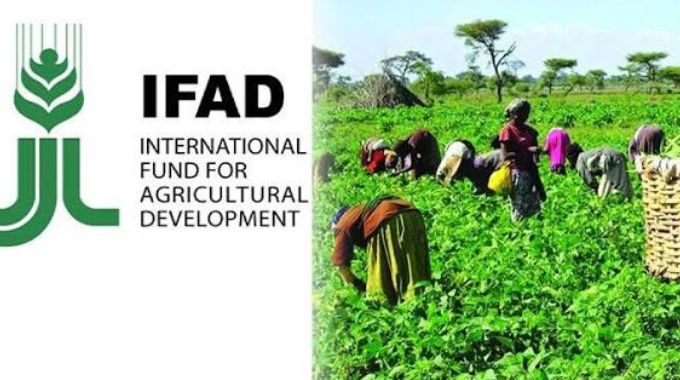
Patrick Chitumba, [email protected]
GOVERNMENT, working with the International Fund for Agricultural Development (Ifad) and the Opec Fund for International Development (Ofid), is rolling out 100 Village Business Units (VBUs) this year to help smallholder farmers withstand worsening climate shocks and sustain horticultural production.
The intervention comes as Zimbabwe braces for forecasts of high temperatures and reduced rainfall during the 2026/27 summer season, with the Government seeking to shield rural communities from the effects of drought and the anticipated El Niño conditions.
The 100 VBUs form part of 620 units to be established under the eight-year, US$66,5 million
Horticulture Enterprise Enhancement Project (Heep), which was launched in June last year.
Heep national project co-ordinator Mr Pedzisai Nemadziva said the VBUs will provide farmers with practical infrastructure and support to continue producing even under difficult climatic conditions.
“For the 100 VBUs this year, this is going to climate-proof production within the rural sphere. By setting up these VBUs, we are setting farmers up for success. This year the project will establish 100
VBUs and 10 public-private-producers partnerships,” he said.
Mr Nemadziva was speaking on the sidelines of a Heep focal persons under Agricultural Rural
Development and Advisory Services induction workshop in Gweru yesterday.
He said the programme would ultimately establish 620 VBUs and 20 public-private-producer partnerships across 20 districts in Matabeleland South, Manicaland, Masvingo and Midlands provinces by 2031.
The VBUs will focus on horticultural production and incorporate climate-smart measures such as irrigation, shade nets and water harvesting infrastructure.
Beyond infrastructure, the project is providing financial support to farmers and businesses through a US$9 million matching-grant facility, while a further US$16,3 million line of credit will be extended to anchor firms.
The funding is intended to address one of the major challenges confronting smallholder farmers — limited access to affordable capital for production and expansion.
Under the matching-grant facility, smallholder farmers will receive 80 percent of the required funding from the project while contributing 20 percent.
For micro, small and medium enterprises, the project will contribute 70 percent, with beneficiaries providing the remaining 30 percent.
Anchor firms — companies that buy produce from farmers while providing inputs and technical support — will operate under a 50-50 cost-sharing arrangement based on approved proposals.
“The project will also disburse an additional US$9 million under its matching grants facility. The funds will be disbursed through three windows,” said Mr Nemadziva.
He said Heep was designed not only to increase production, but to integrate rural farmers into profitable horticultural value chains.
“It will establish 620 village business units and enhance product, price, place and promotion, providing targeted capacity building, matching grants and public infrastructure investments,” said Mr Nemadziva.
“The programme will also contribute to job creation, export expansion and poverty reduction.”
Mr Nemadziva said farmers will also receive training on producing crops according to market requirements, with emphasis placed on securing buyers before planting.
“This improves incomes and food security. Heep’s goal is to increase incomes, food security and empowerment for smallholder farmers engaged in profitable and sustainable horticulture value chains,” he said.
The approach is expected to reduce the risk of farmers producing crops without assured markets, while strengthening linkages between smallholder producers, SMEs and larger agricultural companies.
The project is targeting 71 000 smallholder farming households directly and another 50 000 indirectly by 2031.
Mr Nemadziva said investments in irrigation, water harvesting and other climate-resilient infrastructure would be particularly important as Zimbabwe prepares for another potentially difficult agricultural season.
The investments are expected to increase household incomes through commercial horticultural production, improve nutrition and create employment across farm and non-farm activities.
They are also expected to stimulate rural economies by improving infrastructure, connectivity and market access.
Heep is being implemented in line with the Government’s broader agricultural transformation agenda, including the Horticulture Recovery and Growth Plan, the Agriculture Food Systems and Rural Transformation Strategy and the National Development Strategy 2.