Online Reporter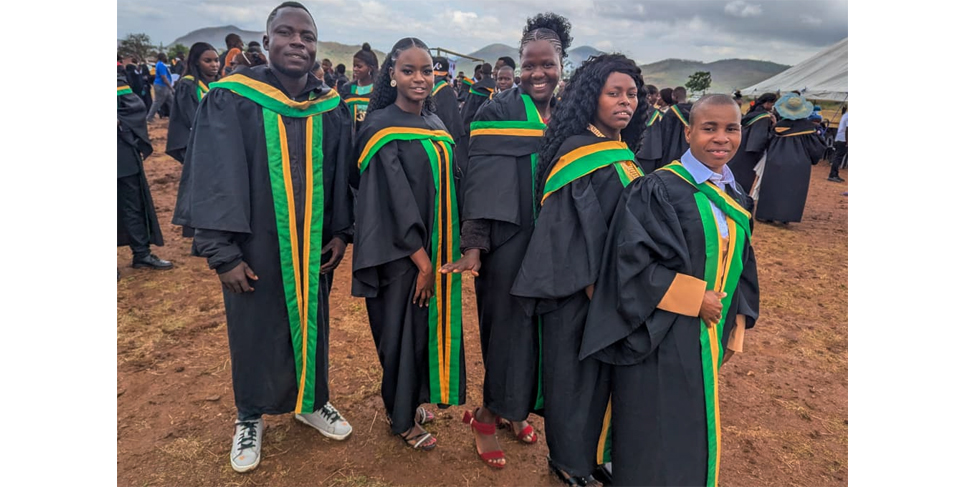
Solomon Bhumu and Takudzwa Manzero
FIVE hearing impaired students were part of the 2 264 graduands from nine vocational training centres who graduated at a Manicaland provincial graduation ceremony held at Magamba Vocational Training Centre last week.
The five graduands, Malvern Gwiti, Tadiwa Mwatenga, Stacy Chinjere, Brenda Itayi and Adeline Madziro from Nzeve Deaf Centre graduated with certificates in Clothing and Textile Technology.
The graduation ceremony was presided over by Youth Empowerment, Development and Vocational Training Minister, Honourable Tino Machakaire, who hailed vocational education as a cornerstone for national transformation, and a powerful tool against unemployment, poverty and drug abuse.
He said: “Today marks, not only the conclusion of a chapter, but the beginning of a new journey filled with promise, opportunity, and purpose. These graduands stand before us as empowered individuals, equipped with practical skills to contribute meaningfully to our national vision of becoming an empowered upper middle class income economy by 2030. Digital skills are vital for our youths.”
Minister Machakaire also announced plans to establish Digital Innovation Hubs in all VTCs nationwide to enhance digital literacy and entrepreneurship among young people.
In addition, the Ministry of Youth Empowerment Development and Vocational Training is rolling out the Recognition of Prior Learning (RPL) policy, designed to provide training opportunities for vulnerable and marginalised groups—including young mothers and school dropouts—who may lack formal academic qualifications.
“You have gained, not only technical expertise, but also discipline, teamwork, and persistence. Take full advantage of opportunities, including funding from Empower Bank. Build enterprises that drive development in your communities,” said Minister Machakaire.
Minister Machakaire commended several centres—Magamba, Kukwanisa, Marange, Mutare, and Herbert Chitepo VTCs—for installing Wi-Fi facilities, an initiative he said is crucial for equipping students with digital competencies.
He also lauded the centres’ transition to green energy through the installation of solar power systems, aligning with Zimbabwe’s green economy agenda.
The graduation held under the theme: “Innovate, Digitalise, and Enterprise: Training and Skills Development; Combating Drug and Substance Abuse,” highlighted Government’s efforts to promote technical skills, entrepreneurship, and digital literacy among youths.
In an interview, one of the hearing impaired graduand, Ms Tadiwa Matenga said: “We have been attending lectures courtesy of the support from Nzeve Deaf Centre which played an instrumental role in paying for our food, transport, living expenses and examination fees. Through its officers’ tutelage and patience, we felt included during our quest for education in order to secure a livelihood. Today, I am running a self-owned garment making business in Harare.”
Nzeve Deaf Centre volunteer and mother of three deaf children, Mrs Jane Murehwa said she was excited that the graduands she has been working with managed to achieve academic excellence.
“I am so happy that this day of celebration including people living with disability has come. I worked closely with the graduands during their education process as an interpreter collaborating with Magamba Vocational Training Centre lecturers. The inclusion of hearing impaired students in classes has been a heartwarming exercise. Going forward, there is need to encourage parents to accept the condition of their children, and not hide them. Let them participate in different activities done in the community,” she said.
Reflecting on her own son’s failure to acquire a job after completing a plumbing course, Mrs Murehwa said: “There is need for more awareness in different companies and vocational training centres so that more teachers, lecturers and personnel are knowledgeable of the sign language. This will allow for the collection of information and employment of hearing impaired people.”
Magamba Vocational Training Centre principal, Mr Shorai Nyamubika expressed pride in the institution’s achievements, and its role in driving rural industrialisation.
“We have refurbished hostels, launched fisheries and a fine bean export hub, and planted five hectares of tobacco. Our goal is to turn these initiatives into viable commercial production units that support, both the community and the institution. Going forward we are scaling up our thrust to attract more youths, reduce drug and substance abuse, and inspire entrepreneurship,” said Mr Nyamubika.
He also revealed plans to expand enrolment in 2026, introduce new methodologies, and improve infrastructure to create a more conducive learning environment.
Outstanding students were honored for stellar performances in various fields.