Online Reporter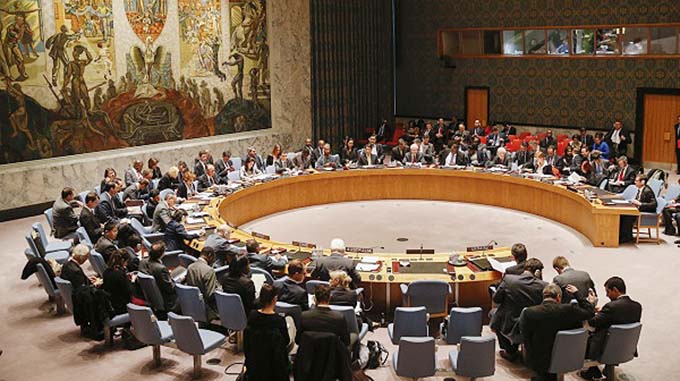
Gibson Mhaka, Zimpapers Politics Hub
AS Africa prepares to commemorate Africa Day on May 25, the annual reflection on unity, liberation and shared destiny arrives at a moment of strategic importance for the continent.
Beyond the symbolism of flags, culture and history, this year’s celebrations carry a pressing political undertone — the need for African countries to rally behind Zimbabwe’s bid for a non-permanent seat on the United Nations Security Council for the 2027-2028 term.
In many ways, the campaign presents a litmus test of Africa’s commitment to its founding ideals under the African union (AU), particularly the principle of collective support and solidarity among member states.
With elections set for June 3, Zimbabwe stands as the sole AU-endorsed candidate, making its bid not just a national aspiration, but a continental cause.
It is now time for the “African Giant” to move with one voice.
A win for Zimbabwe is not a victory for Harare alone; it is a strategic triumph for the 54 nations of the AU.
In the complex theatre of global diplomacy, having a representative who understands the nuances of the Global South, the history of liberation struggles, and the current developmental aspirations of the continent is indispensable.
Africa Day itself is rooted in the formation of the Organisation of African Unity (OAU) in 1963 — a body that later evolved into the AU — with a clear mandate: to promote unity, defend sovereignty and foster cooperation among African nations.
That spirit is now being tested in the diplomatic arena of global governance, where representation remains skewed despite decades of advocacy for reform.
The UNSC is one of the six main organs of the United Nations, tasked with the primary responsibility of maintaining international peace and security.
However, the structure of the Council remains a bone of contention.
UN Secretary-General António Guterres recently told African leaders that the absence of permanent African seats on the Security Council is “indefensible,” declaring: “This is 2026 – not 1946.”
While the fight for permanent representation continues, the non-permanent seats remain the immediate frontier where Africa can exert influence.
His remarks underscore a long-standing imbalance in global decision-making structures — one that Africa has consistently sought to correct.
Zimbabwe’s entry into the Council would bring a sober, balanced and principled voice to global affairs.
Against this backdrop, Zimbabwe’s candidature offers the continent an opportunity to assert itself more forcefully on the global stage.
Harare has already secured endorsements from key regional and international blocs, including the AU, SADC, the Pacific region, Central Asia, the Caribbean and Latin America — a demonstration of growing confidence in Zimbabwe’s diplomatic re-engagement thrust under President Mnangagwa.
Foreign Affairs and International Trade Minister Professor Amon Murwira has expressed strong optimism about the country’s prospects, framing the campaign within the broader philosophy of Zimbabwe’s foreign policy.
“The first move was to be endorsed by SADC and then it was endorsed by the African Union,” he said.
“So we are the sole African union country at the United Nations as we go for elections on the 3rd of June, 2026.”
That endorsement alone should, in principle, translate into a unified African campaign.
Yet history suggests that continental solidarity, while often proclaimed, is not always consistently practised.
This is precisely why Africa Day 2026 should serve as more than a ceremonial occasion — it should be a rallying point for decisive action.
Zimbabwe’s diplomatic outreach to Eastern and Western Europe further highlights the stakes involved.
While Harare has received written endorsements from several countries, Prof Murwira noted that engagements are ongoing to consolidate support.
“We are in the process of going to the Eastern European countries and to the Western European countries, where we have already got a lot of endorsements in writing, but there are some countries that we still have to visit to actually pay our respects… so that we get more support,” he said.
The implication is clear: if Zimbabwe can mobilise backing beyond the continent, then African nations themselves must not lag behind.
Indeed, the credibility of the AU’s collective voice depends on its ability to act cohesively in moments such as these.
Historically, there are notable examples where African solidarity has delivered tangible results. South Africa’s successful bid to host the 2010 FIFA World Cup was underpinned by unified continental support, with African nations lobbying vigorously within global sporting bodies. Similarly, Ethiopia’s enduring role as host of the AU headquarters in Addis Ababa reflects decades of collective endorsement and trust among member states.
In the diplomatic sphere, African countries have often closed ranks in supporting candidates for positions within multilateral institutions.
For instance, Nigeria and Kenya have both benefited from coordinated African backing in previous bids for non-permanent seats on the Security Council.
Another classic case study is the coordinated African support for Dr Tedros Adhanom Ghebreyesus’s election and re-election as Director-General of the World Health Organisation (WHO).
Despite pressure from various global quarters, the African continent remained resolute, proving that when Africa votes as one, the world listens.
These precedents demonstrate that when Africa speaks with one voice, it can shape outcomes in global governance.
Zimbabwe’s case is no different.
Its candidature is not merely about occupying a seat; it is about amplifying African perspectives on peace, security and development.
The Security Council remains the most powerful organ of the United Nations, with the authority to impose sanctions, authorise military action and determine responses to global conflicts.
For Africa — a continent frequently on the Council’s agenda — representation is not a luxury, but a necessity.
If Zimbabwe is currently engaging partners in Eastern and Western Europe to garner additional support, it is only logical and fraternal that African brothers should be the primary advocates for this cause.
Prof Murwira emphasised Zimbabwe’s readiness to play a constructive role if elected.
“We are very confident,” he said. “The foreign policy of His Excellency, President Mnangagwa is based on the doctrine of friend to all and enemy to none.
“Our map is looking very good, and we are looking forward to being there in New York on the 3rd of June, 2026, and Zimbabwe will contribute to a better world for all.”
That doctrine resonates strongly with the AU’s own emphasis on multilateralism and peaceful coexistence.
It also aligns with calls by global leaders, including Mr Guterres, for stronger partnerships between the UN and regional organisations such as the AU.
Indeed, the UN-AU partnership has evolved significantly over the past decade, encompassing joint initiatives in peacekeeping, conflict resolution, sustainable development and human rights. Africa’s growing role in these areas reinforces the argument that it deserves a stronger voice within the Security Council.
Zimbabwe’s bid also comes at a time when the country is actively repositioning itself on the global stage.
The “engagement and re-engagement” policy has seen Harare rebuild diplomatic ties, attract investment and improve its international standing.
This “National Image Enhancement Strategy” has already paid dividends, with the country being voted the best tourism destination of 2025.
Securing a seat on the Security Council would further consolidate these gains while enhancing Africa’s collective influence.
Importantly, the campaign underscores a broader philosophical point: in an increasingly fragmented world, regional solidarity is not optional — it is essential.
The AU has often been described as a “flagship for multilateralism,” and its credibility hinges on its ability to translate principles into practice.
Africa Day 2026 therefore presents a unique convergence of symbolism and strategy.
It is a moment to celebrate cultural richness and historical resilience, but also a time to reaffirm political commitments.
Supporting Zimbabwe’s bid should be seen as part of that commitment — a practical expression of unity in action.
The message is simple yet profound: a win for Zimbabwe is a win for Africa.
It is a victory for collective representation, for shared aspirations and for the principle that African countries must stand together in pursuit of common goals.
Zimbabwe is ready. The endorsements from SADC and the AU are the foundation.
However, the final push requires every African diplomat, from Cape to Cairo, to campaign for Harare.
In the spirit of Pan-Africanism, there is a strong need for African nations to remember that a vote for Zimbabwe is a vote for an assertive, peaceful and unified Africa.
As the June 3 election approaches, the continent faces a choice.
It can either rally decisively behind its endorsed candidate, demonstrating the strength of unity, or allow fragmentation to dilute its influence on the global stage.
Africa Day has always been about more than remembrance — it is about renewal.
This year, that renewal must take the form of concrete support, strategic alignment and unwavering solidarity.
Zimbabwe’s bid offers the perfect opportunity for Africa to show that its unity is not just a slogan, but a living, breathing reality capable of shaping the future of global governance.