admin
admin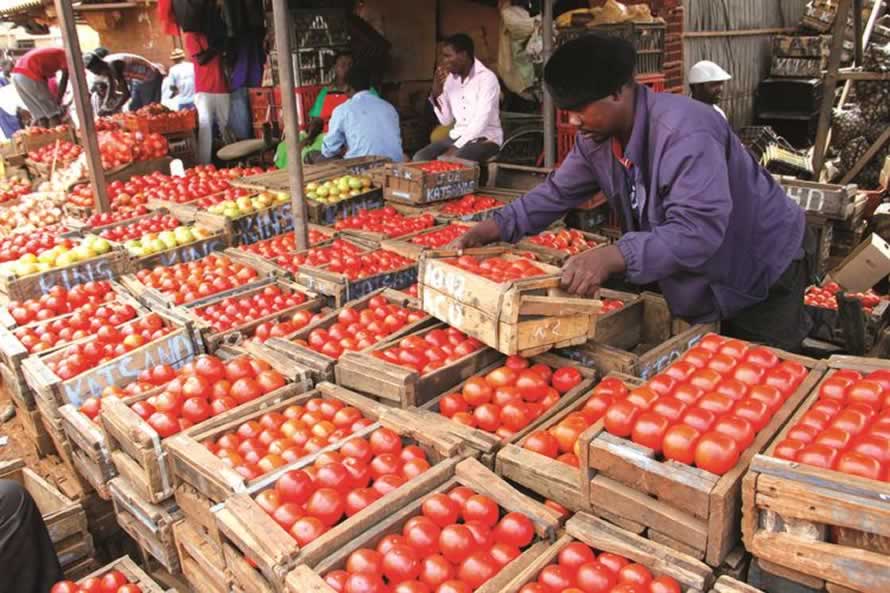

Emilia Zindi in Victoria Falls
Horticulture farmers have been called upon to use certified seeds which give maximum yield per hectare if they want to fully supply the local market.
Farmers in the horticulture industry have been crying foul over the flooding of horticulture products from foreign countries arguing that this had left them with no markets for their products.
However, the farmers have been accused of failing to satisfy the local market on a continuous basis as most of the time their products are not available on the market.
At a seminar being held here, where the horticulture industry was under scrutiny, stakeholders heard that local farmers should constantly supply the market if they want to dominate the industry.
“Our problem with the local producers is that there is no consistence in supplying horticulture products as demanded by the market. As such the only option is to import so as to fill that gap,” said a buyer of horticulture products, Mr Enock Vandira from Bulawayo.
He said in Bulawayo for instance, there was a time when the locals could not supply simple things as tomatoes, onions and potatoes or even cabbages. This had left most supermarkets with no option but to import from South Africa which is not far from the City of Kings.
“It takes me less than 12 hours to drive across the border and back with the required vegetables without having to short change my customers,” he added.
President of Zimbabwe Farmers Union, Mr Wonder Chabikwa, differed with other stakeholders saying local farmers were producing enough to meet demand.
“That is not correct that we are not doing well in horticulture. Just look at Mbare, Renkini and most markets around the country. It looks like we have people with an appetite for foreign products, especially if this is for self-advantage,” he said.
Mr Chabikwa said it was very worrying. He said that there should be very close consultations between authorities responsible for issuing permits, producers and importers.
Another presenter, Mr Ishmael Noel from Angola, said while the farmers produced for a market that could reward their efforts, covering their costs and provided an incentive to continue and expand food production to meet the needs of their domestic, regional and international consumers, it was important for farmers to be able to satisfy the market on a continuous basis.
This could be only be done if farmers use the recommended seed varieties that produce high yields as well as long shelf period.
“It should be understood that in a liberalised market environment, farmers reward themselves through the yield they achieve. The market forces of supply and demand should determine the price and hence the more productive farmers will distinguish themselves from just tillers of the land,” he said.
He said supply and demand was what buyers focus on to know what to buy, from where and where to sell before analysing for how much.
“Therefore, farmers need to organise themselves into groups so that they penetrate the formal markets than being individuals selling your produce by the road side. No-one will take you serious,” he added.
Zimbabwe Seed Trade Association vice chairman, Mr Walter Chigodora, said while the country had scores of horticulture producers there was need for them to diversify and grow other specialised horticultural products such as beetroot, broccoli, cauliflower, eggplants, lettuce, parsley, peas, pepper and spinach, among other products.
Once all these were produced in abundance locally, there would be no need to import these vegetables. It was also critical to have a register of production as at present it is not clear who produces what.



 Online Reporter