Online Reporter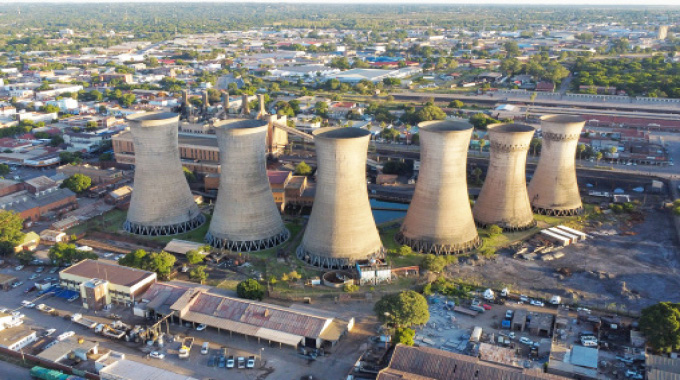
Sikhulekelani Moyo, Zimpapers Business Hub
AS the Bulawayo City Council intensifies efforts to reindustrialise, the local authority is turning its focus to opportunities in new and emerging sectors — placing the green economy at the forefront of its strategy.
In its third-quarter report under the Economic Growth and Stability Thematic Working Group, the city highlighted its commitment to diversifying beyond legacy industries, with a strong emphasis on clean energy, smart agriculture, and waste management.
“The Bulawayo economy is not solely reliant on the revival of its legacy industries. The city is actively diversifying its economic base by focusing on new and emerging sectors that are critical for sustainable, modern growth,” the report reads.
A key example of this shift is the city’s investment in the green economy. In the second-half of 2025, Bulawayo youths participated in a Green Jobs Boot Camp, designed to equip them with practical skills in renewable energy, climate-smart agriculture, and waste management.
“These projects, such as hydroponics and the transformation of plastic and paper waste into valuable products, are not just about environmental sustainability; they are about creating economically viable, entrepreneurial opportunities that can address youth unemployment and foster local innovation,” the report noted.
Amid growing calls for climate-smart development, Bulawayo’s focus on the green economy reflects a forward-looking approach aligned with global trends and the objectives of the National Development Strategy 1 (NDS1).
Zimbabwe’s green economy strategy promotes a transition to sustainable development, supported by Government, development partners, and international organisations. Key focus areas include renewable energy, sustainable agriculture, waste management, sustainable forestry, and the promotion of green jobs through skills development.
In addition to green initiatives, the city is aggressively pursuing investment in urban development and services.
The report cited the Egodini Mall project as a symbol of this ambition, despite ongoing delays. A contract termination deadline of 12 September 2025 now looms over the project’s future.
“The city is also proactively seeking investment in housing, transport, and tourism, a clear signal of diversification beyond traditional heavy industry. These projects, from solar farms to the construction of new stadiums, illustrate a vision for Bulawayo as a dynamic, modern urban centre that can support a diverse range of economic activities,” the report stated.
Meanwhile, the state of the city’s infrastructure remains a central theme in its economic narrative.
Water supply continues to be a critical challenge. While the city successfully repaired a key raw water pump in April 2025, it still lacks a backup system. To address this, the council is pursuing the US$126 million Glass Block Dam project under a Build-Operate-Transfer (BOT) model, with funding from the African Development Bank and the African Export-Import Bank.
This pragmatic approach to financing large-scale infrastructure projects reflects the Government’s limited fiscal space and the need to balance commercial viability with public welfare.
“The high proposed water tariffs under the BOT model, which could be up to three times the current rate, reveal the inherent conflict between commercial viability for investors and the public’s right to affordable basic services. Navigating this delicate balance will be a defining feature of the devolution agenda in the second half of 2025 and beyond,” the report noted.
The Egodini Mall project, once hailed as a transformative urban development initiative, now serves as a cautionary tale of the gap between policy ambition and implementation. The project remains stalled amid a dispute between city councillors and the contractor, Terracotta Trading.
According to the report, the contractor has proposed reducing the investment from nearly US$60 million to US$10,5 million, raising concerns among city officials about the project’s viability and long-term impact.


 Bongani Ndlovu