Online Reporter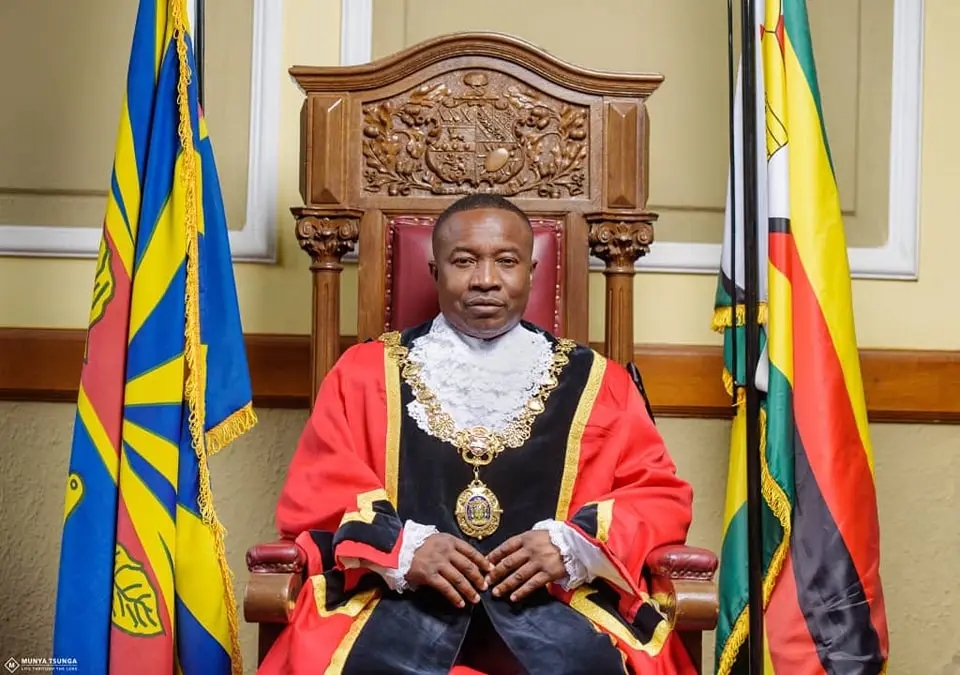
Remember Deketeke
Features Correspondent
THE Harare City Council has been working to align its policies and development trajectory with the Government’s broader national agenda, including the National Development Strategy 1 (NDS1) and other policy frameworks, Mayor Advocate Jacob Mafume has said.
In an interview with The Sunday Mail on Thursday, Adv Mafume said when he assumed office he found a local authority whose policy direction had, over time, become largely disconnected from that of the Central Government.
Part of his mandate, he said, was to restore cooperation between the city and national authorities so that Harare’s development agenda could complement the country’s broader policy direction.
“One of the issues was to align the developmental goals and achievements to fit within the framework of the broader national policy, such as NDS1 and other policy pronouncements by President Mnangagwa,” he said.
He said councils are part of Government structures and should, therefore, work collaboratively with national institutions, instead of operating in conflict.
Adv Mafume said the council has since taken deliberate steps to rebuild relations with the Government and actively participate in national programmes and events.
“As part of restoring that relationship, the council has begun participating in national events such as Independence Day celebrations, national commemorations and official openings of infrastructure and industry within the city,” he said.
He added that the improved relationship had enabled the council to introduce policies recognising the contribution of liberation war veterans, including concessions such as free parking and discounted municipal rates.
Adv Mafume said the council had also refocused its priorities on improving basic service delivery, which residents consistently identify as their main concern.
“The key pain points for residents are refuse collection, water supply, roads, street lighting and planning issues.
“So, we had to go back to the basics,” he said.
He noted that when he assumed office, the municipality was facing serious operational challenges, including salary arrears, persistent water shortages and frequent infrastructure breakdowns.
“Our salaries were six to nine months behind and water supply was difficult. We also faced frequent infrastructure breakages,” he said.
The city also had to contend with public health threats, including cholera outbreaks and the onset of the Covid-19 pandemic.
Mayor Mafume said the council strengthened its health systems to respond to these challenges by establishing response teams and improving services at municipal clinics.
He said the council had since improved maternal health services by rehabilitating maternity facilities and introducing solar power and alternative water sources.
“At one point, some maternity facilities had no water or electricity and people had to use candles. We started installing solar kits, securing alternative water sources and refurbishing the maternity homes,” he said.
The city also established a fully fledged surgical theatre in Mabvuku, enabling the municipality to conduct caesarean deliveries, a first for a local authority in Zimbabwe.
“To date, we have carried out more than 200 caesarean deliveries.
“We are the only local authority in Zimbabwe running such a facility,” he said.
Adv Mafume said the council had also introduced a community health insurance pilot project in Mbare and Harare South aimed at making healthcare more affordable.
Under the scheme, residents contribute small annual fees to access subsidised health services at municipal clinics. He said the programme was being implemented with support from development partners who had mobilised about US$700 000.
The council has also been involved in social rehabilitation initiatives, including programmes to assist victims of drug and substance abuse, and reintegrate children living on the streets into society.
Adv Mafume said more than 500 people had so far undergone rehabilitation through programmes implemented in partnership with First Lady Dr Auxillia Mnangagwa.
He added that the city had also recorded progress in controlling outbreaks of water-borne diseases such as cholera.
Meanwhile, the city has completed work on a long-awaited masterplan to guide urban development.
The last comprehensive plan for Harare was prepared in the mid-1990s.
“The new masterplan covering the period 2025 to 2045 has now been completed and consultants are preparing to present it to Cabinet. A city cannot develop without a masterplan,” he said.
Adv Mafume also said the council had introduced a new digital billing system designed to improve revenue collection, procurement processes and financial accountability.
He added that waste management had improved through the Geo Pomona waste-to-energy project, which has transformed the former Pomona dumpsite.
“It used to be a health hazard with continuous fires and smoke, but it is now clean and well managed,” he said.
The city is also undertaking major upgrades to its water infrastructure as part of efforts to improve water supply.
Council has so far installed more than 11 000 smart water meters under a modernisation programme aimed at improving water management and billing efficiency.