Moffat Mungazi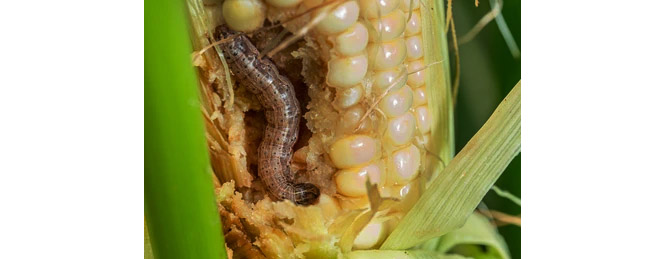
AS the African armyworm continues its relentless march across our fields and farms, leaving in its wake a trail of destruction and despair, it is imperative that we take immediate and collective action to combat this scourge.
In Manicaland, armyworm is wreaking havoc in Buhera, Chimanimani, Chipinge, Mutare and Mutasa districts, and a number of farmers are already counting their losses.
We want to applaud the Government for its timely intervention by providing the necessary pesticides to keep the marauding worms at bay, as they can reduce yields by about 70 percent.
The devastating effects of this pest on our harvests cannot be overstated, and if left uncontrolled, the consequences will be catastrophic.
The African armyworm, a pest that has been wreaking havoc on crops across the continent for decades, has once again emerged as a major threat to food security this rainy season.
Its voracious appetite and ability to adapt to different environments make it a formidable foe, capable of destroying entire crops in a matter of days.
The impact on farmers, who have invested their time, resources, and livelihoods into their crops, is heart-breaking.
The economic implications of an uncontrolled armyworm infestation are equally dire.
If left uncontrolled, an armyworm infestation can have far-reaching and devastating economic implications, affecting, not only farmers and agricultural industries, but also the broader economy and society as a whole.
One of the most immediate and direct economic implications of an uncontrolled armyworm infestation is the loss of crops and reduced yields.
Armyworms are voracious eaters, capable of destroying entire crops in a matter of days.
This can result in significant financial losses for farmers, who may have invested substantial amounts of money in seeds, fertilisers, and other inputs.
In addition, reduced yields can lead to decreased incomes for farmers, many of whom rely on their crops as their primary source of income.
The impact of an uncontrolled armyworm infestation is not limited to farmers, however.
The broader agricultural industry is also likely to be affected, as reduced yields and lower quality crops can lead to decreased demand for agricultural inputs and services.
This can have a ripple effect throughout the economy, impacting businesses and industries that rely on agriculture, such as food processing and manufacturing.
An uncontrolled armyworm infestation can also have significant implications for food security and prices.
With reduced yields and decreased crop quality, food prices are likely to increase and make it more difficult for consumers to access affordable and nutritious food.
This can be particularly devastating for vulnerable populations, such as the poor and malnourished, who may already be struggling to access basic necessities like food.
Uncontrolled armyworm infestations can also have broader societal implications. For example, reduced incomes for farmers can lead to decreased economic activity in rural areas, exacerbating poverty and inequality.
Furthermore, the stress and uncertainty caused by an armyworm infestation can also have negative impacts on mental and physical health, particularly for farmers and their families.
The economic implications of an uncontrolled armyworm infestation can also be long-term and far-reaching, as repeated infestations can lead to soil degradation and decreased fertility, making it more difficult for farmers to produce crops in the future.
However, it is not too late to take action.
Government, farmers, and other stakeholders must work together to develop and implement effective strategies for controlling the spread of the African armyworm.
This includes increasing awareness and education among farmers, providing access to effective pest control measures, and supporting research into new and innovative methods for managing this pest.
We must adopt a proactive approach to managing the African armyworm, rather than simply reacting to infestations after they occur. This includes monitoring crop health, identifying early warning signs of infestation, and taking swift action to prevent the pest from spreading.
The fight against the African armyworm will not be easy, but it is a fight that we cannot afford to lose.
We owe it to ourselves, our children, and future generations to take action and protect our crops, our livelihoods, and our food security.
The time to act is now.



 Online Reporter