admin
admin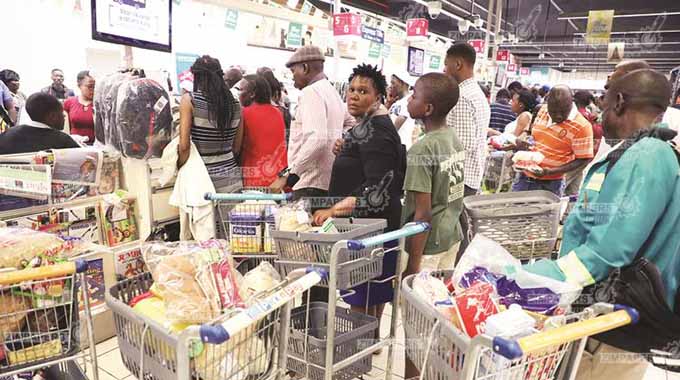
ZIMBABWE is making strides towards achieving an empowered and prosperous upper-middle income society by the Year 2030.
However, the journey was some months ago disturbed by a wave of unjustified price increases that threatened to reverse the gains of economic growth and social transformation.
What became clear was that the exchange rate was being manipulated by unscrupulous elements each time Government reviewed civil servants’ salaries.
Government had to act decisively to stem this tide.
To that end, since May, Government has, through the Ministry of Finance and Economic Development as well as the Reserve Bank of Zimbabwe, put in place a raft of measures to tame the market’s volatility and ensure stability.
These interventions include, among others, increasing the bank policy rate to 150 percent in order to discourage speculative borrowing, collecting import duties in Zimbabwean dollar, transferring external payment obligations to Treasury, settling 50 percent forex corporate tax in local currency and upgrading the wholesale foreign currency trading and pricing system.
The cocktail of measures jointly implemented by Treasury and the Central Bank are bearing fruit as evidenced by the strengthening of the Zimbabwean dollar against the United States dollar.
Since June 27, the local currency has gained over 30 percent against the greenback.
The local currency’s impressive performance confirms the increased demand for it to settle fees and levies in line with Treasury’s recent policy measures.
As of last Thursday, the local currency was trading at US$1:$4 556. Before this, the official exchange rate had depreciated to US$1:$6 926 and plunged to as low as US1:$9 000 on the parallel market.
The Zimbabwean dollar has been making substantial gains on the official interbank market over the past month such that the runaway black market rate has been successfully tamed.
As a result, the prices of goods and services — which were being pushed beyond the reach of many — has stabilised.
As the Zimbabwean dollar continues to appreciate value against the United States dollar, prices have been tumbling.
Some retail outlets have been reducing prices of basic commodities, a survey conducted by Consumer Protection Commission (CPC) has shown.
The Reserve Bank of Zimbabwe also says the benefits of a stable currency have trickled down to ordinary consumers for inclusive growth.
Prices of bread and cooking oil have gone down over the past weeks.
For example, a two-litre bottle of cooking oil had gone up to as much as $24 000, but is now averaging at $17 000.
A 10kg pack of maize-meal has dropped to around $23 000 from $35 000, while a loaf of bread is now averaging $5 000, down from $8 000.
The downward spiral of the cost of goods and services has brought relief to consumers.
This has seen their purchasing power being restored, thanks to Government’s economic stabilisation measures.
The effective policies have arrested even the runaway parallel market exchange rates.
These austerity measures will steer the country to prosperity.
Stability in the market will bring several positive spin-offs to the economy.
Zimbabwe’s economy is projected to do better than the initial estimates and grow by 5,3 percent.
This sets the tone for achieving Vision 2030 and illustrates Government’s commitment to improving the lives of the people.



 Online Reporter