Online Reporter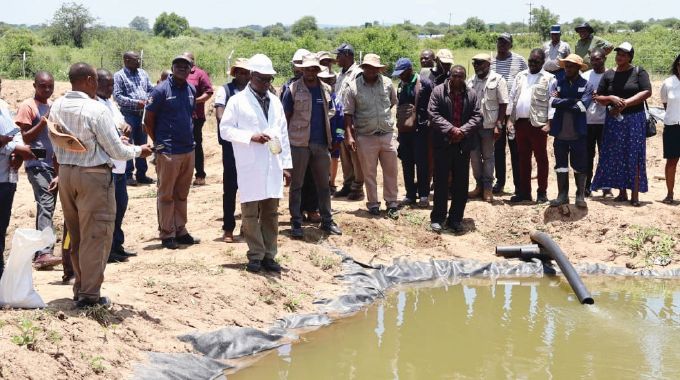
Theseus Shambare, Features Writer
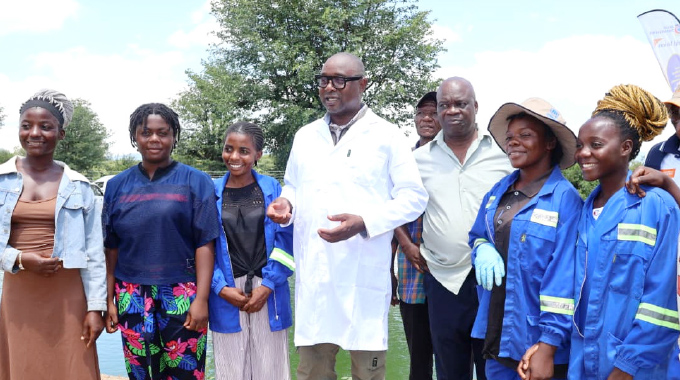
FLEEING violence in the Democratic Republic of Congo six years ago, Dorothy Tamitunda Patrick arrived in Zimbabwe with uncertainty etched into every step of her journey.
Today, at dawn in the Chipangayi area of Chipinge District, as mist lifts briefly before the heat tightens its grip, Dorothy walks towards a line of fish ponds at Tongogara Refugee Camp, carrying feed in a small bucket and the discipline of a woman at work.
She is no longer waiting for food aid.
She is producing food.
Tongogara Refugee Camp, home to over 16 000 refugees, sits in agro-ecological Region Five, Zimbabwe’s driest farming zone and one of its most climate-stressed landscapes. Here, seasons swing sharply between extremes.
Summers are scorching and increasingly humid, with temperatures often soaring to 45 degrees Celsius, while rainfall, though expected between November and February, is erratic and increasingly unpredictable.
Winters are dry and deceptively calm, with mild days giving way to cold nights that many residents describe as freezing.
Spring brings relentless heat, dust and strong winds, turning the land brittle and unforgiving.
Across the Southern African Development Community (SADC) region, such climate stress is increasingly intertwined with displacement.
By the end of 2023, more than 10,1 million people in Southern Africa were forcibly displaced, most of them internally displaced and about one million refugees and asylum seekers living in protracted situations, according to international humanitarian agencies.
Conflict in the Great Lakes region, violence in parts of Mozambique and intensifying climate shocks have turned displacement from a temporary emergency into a long-term reality.
At Tongogara, survival has demanded innovation.
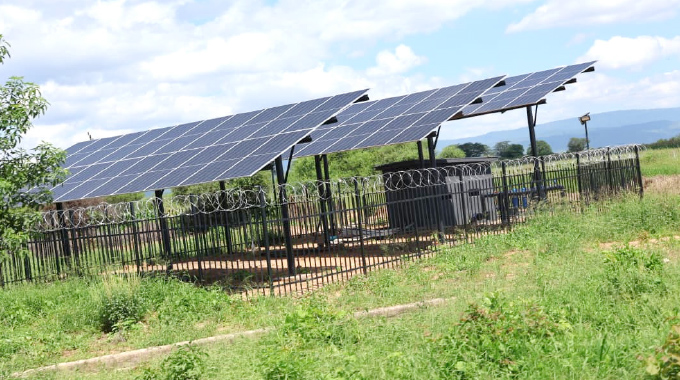
Despite receiving the lowest rainfall levels in Zimbabwe, the camp has transitioned significantly towards solar-powered boreholes to access deeper groundwater. Sand abstraction from the Save River’s alluvial aquifer remains critical, supplying domestic water while sustaining the camp’s irrigation schemes.
It is this fragile balance between water scarcity and food production that has shaped Tongogara’s agricultural transformation.
Led by the Government of Zimbabwe, in partnership with UNHCR, World Vision Zimbabwe and the Food and Agriculture Resilience Development programme, a strategic livelihoods project is redefining what is possible in a semi-arid refugee settlement.
The initiative aligns with National Development Strategy 2, the Sustainable Development Goals, the Global Compact on Refugees and SADC migration and labour frameworks that promote inclusion, self-reliance and economic participation.
At the centre of the project is aquaculture, chosen for its efficiency in harsh climates where conventional agriculture struggles.
With a stocking capacity of 182 000 fish, the aquaculture scheme benefits 63 households, most of them youth, while providing a reliable source of protein in a region prone to crop failure.
For Dorothy, the ponds represent control over an unpredictable environment.
“I never imagined farming fish in such heat,” she said, watching ripples form on the water’s surface.
Each household can earn up to US$45 per production cycle, supported through training, pond construction, feed provision and market access.
For Patrick Bemadu, another refugee farmer, aquaculture has restored dignity.
“When customers buy our fish, they see our work, not our past,” he said.
The project reflects International Labour Organisation (ILO) principles that position decent, productive work as central to restoring dignity, social cohesion and resilience among displaced populations. Production at Tongogara has deliberately diversified to withstand climate shocks.
The settlement now supports 185 hectares of healthy maize, supplying both refugees and host communities despite operating in the country’s driest agro-ecological zone.
For Charlette Kayembe, innovation has been key to lowering costs.
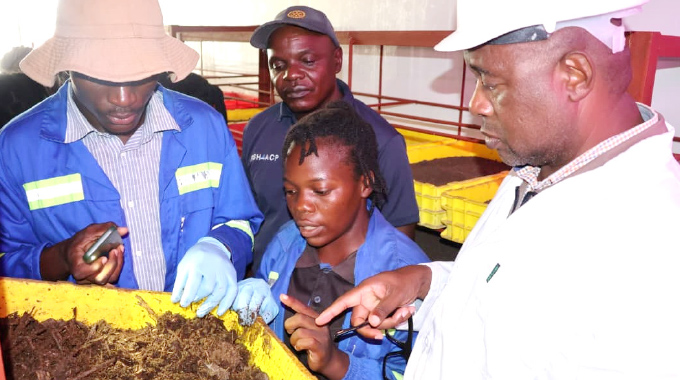
“We breed black soldier flies using organic waste,” she explains.
The larvae are processed into high-protein feed for chicken layers and fish, reducing reliance on expensive commercial feeds while improving productivity.
“This helps us save money and produce more, even in tough seasons,” she said.
Construction is ongoing to expand ponds, storage and irrigation infrastructure, reinforcing a long-term development vision rather than a temporary humanitarian response.
In addition, pig sties, fowl runs, an abattoir and a fish value-addition plant are being established, positioning the settlement to move beyond primary production into agro-processing.
Crucially, private sector players are already on board, ready to absorb the produce, ensuring reliable markets and turning refugee livelihoods into viable, sustainable agri-businesses.
Mr Gilbert Mushingari, a Technical Advisor with World Vision Zimbabwe, said sustainability has guided every decision. “At Tongogara, we are deliberately shifting from aid dependency to self-reliance. These programmes equip refugees with practical skills that restore dignity and improve livelihoods.
“In a place this dry, every system must work efficiently,” he said.
Equally important has been social inclusion.
The project deliberately integrates host community farmers, easing pressure on shared resources while strengthening co-operation. Local farmer Mrs Lizzie Mutyambizi said collaboration has replaced competition.
“We face the same climate, so we solve problems together. We work well with refugees. As community members, we get our 10 percent share per cycle and this has been transformative,” she said.
The settlement ensures phased harvests every four to six weeks, maintaining a steady supply to local and institutional markets, stabilising prices despite climate volatility.
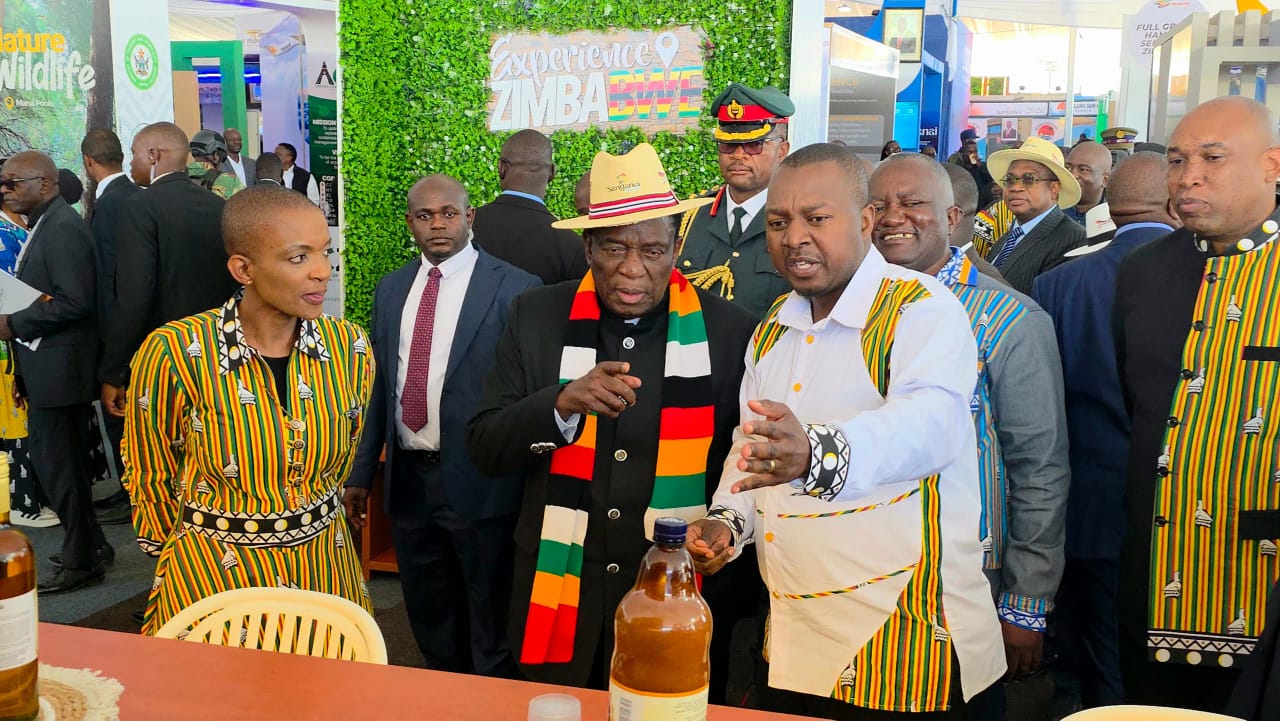
It is these success stories that drew Lands, Agriculture, Fisheries, Water and Rural Development Deputy Minister Davies Marapira to visit the settlement.
He said the place reflects national and regional priorities.
“Even in Region Five, agriculture can thrive through innovation and strong partnerships. This is what we want as Government — adaptive systems that enable rural communities to thrive while leaving no one and no place behind.
“What is particularly pleasing is that these operations are clearly market-oriented,” he said. Fard Director Mr Milton Makumbe said the integrated model offers lessons for the region.
“This is climate resilience meeting, human resilience. This project shows that with the right training, feed support and market access, small-scale aquaculture is viable and sustainable. As a department, we are looking at how lessons from Tongogara can inform national fisheries programming,” he said.
Across Southern Africa, where displacement and climate change increasingly overlap, Tongogara offers a powerful blueprint.
Here, in one of Zimbabwe’s harshest environments, refugees are not merely surviving the weather. They are working with it. At Tongogara Refugee Camp, dignity is no longer dependent on aid.
It is being cultivated — under the sun, against the odds and with purpose.