Online Reporter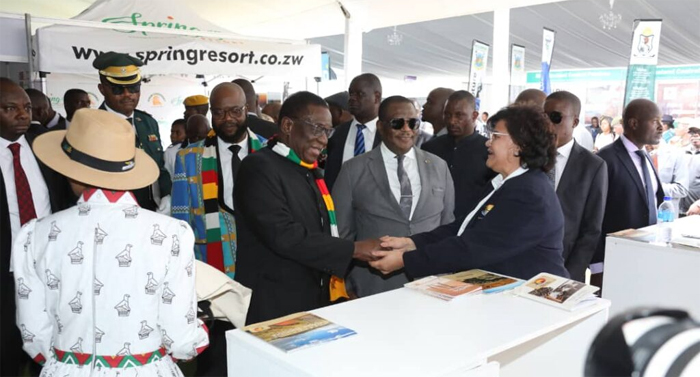
Lloyd Makonya
Correspondent
WHEN Manicaland hosted the Sanganai/Hlanganani/Kumbanayi World Tourism Expo in 2025, the moment carried symbolism far beyond exhibition stands and familiar hospitality rhetoric.
For the first time, Zimbabwe’s premier tourism showcase had deliberately shifted away from its traditional hosts, placing the Eastern Highlands at the centre of the national tourism economy conversation.
It was both an affirmation of Manicaland’s long-acknowledged tourism potential and a stress test of its readiness to anchor a larger share of the sector’s economic future.
As the province now looks ahead to 2026, the question is no longer whether Manicaland has tourism assets because its landscapes, climate, biodiversity and heritage have long answered that, but whether the momentum of 2025 can be translated into sustained economic contribution under a changing policy and development framework.
The 2025 tourism year unfolded against a broader national recovery. Zimbabwe’s tourism sector continued its post-pandemic rebound, with international arrivals rising to an estimated 1,6 million, while domestic tourism recorded strong growth, driven by renewed mobility, targeted marketing and a gradual restoration of confidence in travel.
These national trends directly benefited Manicaland, whose attractions from Nyanga and Vumba to Chimanimani and the scenic Eastern Highlands corridor featured more prominently in domestic travel patterns than in previous years.
Hosting Sanganai/Hlanganani/Kumbanayi World Tourism Expo did more than boost visitor numbers for a single week.
It repositioned Manicaland in the investment and meetings, incentives, conferences and exhibitions (MICE) tourism space, exposing the province to tour operators, airlines, investors and policymakers who had, for years, viewed it as peripheral to Zimbabwe’s mainstream tourism circuits.
For local operators, the Expo created opportunities to forge partnerships, test products and engage markets that would otherwise remain inaccessible.
One of the most tangible enablers of this repositioning was improved air connectivity.
The introduction and subsequent retention of scheduled Air Zimbabwe flights between Harare and Mutare marked a quiet but profound shift in Manicaland’s tourism economics.
Travel time was compressed, accessibility enhanced and the psychological distance between the province and the capital significantly reduced.
For business travellers, conference delegates and high-value tourists, this development alone altered the province’s competitiveness. When viewed alongside improved road traffic flows, Manicaland began to resemble a connected destination rather than a remote escape.
Yet 2025 also exposed persistent weaknesses. Infrastructure gaps remain visible, particularly in secondary road networks linking major highways to tourism sites.
High operating costs, limited accommodation diversity in some districts and inconsistent destination marketing continue to constrain growth.
Moreover, while hosting Sanganai/Hlanganani/Kumbanayi brought immediate benefits, the rotational nature of the Expo means that Manicaland cannot rely on flagship events alone to sustain momentum.
It is against this mixed performance of clear gains tempered by structural constraints that the 2026 tourism economy trajectory must be assessed.
Nationally, the policy environment is shifting in ways that favour provinces capable of strategic alignment. The recently adopted Tourism and Hospitality Industry Policy (2025–2030) signals a more deliberate approach to destination competitiveness, sustainability and private-sector-led growth. Tourism is no longer framed solely as a social or cultural activity but as an economic sector expected to deliver measurable contributions to gross domestic product, employment and foreign currency earnings.
This policy direction will be further reinforced under the National Development Strategy (NDS2), which takes effect from 2026 to 2030.
NDS2 positions tourism as a critical pillar in Zimbabwe’s upper-middle-income ambition, with explicit emphasis on infrastructure development, value-chain integration, community participation and spatially balanced growth.
For Manicaland, this creates an opportunity to embed tourism development within broader provincial economic planning rather than treating it as a standalone sector.
Tourism already contributes an estimated 12 percent to Zimbabwe’s GDP and remains one of the country’s leading foreign currency earners. The challenge and opportunity for Manicaland is to grow its share of that contribution. Improved connectivity, diversified tourism products and targeted investment could increase visitor length of stay, stimulate local enterprise development and deepen linkages with agriculture, culture, transport and creative industries.
Looking ahead, the province’s strongest prospects lie in diversification. Adventure tourism, eco-tourism, heritage and community-based tourism remain under-developed relative to their potential.
The Eastern Highlands are uniquely positioned to attract niche markets of hikers, climbers, birders, wellness travellers and cultural tourists who value authenticity and extended engagement over mass tourism experiences. Aligning these offerings with regional and international marketing strategies will be critical.
Equally important is the need for coordinated investment promotion. Under NDS2, provinces are expected to play a more active role in facilitating private investment. Manicaland can leverage its recent exposure to position priority tourism zones, incentivise accommodation development and attract diaspora capital into small- and medium-scale tourism enterprises.
In this context, the legacy of hosting Sanganai should not be measured solely by attendance figures or hotel occupancy rates, but by whether it catalysed a long-term shift in how Manicaland is perceived, planned and invested in.
The foundations have been laid though improved access, heightened visibility and supportive national policy signals. What remains is disciplined execution.
As Zimbabwe enters the NDS2 era, Manicaland stands at a strategic crossroads. With deliberate alignment between provincial actors, national policy frameworks and private sector ambition, the province can move beyond episodic tourism success towards a resilient tourism economy. One that meaningfully increases its contribution to GDP, creates sustainable livelihoods and anchors Manicaland firmly within Zimbabwe’s future growth story.
Ends