Chronicle Editor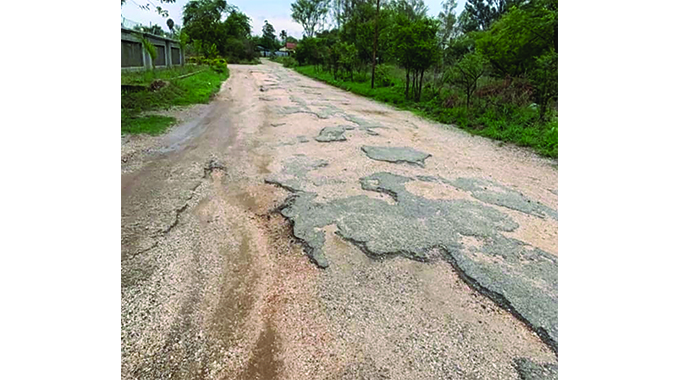
Patrick Chitumba – [email protected]
Heaps of soiled diapers and sanitary wear are a common sight in Gweru’s high density areas of Mambo, Ascot, Mtapa, Senga and Mkoba.
Since the opposition took over the running of the local authority many years ago, residents have been forced to co-exist with garbage.
Failure by the Gweru City Council (GCC) to deliver on its mandate to collect refuse has resulted in residents creating dumpsites at open spaces which are within reach of their houses.
As if that’s not enough, the local authority is failing to provide residents and stakeholders with potable water.
Some suburbs in low lying areas such as Mkoba 3, 4, 6 and 7 continue to go for long periods without the precious liquid while others in high lying areas such as Mkoba 15, 18, 19 and Ridgemont have gone for over three months with dry taps.
Gweru residents have continuously made passionate pleas to the local authority to improve on service delivery but their cries fall on deaf ears.
The opposition dominated local authority has not been collecting waste from residential areas, giving rise to illegal dumpsites.
Residents are now living in fear of contracting diseases such as cholera, typhoid and malaria as bacteria and mosquitoes take advantage of the breeding environment.
Swarms of flies and mosquitoes, which are the vectors of the deadly cholera and malaria, hover over dumped decomposing rubbish all day.
Cholera is a bacterial disease usually spread through contaminated water and causes severe diarrhoea and dehydration. If left untreated, cholera can be fatal within hours, even in previously healthy people.
Apart from uncollected refuse, the roads are marred by potholes which disturb the smooth flow of traffic, sometimes leading to congestion.
Residents have expressed concern over the poor service delivery, pointing out that councillors were living lavishly while neglecting rate payers.
Mrs Anesu Machaka of Mkoba 19 said it is rather unfortunate that they are now used to seeing piling garbage and dry taps.
“This opposition led council has normalised a wrong. We’ve come to accept mediocre because for long we have been living in dirt, in sewage and with dry taps. We now see it as an achievement for one to drill a borehole for water or to throw away litter anyhow because council has failed us,” she said.
Madzibaba Remmie from Mkoba 15 suburb said he had resorted to burning litter at his house to avoid piling it.
“Roads have potholes, refuse is not collected and we live in constant fear of water borne diseases such as cholera and typhoid. We have experienced these diseases before remember and it all boils down to a council that’s being led by the opposition and doesn’t have the residents’ needs at heart,” he said.
GCC says it has been struggling to collect refuse on a regular basis owing to its ageing fleet of refuse compactors which often break down and fuel shortages.
Mr Cornelius Selipiwe, director of Gweru Residents and Ratepayers Association said council is failing to collect garbage because they don’t have the means or the plan to do so.
“They’re not strategic when it comes to service delivery. At the end of the day, you find that people are not willing to pay rates and other services to council,” he said.
Mr Selipiwe said there are some people who pay their rates religiously but council is not giving them the services they require.
“As a result, you find apathy in settling bills, which also impacts on service delivery,” he said.
Turning to the issue of littering, he said residents also need to practise proper refuse management from the home set-up into the community.
“The local authority should inform residents on waste management. It starts from the household level where waste is produced and therefore the need to reduce the amount of waste they produce. There’s need for a viable plan that involves everyone so that we manage our waste because residents are the owners of this council,” he said.
Council spokesperson Ms Vimbai Chingwaramusee said they are trying by all means to ensure they follow refuse collection schedules across all suburbs.
“We encourage our residents to have bins and dispose their refuse properly. People are dumping refuse in drainage ways which is something we don’t encourage as a local authority,” she said.
“We encourage people to drop refuse in bins and place them in places that are accessible to our refuse trucks. We sometimes have operational challenges like when the trucks are down but the city is ours not the local authority and therefore the need for residents to all practise proper waste management.”
In terms of water challenges bedevilling the local authority, Ms Chingwaramusee said council is facing power outages at Range Booster and Gwenhoro Dam.
Without power, she said, council is unable to pump or distribute the precious resource.
“We have persistent power outages that affect pumping which results in residents going without water. Our engineers are looking at alternative sources of power so that we don’t just rely on Zesa,” she said.
Meanwhile, residents are up in arms with the local authority over the proposal to bill all goods and services in United States dollars.
The council last month proposed to bill for rates and other charges in United States dollars to cushion itself against inflation.
Mayor Councillor Hamutendi Kombayi said council was failing to provide services because of the erosion in value of local currency payments due to rising inflation and depreciation, and hence the need to peg rates in US dollars.
Gweru Residents Trust chairperson Mr Antony Madzivanyika said calls by the local authority to bill rates and services in US dollars are ridiculous, arguing even people in rural areas had far better living standards.
Council’s move would also be a violation of a Government directive forbidding businesses from excluding payments in local currency.
Local Government expert Dr Vincent Chakunda said there are a number of ways to ensure consistent water supply which include negotiating for a dedicated power line from Zesa to ensure that Gwenhoro is fully supplied with electricity.
“This has happened with a number of organisations and mining houses before so there is precedence. As we’re pursuing the dedicated line option, there is also need to explore alternative energy for Gwenhoro and Range Booster. “The alternatives are then subjected to a feasibility test to asses our abilities to sustain the option,” he said.
At some point, Dr Chakunda said, GCC asked residents to pay a pump levy.
“We should audit the pump levy and how the money was used. This is good basis for engagement with communities if extra funds are required,” he said.
Addressing a Zanu-PF campaign rally at Mbare Netball Complex recently, Vice President Constantino Chiwenga urged urban voters to remove opposition from urban councils so that they start enjoying proper service delivery.
He said opposition led councils had failed dismally to address service delivery issues in a development that has resulted in residents failing to access water and health services among other service delivery provisions.


 Online Reporter