Online Reporter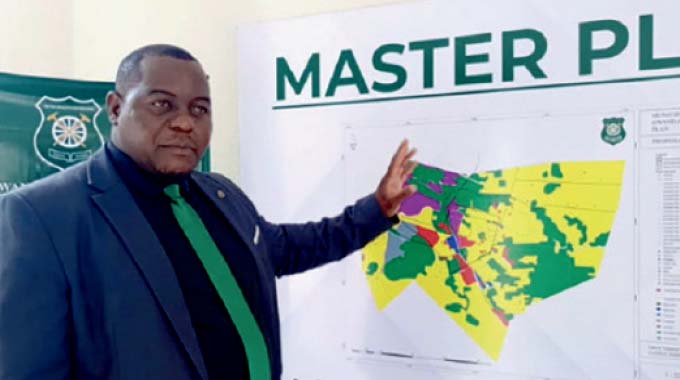
Gibson Mhaka, Zimpapers Politics Hub
THERE is a growing global consensus on the indispensable role of gender equality in achieving meaningful development.
This recognition is powerfully underscored by the Sustainable Development Agenda, a landmark initiative that explicitly identifies gender equality and the principle of “leaving no one behind” as fundamental prerequisites for sustainable progress across all sectors.
Available evidence indicates that gender equality fuels improved economic growth, reduces poverty, and fosters human development.
Conversely, neglecting gender considerations in public policy, planning, and budgeting carries the significant risk of exacerbating societal inequalities, thereby impeding economic growth and equitable development.
Indeed, gender equality and sustainable urbanisation are crucial not only for the survival of cities but also for the realisation of global commitments and targets, including the Sustainable Development Agenda.
Cities and towns are increasingly recognising and addressing gender inequality, with successful initiatives demonstrating the potential for transformative change.
However, urban planning, a process fundamentally about creating spaces that cater to the diverse experiences and needs of all individuals, has often been approached from a male-centric perspective.
This oversight has resulted in the neglect of women’s unique requirements, a phenomenon highlighted by research on gender disparities that points to a significant issue of ‘gender-blindness’ in the design and development of urban environments.
Despite these historical shortcomings, cities and towns are now making strides in addressing gender inequality, and successful examples are emerging to demonstrate what can be achieved.
To effectively tackle gender disparities in urban planning, a comprehensive approach is required.
This extends beyond simply constructing inclusive physical spaces; it necessitates cultivating cities that embody social and economic justice.
Indeed, when urban design and services—including water, sanitation, transport, and markets—address gender discrimination and actively promote equal opportunities, greater social and economic benefits can be achieved for the entire community.
This very philosophy underpins gender-based planning, it is not solely about meeting women’s needs, but rather focuses on designing spaces that are welcoming and functional for everyone, regardless of gender, with the core principles of ‘inclusivity’, ‘vulnerability’, and ‘equality’. This concept is gaining traction worldwide, and in Zimbabwe, towns like Gwanda Municipality, the provincial capital of Matabeleland South, have pioneered gender-sensitive urban planning.
The move comes after Gender Links Zimbabwe (GLZ) partnered with the Ministry of Local Government and Public Works to implement a gender mainstreaming programme, aiming to ensure that all 92 local authorities in the country develop gender-sensitive policies and programs that result in gender-responsive service delivery.
In line with this broader national effort, Gwanda Municipality, with a population of about 21 000 people, has strategically integrated gender-responsive budgeting into its master plan, a move poised to significantly enhance its attractiveness to investors and accelerate economic transformation.
By explicitly considering the needs and contributions of all genders in its development planning and resource allocation, Gwanda can foster inclusive growth, identify new opportunities, create a more stable and equitable economic environment, and position itself as a forward-thinking and socially responsible investment destination.
This integration of gender-responsive budgeting within the master plan represents a strategic approach with the potential to significantly enhance the municipality’s appeal to investors and accelerate economic transformation by fostering inclusive growth, identifying new opportunities, and creating a more stable and equitable economic environment.
Ultimately, this positions Gwanda as a forward-thinking and socially responsible investment destination.
In a recent interview in Bulawayo, Marshal Dube, the local authority’s systems administrator, outlined some of the incentives designed to attract investors and accelerate economic transformation, among which is the integration of gender-responsive budgeting into its master plan.
“We are showcasing that through the initiatives undertaken and the processes of crafting the master plan, we are planning to budget resources, recognising that land is a finite resource. Significantly, our master plan has integrated gender-responsive budgeting.
“We aim to plan in a gender-responsive manner, ensuring the inclusion of all women and people from all walks of life.
“As we proceed to the local development planning phase, we want to craft zoning policies, where each policy document will be evaluated on its gender responsiveness.
“Thus, as a local authority, our aim is not only to achieve an upper-middle-income society but also to ensure that no one is left behind as we allocate land through local economic development planning,” said Dube.
Dube said Gwanda’s master plan envisions industrial expansion beyond current limits, including the development of heavy industries, with a key focus on gender-sensitive urban planning principles.
“We fully support Vision 2030. As a municipality, we are working towards building a prosperous, upper-middle-income economy.
“Development control is our key tool, and we want to promote the construction of compact, high-rise, and multi-use buildings where residential apartments are built above commercial spaces, ensuring all these developments adhere to gender-sensitive urban planning principles,” said Dube.
He added that such an approach would encourage efficient land use, enhance the town’s aesthetics and contribute to modern urban development.
Dube further noted that Gwanda’s infrastructure development agenda, with a focus on gender-sensitive considerations, encompasses energy, roads, water and sanitation, recreational facilities, SME infrastructure, and land development—sectors targeted for partnerships under Public-Private Partnership (PPP) arrangements.
Commenting on Gwanda Municipality’s move, social worker and development practitioner Duduzile Mhlanga said GRB is a powerful tool that can significantly accelerate a town’s economic transformation by fostering inclusive growth and addressing inequalities.
“It’s not about creating separate budgets for men and women,” she explained, “but rather about analysing the budget’s impact on different segments of the population, considering their unique needs and contributions.”
Dube emphasised, “GRB helps identify legal, social, and economic barriers that hinder women’s full participation in the economy.
“By allocating resources to address these barriers, for example, lack of access to credit, skills training, childcare, a town can unlock the significant economic potential of its female population.”
She further noted, “Targeted budget allocations can support women-owned businesses through access to finance, business development services, and market linkages. This fosters entrepreneurship, creates jobs, and diversifies the local economy.”
“Furthermore,” Dube stated, “investments in infrastructure and services that ease women’s burdens, such as affordable childcare and safe transportation, can enable more women to enter and remain in the formal workforce, boosting productivity and economic output.”
From Mhlanga’s observation, it is clear that GRB is a powerful tool for strategic resource allocation.
By recognising and addressing gender-specific needs and barriers, cities can create a more equitable economic environment that not only empowers women but also drives broader economic prosperity and sustainability for the entire community.
GL Zimbabwe Country Director Priscilla Maposa said that to strengthen gender mainstreaming across all the 92 local authorities, the Ministry of Local Government and Public Works gave a policy directive for all council budgets to be gender sensitive as a condition of approval.
“The attainment of Vision 2030 towards a prosperous and empowered upper middle-income economy demands that the Local Government sector provides engendered and inclusive basic services.
“Recognising this imperative, Gender Links Zimbabwe in partnership with the Ministry of Local Government and Public Works, is implementing a gender mainstreaming programme and working with all 92 local authorities in Zimbabwe for over a decade.
“The aim is to ensure that local authorities come up with gender responsive policies and programmes which result in gender responsive service delivery,” said Maposa.
She said a gap, however, still existed as there was no uniformity in the way councils were reporting on gender in their budgets, hence gender responsive budgeting became a core focus.