dyton mupawaenda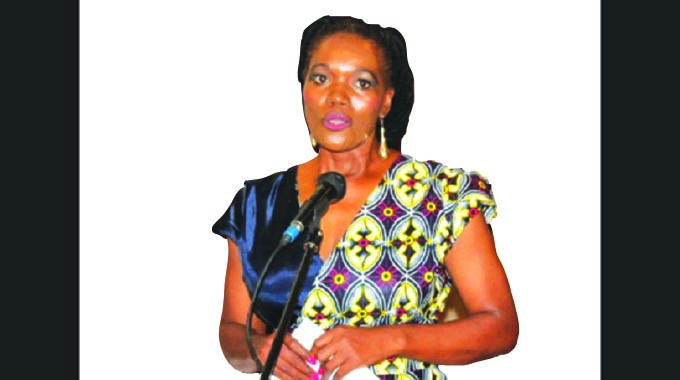
Elita Chikwati-Features Editor
In the past, testing positive to HIV was like a death sentence It was deemed the end was nigh. There was fear, dejection and malice, wrapped together.
But the introduction of the Anti-retroviral Therapy (ART) became a benign intervention that has brought dignity and restored life itself.
One such living testimony is Tendai Westerhof, who has been living positively with HIV for close to 23 years.
Westerhof, an HIV activist, turns 58 today and looks back at her journey since the time she tested HIV positive.
She now has an undetectable viral load. She is astute, has depth of character and is a living testimony for all and sundry to see and learn from.
“My journey of living with HIV started in 2002 due to circumstances beyond my control. I had to go for an HIV test and tested positive.
“The discovery of HIV affected almost every aspect of my life. I could not cope with it. It had never occurred to me that I would end up contracting HIV, so a lot happened to me at a personal level.”
The process of accepting the status did not just come overnight for Westerhof because she had many questions. Being a model who was well-known, appeared normal but, she was suffering inside.
She had to research on the disease for her to accept the condition.
“As time went on, I accepted my status and I went to see certain doctors in private. At first when I took the treatment, I thought the HIV would clear from my body, but as I started to learn about the virus, I realised it would never leave our body, but gets suppressed and undetectable, and cannot be transmitted.
“Because of the ARV effective treatment for the many years, my HIV is undetectable I cannot transmit HIV to my sexual partner.”
Westerhof had another challenge. That of disclosing her status.
She felt people were aware of her status and this tormented her.
After some research, she later revealed her status first to her close family members, and later to the public.
She learnt that being HIV positive and having Aids were two different things.
Aids includes opportunistic infections like STIs, TB meningitis, pneumonia, the body wastes away because the immune systems would have broken down.
“When I learnt this, I told myself I could not waste away and was concentrating on what I could do to live with the virus.
” This is when I learnt about positive living. I dealt with denial, and I received counselling and was put on treatment early.”
At first, she shunned public health institutions for fear of being recognised.
“I did not want people to know I had HIV”, she reminisces.
Buying the medication privately proved costly to Westerhof and she got to a stage where she could no longer afford and had no option but to seek help from public health institutions.
“Now I am in good care, I take my treatment everyday as prescribed and I have not experienced any major health complications.
“I have taken treatment for close to 23 years and have done well. I was young at that time, but now I am growing older at 58 years. I have been taking treatment for long and there are now certain health challenges I am facing as a person living with HIV; the issue of HIV and ageing.”
Westerhof said the challenges included accumulating unevenly distributed fat, headaches, high blood pressure and other non-communicable diseases.
“People react differently to treatment. There are some who have been on treatment for a long time, but some do not even have any side effects but for me aging with the disease has brought challenges. I now have problems with eyesight. Sometimes I have breathing problems, sometimes I feel my body is overweight and some issues linked to diabetes.
“These are the challenges I now face with HIV. ART is a miracle. Many people never expected that I would still be alive by now. Over the years, I have lost many relatives and friends; I have seen them succumbing to Aids-related illnesses. Some are still in denial and could not seek treatment.
“I accepted my condition and managed to live. Treatment brings new hope to life and you can live a normal life. But whether you are living with HIV or not, everyone aging will, experience health problems, but those with HIV are more vulnerable.”
Westerhof has been vocal on the HIV issue and advocating for the rights of people living with the disease.
“I was a professional woman and was a business woman, ran a modelling agency but discovering my HIV status became a life-changing experience.
“I have registered some success. I realised that speaking out about HIV breaks the stigma associated with the disease.
“The disease killed many people because of lack of knowledge. The stigma also contributed to the deaths. I saw an opportunity to speak out on HIV to help many people.
“After my public disclosure, many people got assisted. I inspired many women who were living with HIV and many learnt about the prevention of mother to child transmission, I became a role model of some people living with HIV.”
Westerhof was also influential towards policy formulation through her advocacy.
In 2004, through her organisation Public Personalities against AIDS Trust , Westerhof advocated for HIV testing and counselling and that year, some Parliamentarians underwent public health HIV testing.
“This had impact on the general populace so many people began to seek HIV testing and counselling services. “
“I have worked with many young people and women sexual and reproductive health issues, cervical cancer screening and to ensure we protect young people and girls from HIV infections and dealing with issues of Gender Based Violence.”
Westerhof has also written books. The first one , “Unlucky in Love”, highlighted her life of a rural girl who came to the city and had constructive and destructive relationships, and ended up contracting HIV.
She also highlighted efforts that were being made by other organisations to fight the spread of HIV.
She said women sometimes could not make informed decisions to protect themselves because of culture which promoted patriarchy.
“We had to form national network of women living with HIV to amplify voices so that as a nation the unique needs of women living with HIV could also be addressed.
“We wanted to see policies that protected women living with HIV in terms of access to treatment, preventions of HIV infections, care and support. “
We formed this network Pan African Positive Women’s Coalition and today with have a national network of women living with HIV with structures in all the 10 provinces in the country where women living with HIV are visible an active in decisions that affect their health,” she said.
Strides are being made in Zimbabwe towards the prevention of the spread of HIV.
Westerhof said the introduction of the injectable drug was a good idea which ensured the country was on target to end HIV.
She said the drug would ensure those who are negative remind negative and protected populations that are on high risky of contracting the virus.
“We have sex workers and young people who need this drug; people in discordant couples need this drug. This drug should be accessible.
“The HIV response is also evolving; new technologies are coming. We want innovations which allow vulnerable women to use without having to seek consent from partners,” she said
Westerhof urged those living with HIV to continue taking their treatment.
“The coming of ART has proved that HIV is a condition that can be managed. We should not let HIV rule our lives.
“We are ageing with HIV and we have lots of information that we can use to educate the younger generation so the not end up like us. We can also mentor young people living with HIV so that they can cope with the condition.
She urged the younger generation living with HIV that there was hope and they could date and get married and have HIV negative children.
“There is need for user friendly services for young people especially we should not have judgmental attitude towards young people,” she said.
For Westerhof, life goea on.



 Online Reporter